C11 • Shopper Mission & Basket Growth Mini-Course

Your product’s value is not limited to what it sells.

It includes what it helps the shopper buy.

Learn how to move beyond one-SKU thinking and build one practical basket-growth idea around a real shopper mission, one retailer, and one measurable test.

One shopper mission One retailer One basket-growth test
Regular price: $297 Founder access $97
Get Instant Access | $97

Build one Shopper Mission Basket Growth Plan • 14-day guarantee

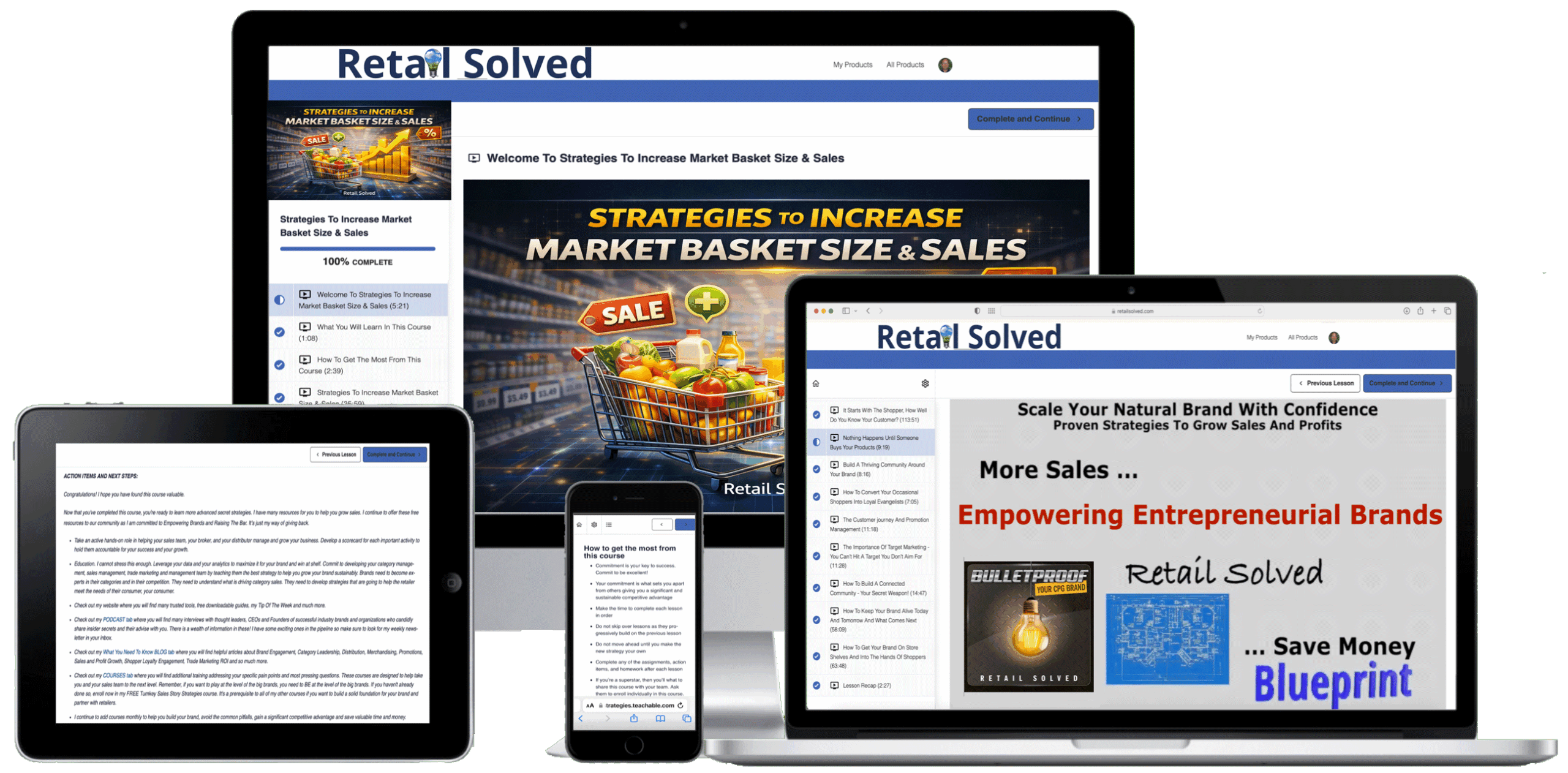
Strategies To Increase Market Basket Size and Sales course cover

The overlooked growth question

Stop asking only, “How do we sell more of this item?”

Start asking, “What else does the shopper need to complete the mission—and how can the retailer make that easier?”

Basket growth is not about forcing unrelated add-ons. It is about helping the shopper solve more of the same problem in one trip.

Watch the course preview

Grow the value of the trip—not just the velocity of the SKU.

This course helps you connect the shopper mission, your product’s role, complementary needs, retailer execution, and a simple test the team can measure.

The three beliefs that quietly cap growth

Basket growth starts when these beliefs change.

1

“Velocity tells the retailer what my brand is worth.”

Velocity matters, but it does not show the complete shopper or retailer value. The item may support a larger trip, a distinct need state, repeat behavior, or a more valuable category mission.

2

“The answer is another promotion.”

Promotions can create trial or urgency, but they can also transfer demand, compress margin, and train shoppers to wait. Basket growth begins with the shopper mission—not the discount.

3

“The shopper will connect the dots.”

Shoppers are busy. If complementary products are hard to find, poorly timed, unavailable, or disconnected from the mission, the opportunity disappears.

What you will learn

Build one basket-growth idea the retailer can understand and test.

  • Define market basket, basket value, basket composition, and share of wallet
  • Identify one real shopper mission or use occasion
  • Clarify the role your SKU plays inside that mission
  • Identify complementary needs, products, or categories
  • Separate observed behavior from assumptions
  • Evaluate availability, placement, price, promotion, and timing
  • Design one small retailer-ready basket-growth test
  • Define the baseline, owner, measure, and review date
Strategies To Increase Market Basket Size and Sales course displayed across desktop, tablet and mobile screens

The five basket-growth lenses

See the trip through the shopper’s eyes.

The opportunity is not “What else can we sell?” It is “What else helps the shopper complete the mission?”

Mission

What is the shopper trying to accomplish on this trip, in this occasion, or with this use case?

Need

What problem, constraint, preference, or tradeoff shapes the decision?

Companion

What products or categories naturally help complete the same mission?

Friction

What prevents the shopper from finding, trusting, affording, or buying the complete solution?

Test

What small change can the retailer and brand implement, measure, and improve?

Why this matters

The strongest smaller brands often create value that rank reports overlook.

Brand rank is not the same as brand strength.

A rank report shows how much the SKU sold. It does not automatically show why the shopper chose it, what else entered the basket, whether the trip was incremental, how the product supported the category, or whether execution limited the result.

That missing context is where a smaller brand can become more valuable to the retailer. The brand can bring shopper signals, category context, complementary purchase hypotheses, and a practical test that helps the retailer learn.

Basket value How much the shopper spent during the transaction.
Basket composition Which items and categories were purchased together.
Trip mission What the shopper was trying to accomplish.
Incremental impact What the strategy added rather than merely moved.
The quick win

Build one Shopper Mission Basket Growth Plan.

Choose one SKU, one retailer, and one shopper mission. Identify one complementary opportunity and one small test the retailer can execute.

Your first basket-growth test

1. Define the shopper mission
2. Clarify the SKU’s role
3. Identify the companion need
4. Remove one point of friction
5. Measure the result

What changes

Move from random add-ons to intentional basket strategy.

Before

  • The team focuses on one SKU at a time
  • Promotions become the default growth answer
  • Companion products are selected by intuition alone
  • Execution ownership is unclear
  • The result is judged only by topline sales

After

  • The team starts with one shopper mission
  • Complementary needs are tied to real behavior or a testable hypothesis
  • Availability, placement, price, timing, and promotion are considered together
  • The owner and execution steps are defined
  • The team evaluates basket, margin, repeat, and incremental impact

How I learned it and earned it

The most useful category insight often lives beyond the rank report.

Throughout my career, I built custom retailer and category tools designed to connect item performance to the shopper, the basket, the account, the market, and the decision that should follow.

The lesson is simple: data tells you what was purchased. Strong category leadership helps explain what else mattered, why the choice happened, and what the retailer should test next.

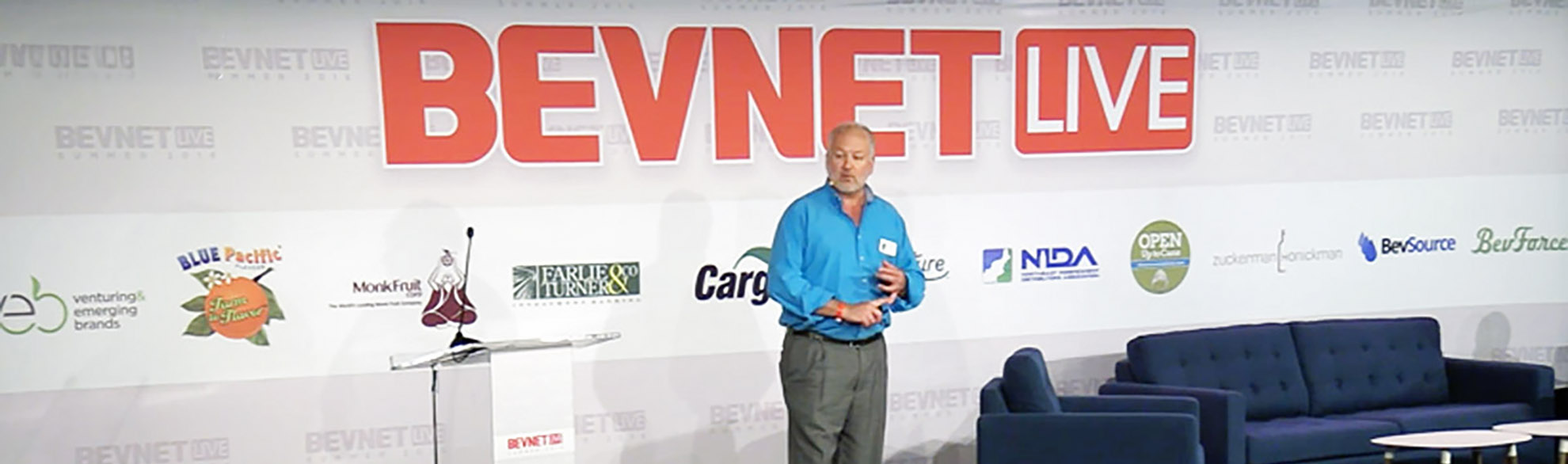
Daniel Lohman speaking at BevNET Live Expo West Pitch Slam mentors and selection committee
Daniel Lohman, CPSA

Your instructor

Daniel Lohman, CPSA

I help emerging CPG brands understand what is really driving retail performance, why what happened happened, and what the team should do next.

This mini-course helps you look beyond one-SKU selling and build a shopper-first basket-growth idea that can be tested, measured, improved, and repeated.

Frequently asked questions

Still deciding?

Do I need retailer transaction-level basket data?

No. Transaction-level data is valuable, but you can begin with shopper feedback, first-party signals, retailer POS, ecommerce behavior, product reviews, use occasions, store observations, and one clearly labeled hypothesis that you test rather than present as fact.

Is this about bundling products together?

Not necessarily. A basket-growth strategy may involve placement, content, assortment, availability, cross-merchandising, a recipe, a digital recommendation, a use occasion, a retailer-specific offer, or another way to help the shopper complete the mission.

What is the first practical outcome?

Complete one Shopper Mission Basket Growth Plan for one SKU, one retailer, and one testable opportunity.

Will every basket strategy increase sales?

No. The point is to replace guessing with a focused test. Results depend on shopper relevance, price, availability, execution, margin, retailer fit, timing, and whether the demand is truly incremental.

How is this different from a promotion course?

The course begins with the shopper mission and basket—not the discount. Promotion may support the idea, but it is only one possible lever alongside assortment, placement, content, availability, convenience, and execution.

What is the guarantee?

You have 14 days to review the course. If it does not give you practical ideas you can use to improve a real shopper or retailer decision, email Retail Solved and your purchase will be refunded.

Grow the trip, not just the item

Help one shopper complete one mission more easily.

Start with one SKU. One retailer. One basket-growth test.

Instant access • Regular price $297 • 14-day guarantee

Retail Solved Bulletproof Your CPG Brand podcast