1
“The retailer’s job is to sell my product.”
Retailers manage thousands of items, multiple categories, competing priorities, and their own operating constraints. Your brand must help make the decision easier to understand and execute.
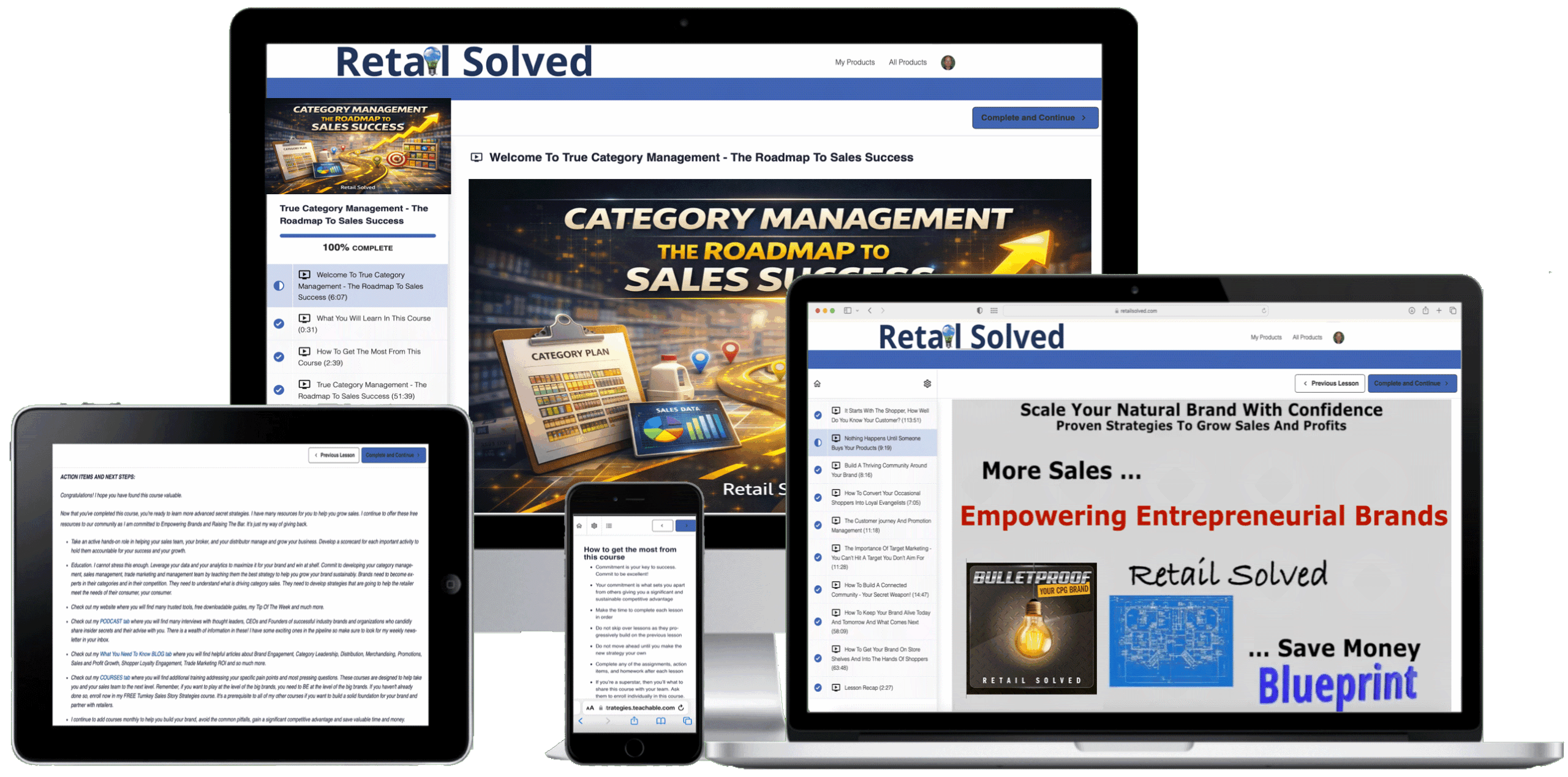
C10 • Foundational Category Management Mini-Course
Learn how to stop presenting your brand as another item asking for space—and start helping one retailer make a clearer decision about the shopper, the category, and what should happen next.
Build one Retailer-Ready Category Opportunity Brief • 14-day guarantee

The great equalizer
Retailers already know your brand wants distribution. What they need is help understanding the shopper, the category opportunity, the competitive context, the risk, and the next decision.
Watch the course preview
This course introduces the category-management thinking behind stronger buyer conversations: retailer objectives, shopper needs, category roles, competitive context, evidence, and actionable recommendations.
The three beliefs that keep brands pushing uphill
Retailers manage thousands of items, multiple categories, competing priorities, and their own operating constraints. Your brand must help make the decision easier to understand and execute.
A smaller brand may not have the largest budget or velocity, but it can bring shopper knowledge, category perspective, emerging signals, and a clearer recommendation.
Reports describe performance. Category leadership connects the performance to the shopper, the retailer objective, the competitive context, and the decision that should follow.
What you will learn
The five category lenses
A retailer-ready recommendation answers more than “Why should you buy my product?”
What is the retailer trying to accomplish, protect, simplify, or improve in this category?
What need, mission, decision driver, frustration, or emerging behavior matters?
What role does the category play, where is it growing or weakening, and what is missing?
What alternatives shape the decision—brands, private label, channels, retailers, and adjacent solutions?
What should happen next, why, who owns it, and how will the result be evaluated?
How I learned it and earned it
A competitor had offered a major retailer a large payment for exclusive distribution. The retailer had essentially decided to remove the competing line.
The answer was not a louder brand pitch. It was a shopper and category story: who bought each product, how those shoppers behaved, what else they purchased, how loyal they were to the retailer, and what the assortment decision would change.
The brand stayed. The competitor lost the exclusive position. The lesson is not that every category presentation produces that outcome. The lesson is that a shopper-first category argument can change a decision that brand advocacy alone cannot.
The quick win
Choose one SKU, one retailer, and one live selling situation. Use the course to replace a generic product pitch with a clearer category recommendation.
What changes
Professional category leadership
I worked on early category-development teams at Unilever and Kimberly-Clark, built retailer-facing analytical tools, supported national retailers, trained teams, and became the first Certified Professional Strategic Advisor through the Category Management Association.
I share that history for one reason: category leadership is learned by combining data, shopper understanding, retailer context, judgment, and execution—not by printing another topline report.


Your instructor
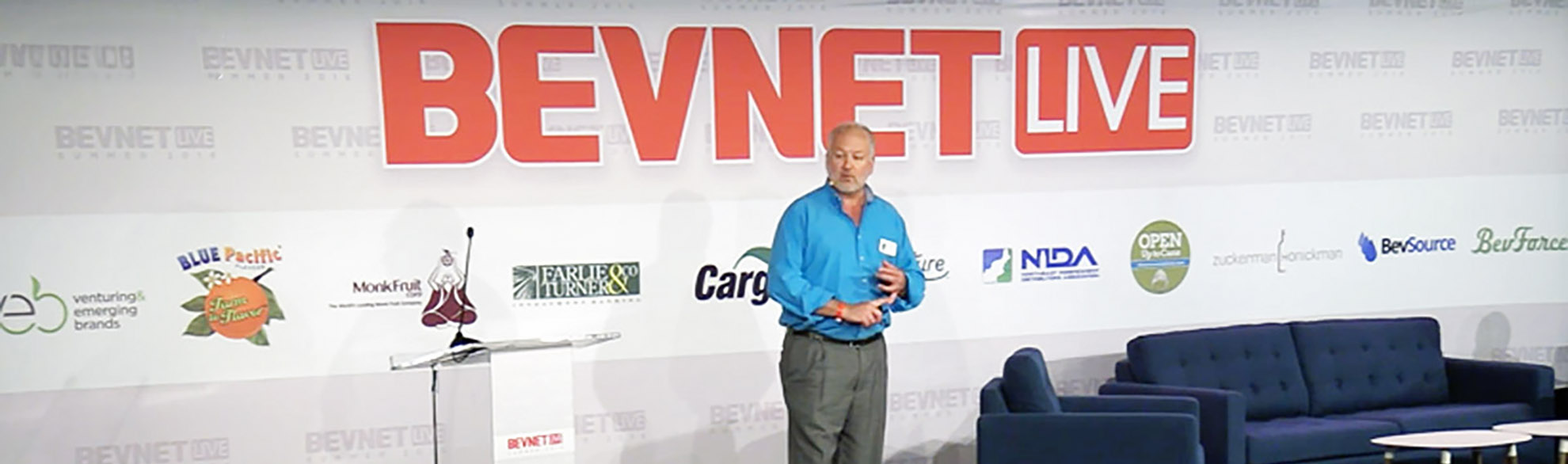
I help emerging CPG brands understand what is really driving retail performance, why what happened happened, and what the team should do next.
This mini-course gives you the category-management foundation behind stronger decisions, stronger retailer conversations, and a repeatable operating rhythm your team can continue to build.
Frequently asked questions
No. Larger brands may have more data and resources, but smaller brands can bring valuable shopper knowledge, emerging signals, product expertise, category perspective, and a focused recommendation.
No. You can begin with retailer POS, distributor reports, internal data, shopper feedback, store observations, retailer conversations, and other consistent evidence. The course also helps you identify what information is missing.
Complete one Retailer-Ready Category Opportunity Brief for one SKU, one retailer, and one live selling situation.
No. This is a foundational mini-course. It helps founders and commercial teams understand the decision logic, ask better questions, work more effectively with internal and external experts, and improve one real retailer conversation.
A generic sales course usually focuses on persuasion and presentation. This course focuses on retailer objectives, shopper behavior, category roles, evidence, competitive context, and the recommendation behind the conversation.
You have 14 days to review the course. If it does not give you practical ideas you can use to improve a real category or retailer decision, email Retail Solved and your purchase will be refunded.
The great equalizer
Start with one retailer. One SKU. One stronger category recommendation.
Instant access • Regular price $297 • 14-day guarantee