Getting on shelf is not the win.
Before your next buyer meeting, pressure-test the five questions that can make the retailer's decision easier: where the item belongs, who buys it, what the retailer gains, what you can show them they do not already know, and what happens after they say yes.
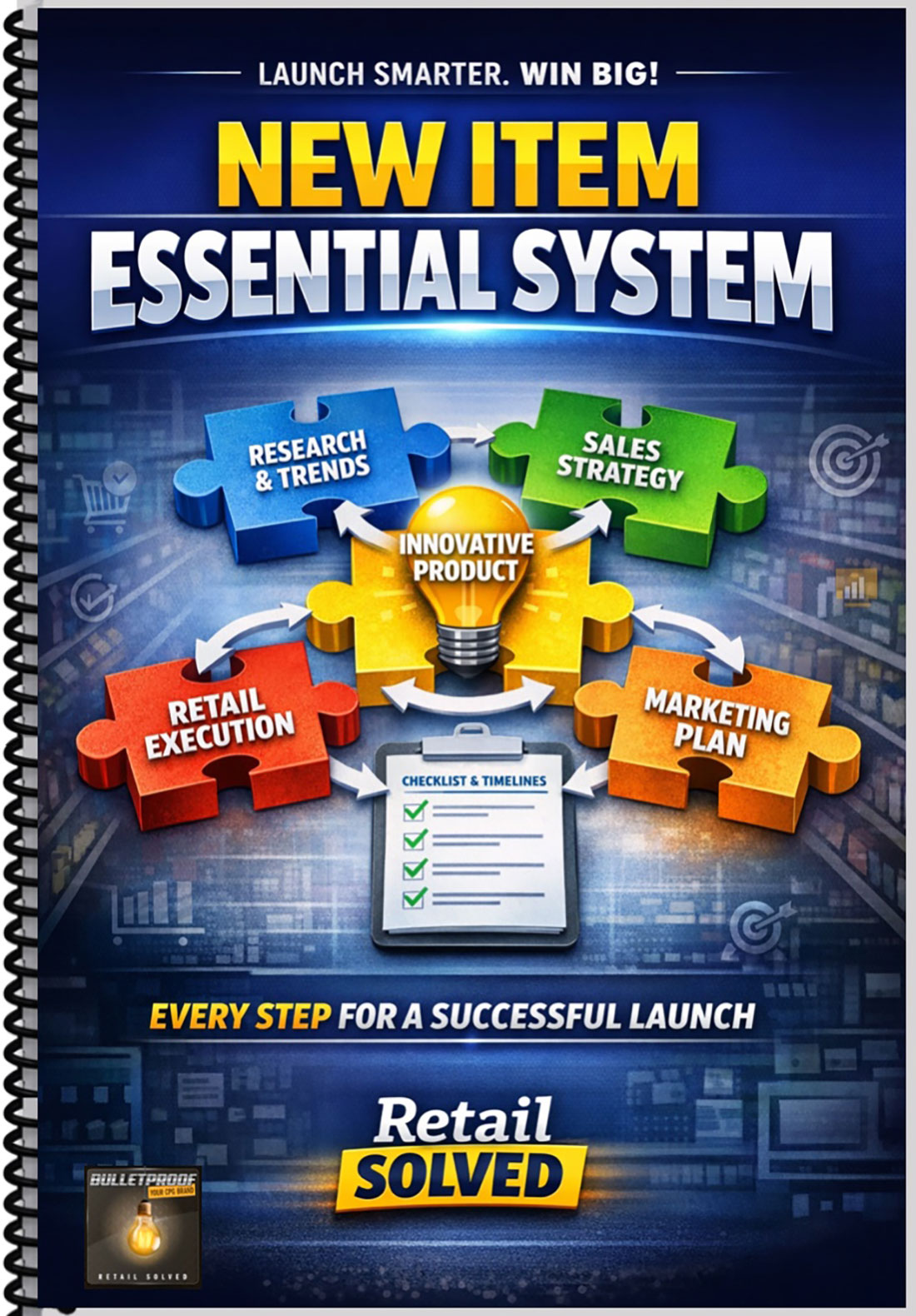
Make your next retailer decision easier.
Get the free New Item Essential System and pressure-test the shelf, shopper, retailer-value, evidence, and execution questions before the buyer has to ask them.
Make the item easier to say yes to
Help retailers understand the shopper problem, category role, shelf fit, and retailer value before your product asks for space.
Protect launch cash
Plan for trade spend, deductions, free fills, compliance costs, inventory pressure, and execution gaps before they drain runway.
Turn trial into repeat
Build the retail execution, shopper clarity, scorecard rhythm, and loyalty plan needed to keep the shelf after the first order.
Most new items do not fail because the product is bad.
They fail because they never had a real chance. The retailer did not fully understand the role the item played. The shopper did not understand why it mattered. The execution plan was not clear. The story was not turnkey. Or the brand treated authorization as the finish line instead of the starting line.
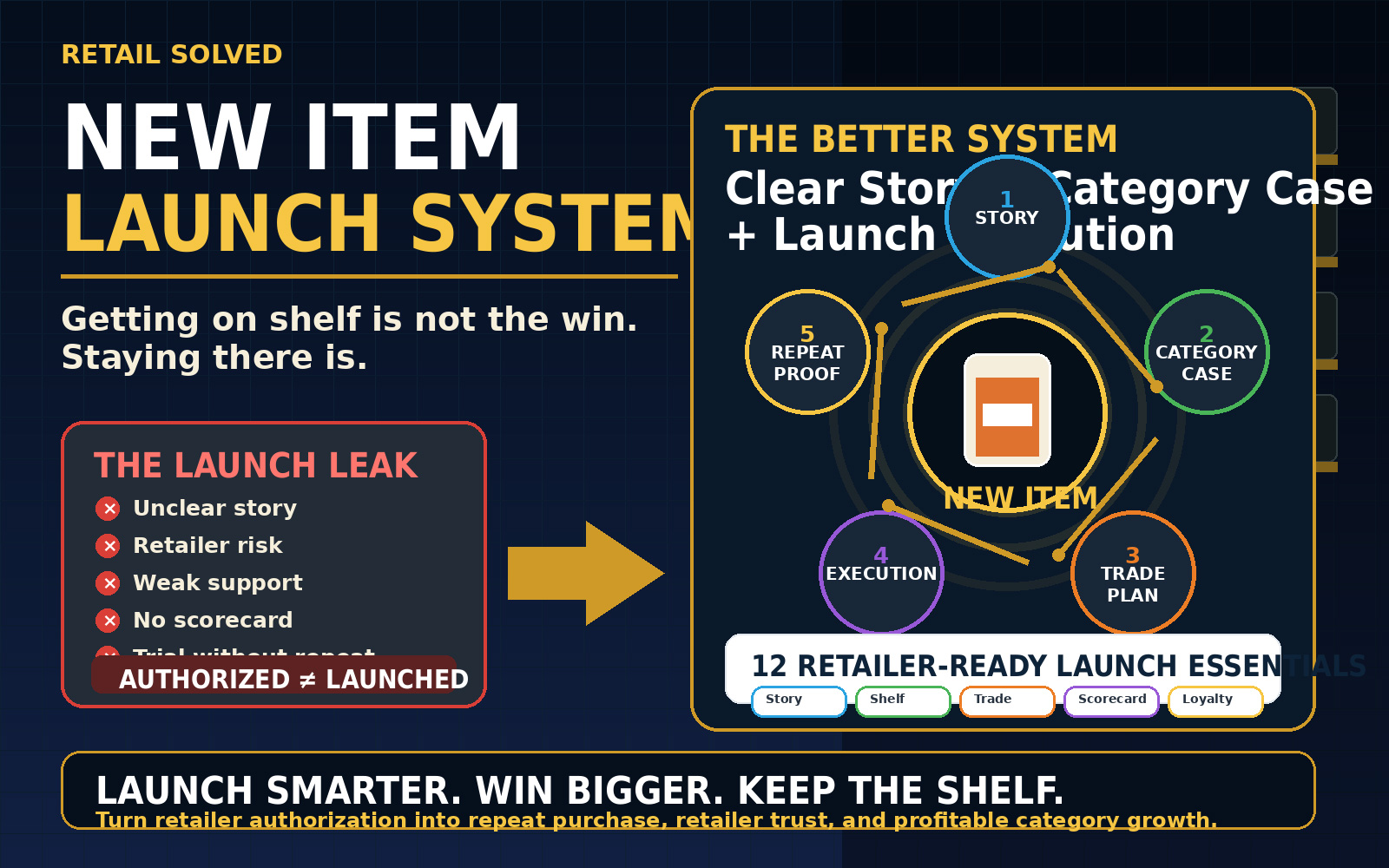
Build the retail muscle before the launch starts.
- How to clarify your brand message before it gets diluted
- How to show the retailer where the item fits and why it belongs
- How to protect launch cash from trade spend, deductions, and execution gaps
- How to bring the right numbers and the right story
- How to align brokers, distributors, sales teams, and retailer materials
- How to turn trial into repeat purchase and retailer trust
Make the retailer's decision easier — then make the launch easier to execute.
This is not about creating a longer deck. It is about building the retail fundamentals most brands were never taught, one practical win at a time.
Clarify the story
Define who the item is for, why shoppers care, where it belongs, and how it helps the retailer win.
Plan the execution
Align pricing, trade, deduction prevention, inventory, broker responsibilities, merchandising recommendations, and scorecard expectations.
Prove the launch
Track execution, repeat purchase, market basket value, retailer trust, and what to fix first if the launch underperforms.

Practical retail clarity from someone who has been there.
I'm Daniel Lohman, CPSA, founder of Retail Solved and host of the Bulletproof Your CPG Brand podcast. I built this guide to help CPG founders replace scattered tactics with clearer strategy, stronger execution, and smarter retail decisions.
The product was not the problem. The shelf story was.
A small challenger brand had meaningful retail distribution, but velocity was falling because the same product was being merchandised in different parts of the store. The retailer did not have a clear answer for where it belonged.
Instead of buying a broad data package, we started with the decision. We bought only the data needed to test the placement question, listened to real customers, and found a repeated use occasion: shoppers were using the product as a salad topping.
One shopper signal created a clearer retailer recommendation.
Now the brand could connect the shopper’s real use occasion, the right shelf location, the category role, and the evidence the retailer needed to understand why the placement made sense.
The lesson: do not bring the retailer more information simply because it exists. Bring the evidence that helps them make the decision.
Frequently Asked Questions
Who is this guide for?
This guide is for CPG founders and growth-stage brand teams who want clearer strategy, stronger execution, and a more practical way to grow with limited resources.
Is this only for brands already in retail?
No. The concepts apply whether you are preparing for retail, expanding into new accounts, improving execution, or trying to make better decisions with the resources you already have.
Is the guide really free?
Yes. Enter your first name and email and you’ll get immediate access to the guide, along with occasional practical founder-focused resources from Retail Solved.
What if I do not know what to fix first?
Use the Retail Fundamentals Check inside the guide. The goal is not to fix everything at once. Ask which retail fundamental is costing you the most right now, choose one weak point, and start there.
What happens after I download?
You’ll receive the guide instantly, followed by a few practical notes to help you use it. If the guide exposes a specific gap, I’ll point you to the next most relevant resource rather than bury you in more information.
Before your next buyer meeting, make the decision easier.
Use the free New Item Essential System to find the retail fundamental that needs attention first — and give the item a better chance after the buyer says yes.