
What Is Category Management?
A founder-first guide to winning with retailers, shoppers, and shelf strategy
The Simple Answer
Category management is the art and science of aligning shopper needs with the products on the shelf—so the entire category grows, not just one brand.
When done right:
- you earn shelf space
- you gain retailer trust
- your products become easier to sell
- your growth becomes more predictable
When misunderstood:
- you rely on reports instead of strategy
- you chase velocity instead of value
- and you quietly lose decisions at retail
Category management is not about data.
It’s about how decisions are made.
Table of Contents
- Why Category Management Feels Intimidating
- Category Management in Plain English
- What Category Management Is (and Is NOT)
- Why Most Brands Get It Wrong
- The Real Goal of Category Management
- The Three Pillars of Category Management
- How Retailers Actually Think
- The Role Brands Should Play
- How Category Management Drives Growth
- Category Management vs. Trade Marketing
- Where Data Fits (and Where It Doesn’t)
- Where AI Fits (and Where It Doesn’t)
- What Happens When You Get This Right
- Where to Go Next
1. Why Category Management Feels Intimidating
Most founders hear “category management” and think:
- “That’s a retailer thing.”
- “That’s for big brands with data teams.”
- “I just need better reports.”
- “AI will handle that.”
That reaction is completely understandable.
And completely wrong.
Category management feels complicated because it’s usually explained poorly.
In reality:
It’s not complicated.
It’s just unfamiliar.
Once you understand it, everything at retail starts to make more sense.
2. Category Management in Plain English
Think of category management like city planning:
- The shopper is the driver
- The category is the road system
- The products are destinations
- The retailer manages traffic flow
Most brands try to win by building a bigger billboard.
Smart brands help design a better road system.
That’s the difference.
3. What Category Management Is (and Is NOT)
❌ What people think it is
- Reports
- Dashboards
- Syndicated data
- Planograms
- AI-generated charts
That’s like bringing a tricycle to the Tour de France.
✅ What it actually is
- Translating shopper behavior into shelf decisions
- Using data as an input—not the answer
- Helping retailers reduce risk
- Making categories easier to shop
- Driving total category growth
Category management is a decision framework.
4. Why Most Brands Get It Wrong
Most brands operate in brand logic:
- “Here’s why we’re different”
- “Here’s why shoppers love us”
- “Here’s our growth story”
Retailers operate in category logic:
- Does this grow the category?
- Does it solve a shopper need?
- Does it simplify decisions?
- Does it reduce risk?
If you speak brand logic in a category conversation:
👉 you create friction
👉 you lose trust
👉 you lose space
Often without being told why.
5. The Real Goal of Category Management
The goal is simple:
Make it easier for shoppers to buy—and easier for retailers to win.
That means:
- better product selection
- better organization
- better placement
- better outcomes
When that happens:
- shoppers buy more
- retailers earn more
- brands grow faster
6. The Three Pillars of Category Management
At its core, category management is built on three fundamentals:
1. Create products shoppers actually want and need
This is about why people buy, not just what they buy.
Needs change based on:
- occasion
- use case
- channel
- price sensitivity
If your product doesn’t solve a clear need:
👉 it becomes shelf clutter
2. Make those products available where shoppers shop
Availability is not just distribution.
It’s relevance.
This includes:
- assortment strategy
- pack architecture
- channel fit
- shelf placement
Right product.
Right place.
Right time.
3. Use shopper needs to drive growth
This is where category management becomes powerful.
Done well, it:
- increases traffic
- improves conversion
- grows basket size
- builds loyalty
This is why retailers care.
7. How Retailers Actually Think
Retailers don’t think in terms of brands.
They think in term of:
- shoppers
- needs
- categories
- outcomes
They ask:
- Does this improve the category?
- Does it make shopping easier?
- Will it perform consistently?
- Will it create problems later?
If your product makes their job easier:
👉 you win
If it creates complexity:
👉 you lose
8. The Role Brands Should Play
Here’s the truth:
You don’t need to become a category management expert.
But you do need to understand:
- how retailers think
- how decisions are made
- how to speak their language
Brands that do this:
- gain leverage
- earn trust
- influence outcomes
Brands that don’t:
- react
- defend
- get replaced
9. How Category Management Drives Growth
Once you understand category management:
Everything changes.
- Your product development improves
- Your assortment gets tighter
- Your shelf strategy gets clearer
- Your conversations get easier
- Your trade spend gets smarter
You stop chasing growth.
You start designing it.
10. Category Management vs. Trade Marketing
These are often confused.
They shouldn’t be.
- Category Management = Strategy (WHY)
- Trade Marketing = Execution (HOW)
Category management defines:
- what should happen
Trade marketing defines:
- how it happens
Without category management:
👉 trade marketing becomes guesswork
11. Where Data Fits (and Where It Doesn’t)
Data is important.
But here’s the truth:
Data does not create strategy.
It supports it.
Data should:
- validate decisions
- highlight trends
- reduce uncertainty
But:
👉 Data without context creates noise
👉 Data without insight creates confusion
Having the right data is critical. Many brands use the wrong data to tell their story. Make certain the data you use fully aligns with the question you are answering.
12. Where AI Fits (and Where It Doesn’t)
AI is powerful.
We use it. We teach it.
But AI does NOT replace:
- judgment
- creativity
- experience
- shopper understanding
AI accelerates thinking.
It does not replace it.
AI will never replace the insights of a talented category manager. It will add clarity and make them more actionable.
13. What Happens When You Get This Right
When category management clicks:
- Retail conversations become easier
- Buyers trust you more
- Your products fit better
- Your promotions work harder
- Your brand grows faster
You stop asking for favors.
You start helping retailers win.
When done right, retailers look to you as their trusted advisor. This changes everything. Savvy retailers frequently give their partners incremental opportunities n to available to other brands.
14. Where to Go Next
If this made something click:
Start Here
Build your foundation and understand how everything connects
Go Deeper
30 Days to Profitable CPG Growth. It’s FREE. Click here to get started
Apply these principles step-by-step
Final Thought
Category management is not reserved for big brands.
It’s the advantage most small brands don’t realize they have access to.
Used correctly:
👉 it becomes your unfair competitive advantage
👉 it helps you get more from your available resources

Category Management Solutions
is Retail Solved
Category Management Solutions provides innovative ideas, actionable insights and strategic solutions to help your business gain a competitive advantage.
Combining the industry’s best practices and tools, Category Management Solutions implements a customized process that meets the demands and needs of your CPG or organic brand.
Our unique approach and expertise is designed for the small to medium size brands wanting to grow their business, build shopper base and expand brand shelf space. It includes strategies of the top national brands without all the added expense, saving you valuable time and money.
Our mission is to level the playing field between natural and conventional (mainstream) by helping natural organic companies make the most of their available resources, win at shelf and connect with consumers.
Our goal is to leverage the relationships between brands and retailers, creating a collaborative approach to better meet the needs of the shopper. Consideration of all three needs, the brand, the retailer and the shopper, is the foundation for a sustainable strategy that competes in the marketplace regardless of size or volume.
True Category Management
I use the term True Category Management to differentiate between the common perception of most as opposed to the measurable results Category Management can offer. The reality is that true Category Management, when done properly, can determine your level of success in the marketplace and so much more.
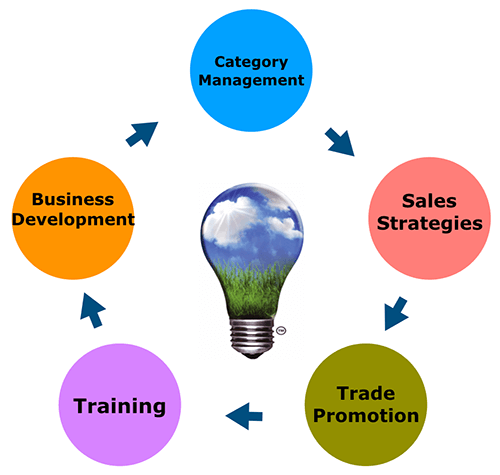
Category Management provides strategies to better connect with consumers, develop brands, manage trade spending, optimize product placement, and grow sales. Category Management is the science and art of combining business intelligence, logistics data, syndicated and POS data, consumer data, etc. to maximize business results. Category Management should touch every aspect of your business from research and development all the way through to the end consumer. It is the essential process that most companies either overlook or say they can’t afford to invest in. This is particularly true in the natural organic channel.
Let’s break down several of the components in Category Management:
Analytics: Analytics, both advanced and basic, are at the heart of category management. Analytics encompass all aspects of trade management, business planning, assortment analysis, consumer awareness, etc. Analytics go well beyond producing pretty charts and graphs. Analytics, when applied correctly, provide invaluable business insights and actionable recommendations. Analytics are the road map to achieving your goals.
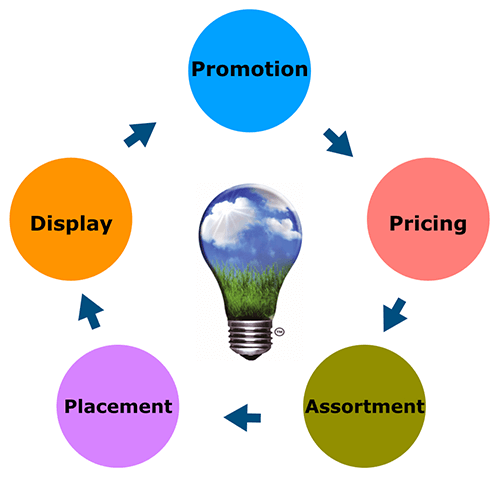
Trade Marketing Support: Trade marketing encompasses all aspects of promotion, pricing, product placement, assortment, merchandising, and brand development. Trade marketing includes analysis of historical events and it also includes projections for future sales trends.
Consumer Insights: Consumer insights encompass all consumer and shopper-related information including consumer buying and shopping habits, etc. Consumer insights provide an invaluable look into customer needs and wants, allowing manufacturers and retailers to focus on strategies. From reducing long checkout lines to providing the best selection of merchandise at the best possible price, the ultimate goal is to improve customer satisfaction. Consumer insights lets you identify and then focus on the needs and wants of the people who want to purchase your products. Your ability to meet their needs will determine your success.
Database Management: Database management, also known as business intelligence, encompasses several different data sources including internal and external data sources, syndicated data, retailer point of sales data, consumer data, marketing data, etc. Talented category managers can help you manage all of the different data sources bringing them together in a useful way. This maximizes efficiencies within the organization while building a strong sales story to help you win at shelf.
Shelf Management: Shelf management encompasses product placement and merchandising on retailer shelves. Shelf management helps the retailer maximize sales per linear foot, drive foot traffic to their stores, increase customer shopping basket size, and have a competitive advantage in the marketplace they serve.
Category Reviews: Category reviews serve as a review of category performance. They provide the framework for retailers and manufacturers to work together in setting goals, expectations, and strategic plans for future category growth. Scorecards can be used to help obtain and measure category growth objectives.
Retail Sales Support: Category managers can and should support sales at retail. Category management should offer an unbiased objective with the purpose of increasing retailer’s sales. Category managers provide fact-based selling to help support the traditional sales efforts. A savvy brand realizes that their ability to help the retailers sell their products while growing the retailer’s category is a true win-win. Most retailers will work hard to support manufacturers willing to help them compete more effectively.
Category management truly is the glue that unites the different business functions. It helps retailers identify opportunities for sustainable growth, increased sales, and increased foot traffic. When done correctly, it grows brands.
The Category Management Process – 8 Simple Steps
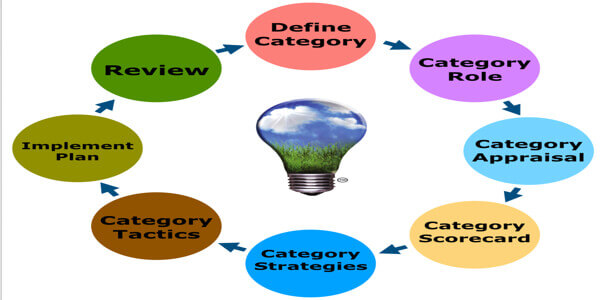
Category Management is typically an eight-step process. The best solution for your business is the one that encompasses all of the strategies needed to make your brand successful. The process you choose will significantly help you achieve the goals you set for your brand. It will be your roadmap to success. Your process will establish your brand as a true leader in the category and differentiate you from your competition.
A good first step is to understand (become an expert) of your retailer: their needs, goals and objective for the category, their profit and margin expectations, etc. Aligning your process with their Category Management process will help you stand out in their eyes and establish you as a true partner and potentially, the category captain.
1 Define Category: This step is perhaps the most important step, as it will define your understanding of the retailer, their customers, and the customers who buy your brand. The key question is how customers shop the category. The consumer decision tree will help you define the category. The consumer decision tree identifies the choices and the order of decisions customers make when they shop the category. Do they choose brand, sub-brand, quality, flavor/scent, packing, etc? Do they choose complimentary products during the same trip? For example, a customer shopping for your 24oz bottle of vanilla scented shampoo might also purchase your 24oz bottle of vanilla scented conditioner.
2 Category Role: Role identifies the importance of the category to the retailer. This is the role the retailer wants the category to play within their store. A category can be used to bring consumers into the store, increase foot traffic, support routine shopping needs, be a destination for seasonal/occasional purchases, a one-stop-shop, or for convenience. Retailers may assign different roles to categories within their stores depending on the customers they want to attract.
3 Category Appraisal: Knowing how the category performs at the retailer, within the market, and across different outlets is the next step. This should include a pricing, promotion, placement, and product assortment assessment. How does the category performance compare to the competition? Being able to measure your efforts/success is critical to knowing what strategies work and which don’t work.
4 Category Scorecard: Scorecard is the strategic allocation of work to be performed to reach the category goals and objectives. It is a summary of observations and analysis to help develop goals and targets for the category. It should include an assessment of consumer buying habits.
5 Category Strategies: Strategies are used to fine-tune the category role to meet scorecard objectives. Category strategies are designed to grow market share, increase sales, increase foot traffic, improve gross margin, increase return-on-investment, increase shopping basket size, and gain customer satisfaction. We will cover this more in depth later.
6 Category Tactics: Tactics include specific actions to be taken to achieve chosen category strategies. Promoting top brands on a front end-cap three times a quarter at a hot price point with a feature is just one example.
7 Plan Implementation: This is the action step that brings your strategies and tactics to life. This is where the proverbial rubber meets the road. The degree to which you accurately implement the plan will dictate its success.
8 Review and Assess Performance: This is where you analyze, measure, and review the results. This should be on-going and used to help you refocus and make changes if necessary.