
Retail Clarity Decision Tools™ for CPG Brands
YOUR TEAM HAS THE REPORTS.
WHY IS THE NEXT DECISION STILL UNCLEAR?
Your team may already have the data, dashboards, software, and smart people.
I help you identify what the business is really trying to decide, what context is missing, and what will make the next move clearer and easier to repeat.
✔️ Start with one recurring decision.
✔️ No polished deck or cleaned data required.
✔️ Built for your team to own and maintain.
If a custom tool is not the right answer, I will tell you.
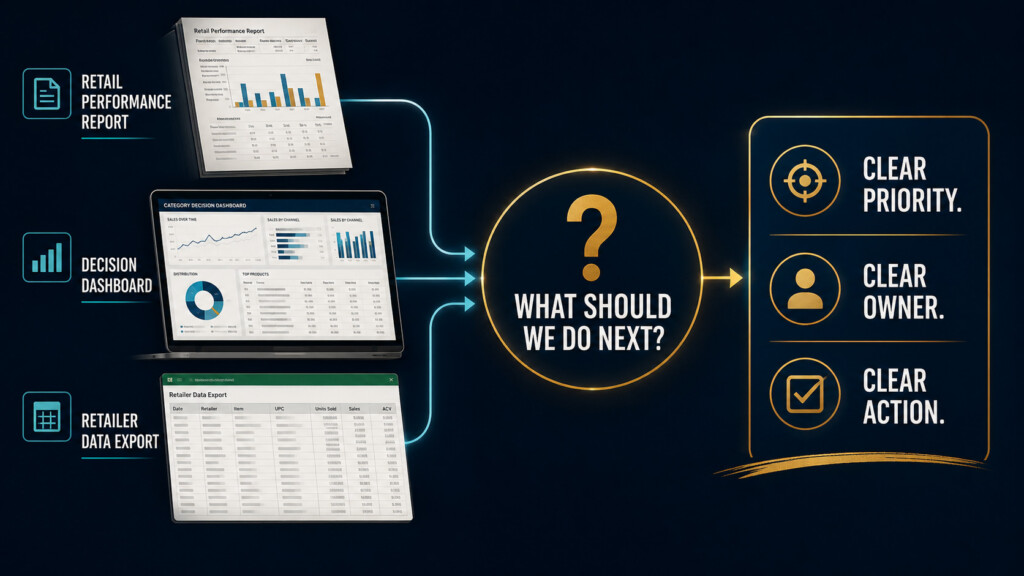
MORE PEOPLE. MORE SOFTWARE. SAME DECISIONS.
Your brand has grown. The team has grown. The reporting has grown. Yet the same important questions still return to the founder or leadership team.
That does not mean the people or tools failed. It usually means the business has not built a shared way to turn all that information into a decision everyone understands and can act on.
A strong Decision Tool connects the question, the right evidence, the owner, and the next action. It gives the team a simpler, repeatable way to decide what to do next without starting over every time.
The goal is not another dashboard. It is a business that becomes easier to operate as it grows.
THIS MAY BE THE RIGHT NEXT STEP IF:
✓ The same retail, trade, distribution, or reporting decision keeps returning to the founder or leadership team.
✓ Sales, finance, operations, marketing, and outside partners are working from different versions of the truth.
✓ Your dashboard shows what happened, but the team still debates what to do next.
✓ Important information is scattered across retailer portals, spreadsheets, broker updates, syndicated data, and internal reports.
✓ You are considering another hire, platform, or outside partner but want to define the real problem before spending more.
You do not need to fix the whole company. Start with one decision that matters now.
START WITH ONE DECISION
Not every problem requires a new dashboard.
Sometimes the existing report needs a clearer purpose. Sometimes the team needs a focused Decision Tool. Sometimes the real gap is ownership, operating rhythm, or the way different functions are interpreting the business.
Bring one report, workflow, or recurring question. I will help you determine which problem you actually have.
What happens on the call
1. Clarify the decision
What is the business trying to understand or decide?
2. Identify the gap
Is the missing piece the question, owner, evidence, operating rhythm, or tool?
3. Recommend the next step
I will tell you honestly whether the current report can be improved, a focused Decision Tool makes sense, or the team needs a broader capability project.
Most calls take 30 to 45 minutes. The calendar reserves an hour so we do not have to rush.
The call determines which starting point fits the problem. It does not assume you need the largest project.
SEE HOW A DECISION BECOMES A WORKING TOOL
This five-minute walkthrough shows how I begin with the business question, connect the available evidence, and build a practical tool the team can use, maintain, and act on.
No polished deck or perfectly cleaned data required. Start with one report, workflow, or recurring question.
Prefer to scan first? Keep scrolling to see real tools, proof, and outcomes.
BUILT FROM REAL RETAIL DECISIONS
NOT GENERIC DASHBOARD WORK
I built the original SPINS Distribution Tracker so natural brands could see how their products were performing by retailer and quantify the dollar opportunity associated with closing important distribution gaps.
That tool helped make store-level opportunity visible and actionable. It also opened the door to a broader suite of category-management tools and later informed the core-distribution system I built inside Simply Good Foods.
I have built decision tools from nearly every seat in the retail system: store operations, sales, broker management, category management, manufacturer, founder, syndicated data, trade, deductions, and execution.
That matters because a report can be technically correct and still fail if it ignores how shoppers buy, how retailers decide, how trade affects margin, or how the team actually works.
The goal is not to give your team another file.
The goal is to help everyone see the same problem, agree on what matters, assign ownership, and act.
THESE ARE DECISION TOOLS
NOT REPORTS
A report summarizes information. A Decision Tool helps the team make one recurring business decision.
It should make five things easier to see:
What changed?
Why does it matter?
Where should the team focus?
Who owns the next action?
What should happen next?
That is why every tool begins with the business question, not the spreadsheet.
The value is not the file. It is the clearer decision and stronger action that follow.
WHAT CLIENTS SAY ABOUT THE DIFFERENCE
Craig told me not to call these reports.
He said they were tools.
That distinction stuck because it is exactly the point.
Reports show information.
Tools help teams act.
WHY MOST DASHBOARDS STILL LEAVE THE DECISION UNCLEAR
Most dashboards begin with the data that is already available.
They summarize sales, distribution, promotions, inventory, margin, deductions, or execution. That information is useful, but it rarely explains the entire business problem.
The team still has to connect what happened inside the business with what the shopper chose, what changed in the category, and what action should happen next.
THE RETAIL CLARITY LENS
A useful Decision Tool should help the team answer four questions:
1. What happened?
Sales, distribution, margin, inventory, promotions, deductions, and execution.
2. Why did it happen?
Shopper needs, behavior, value, repeat purchase, and reasons for choosing.
3. What influenced it?
Competition, retailer activity, assortment, pricing, placement, and category conditions.
4. What should happen next?
The priority, owner, corrective action, investment decision, and next commercial move.
The data tells you what happened. The full context helps you decide what to do next.
WHAT A DECISION TOOL CAN HELP YOUR TEAM DO
Every project begins with one recurring business decision. The tool is then built around the action the team needs to take.
Protect the core business.
Identify which lost authorizations, distribution gaps, retailers, and items deserve attention first.
Improve promotion decisions.
Determine whether an event created profitable, incremental demand or simply moved sales and margin.
Prevent deductions and recurring losses.
Trace where the problem begins, quantify the impact, and identify what process needs to change.
Focus employees, brokers, and outside partners.
Clarify priorities, ownership, expectations, and the next action.
Allocate resources more effectively.
Compare retailers, markets, products, promotions, and opportunities using consistent decision rules.
Build stronger retailer-ready recommendations.
Turn shopper, category, competitive, financial, and execution signals into a clearer commercial story.
The tool may be a dashboard, scorecard, tracker, analysis, or workflow. The format follows the decision. The decision does not follow the template.
WHAT MAKES THIS DIFFERENT
Most specialists see the business from one primary seat.
I have worked across store operations, sales, broker management, category management, manufacturer teams, founder leadership, syndicated data, trade, deductions, and retail execution.
That wider view matters because a decision can look right from one department’s perspective and still weaken the larger business.
A promotion may increase sales while reducing margin. More distribution may create inventory and service problems. A broker may close a gap while the wrong item enters the wrong stores.
Retail Clarity connects the shopper, retailer, category, financial, execution, and ownership implications before the team acts.
The tool is only useful if it works in the real business, not just in the spreadsheet.
BUILT FOR TEAMS THAT NEED TO ACT
Most CPG teams do not need another complicated reporting system. They need a simpler way to make recurring decisions and act before the opportunity disappears or the problem gets more expensive.
A Decision Tool may help the team determine:
Which distribution gaps deserve attention first.
Whether a promotion created profitable, incremental demand.
Where deductions begin and what process needs to change.
What an employee, broker, distributor, or outside partner should do next.
Better internal decisions also help the brand keep its promise to shoppers through consistent quality, reliable availability, and trusted value.
The tool should make the decision easier, the owner clearer, and the next action harder to ignore.
BRING ONE DECISION.
LEAVE WITH A CLEARER NEXT STEP.
You do not need a polished presentation, a completed analysis, or perfectly cleaned data.
Bring one report, workflow, or recurring question your team still debates.
1. CLARIFY THE DECISION
We begin with what the business is trying to understand, decide, or improve.
2. IDENTIFY THE REAL GAP
We determine whether the missing piece is the question, ownership, evidence, operating rhythm, or the tool supporting the decision.
3. CHOOSE THE MOST PRACTICAL NEXT STEP
I will tell you honestly whether the current report can be improved, a focused Decision Tool makes sense, or the issue requires a broader capability project.
Most calls take 30 to 45 minutes. The calendar reserves an hour so we do not have to rush.
If a custom tool is not the right answer, I will tell you.
SEE HOW REAL DECISION TOOLS TURN DATA INTO ACTION
Each example began with a specific retail or commercial question. The tool was then built to expose the missing context, focus the team, and make the next action clearer.
These are sanitized examples, followed by one client’s experience with the work. They are not generic templates or fictional dashboards.
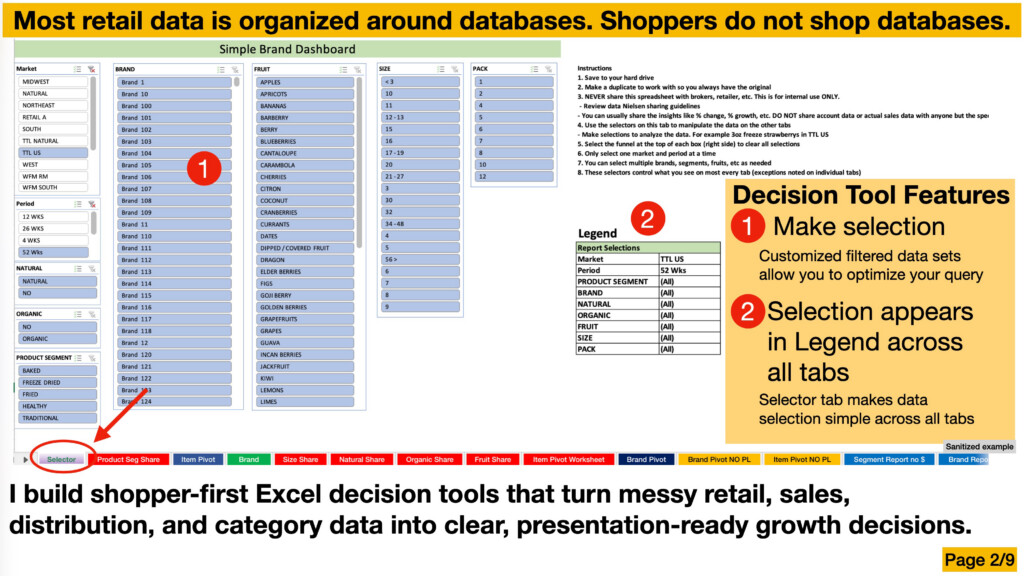
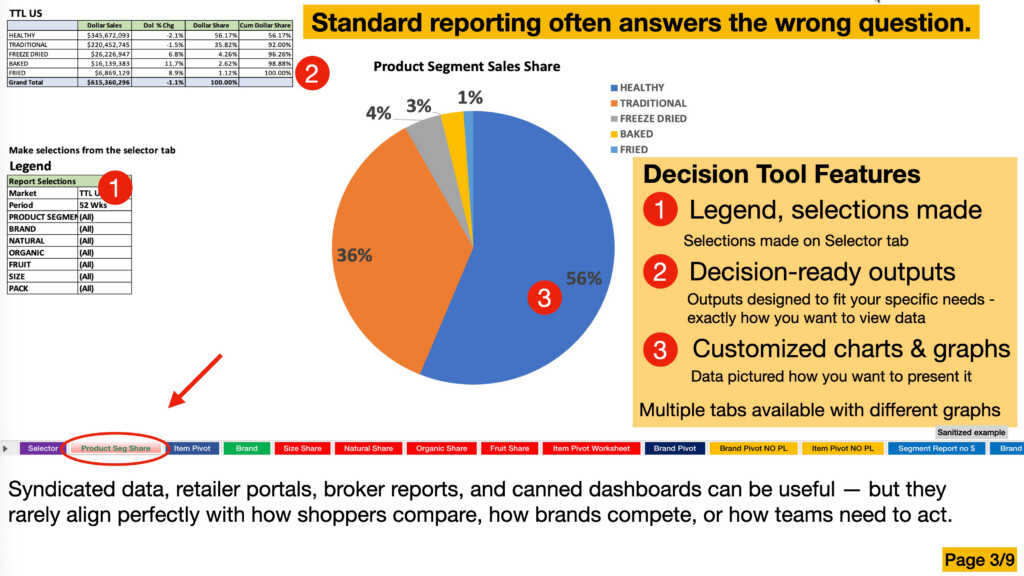
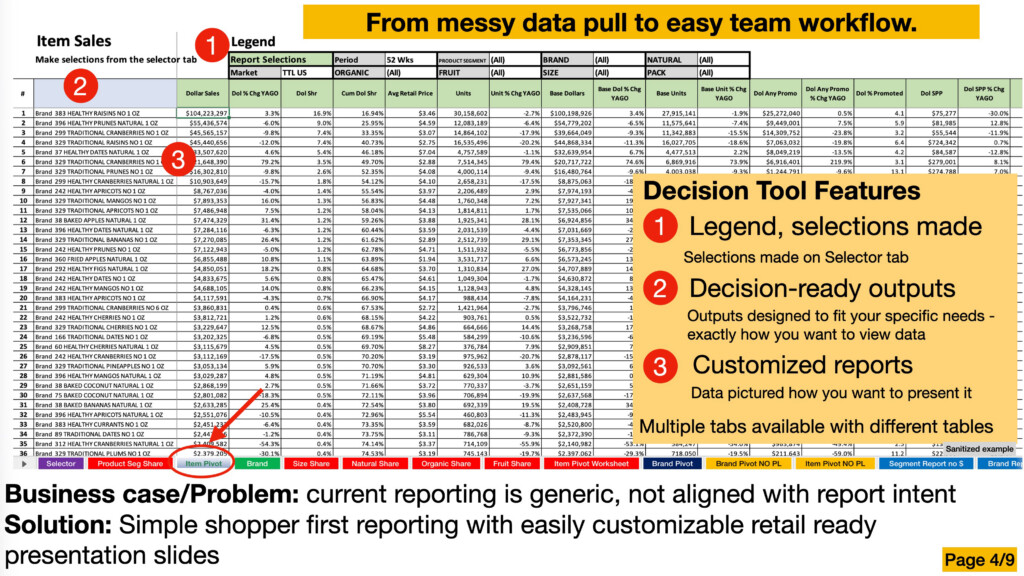
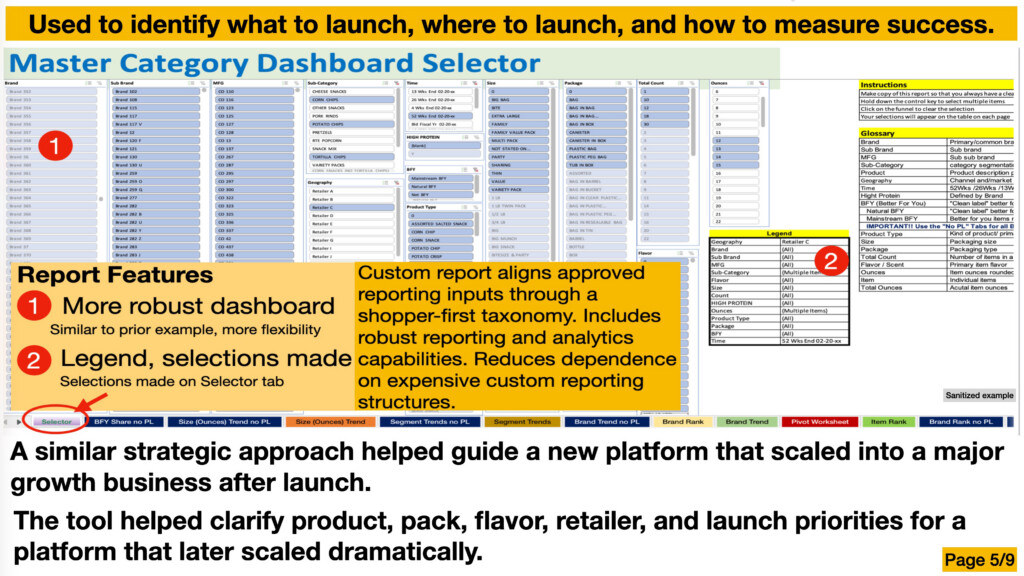
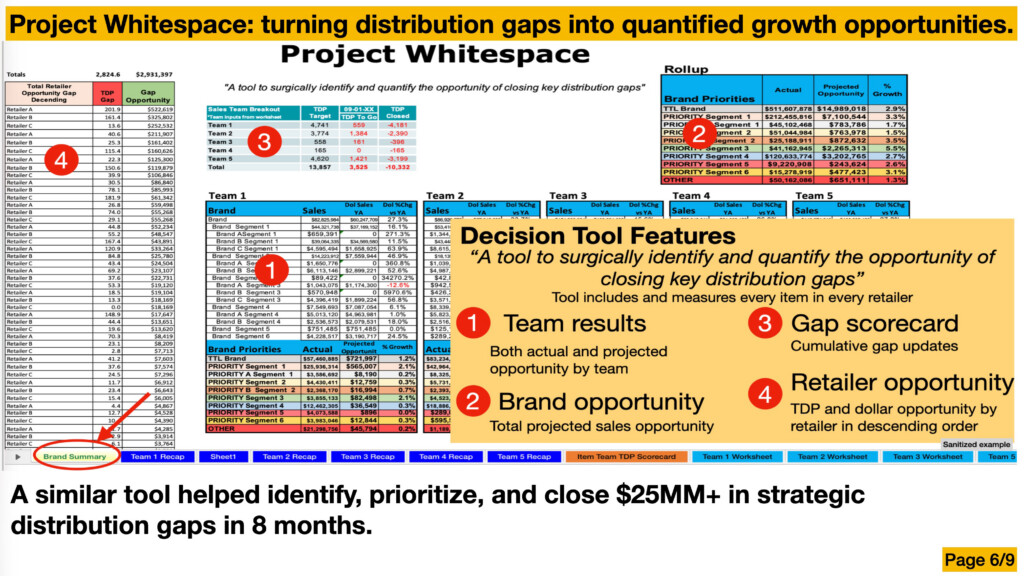
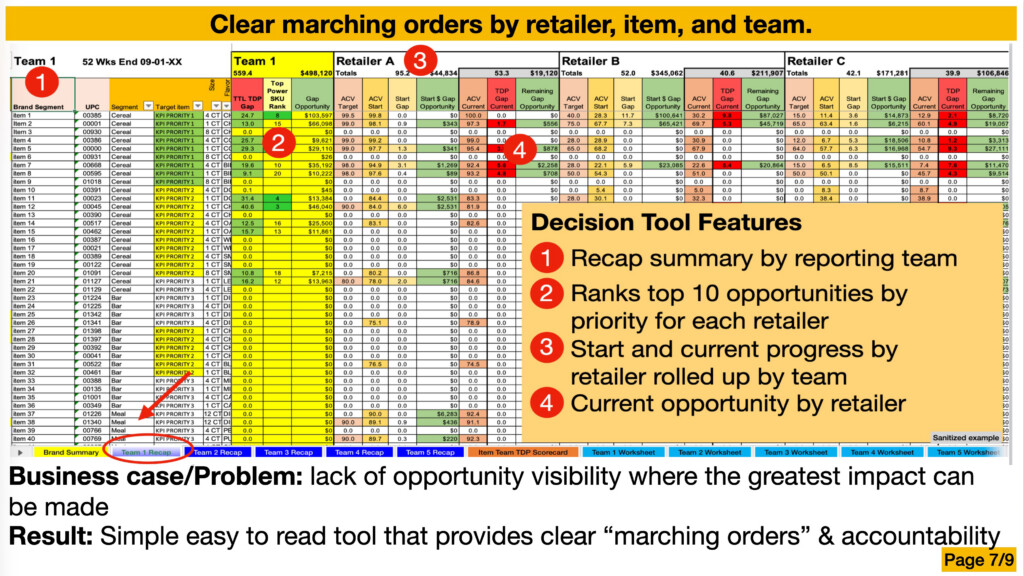
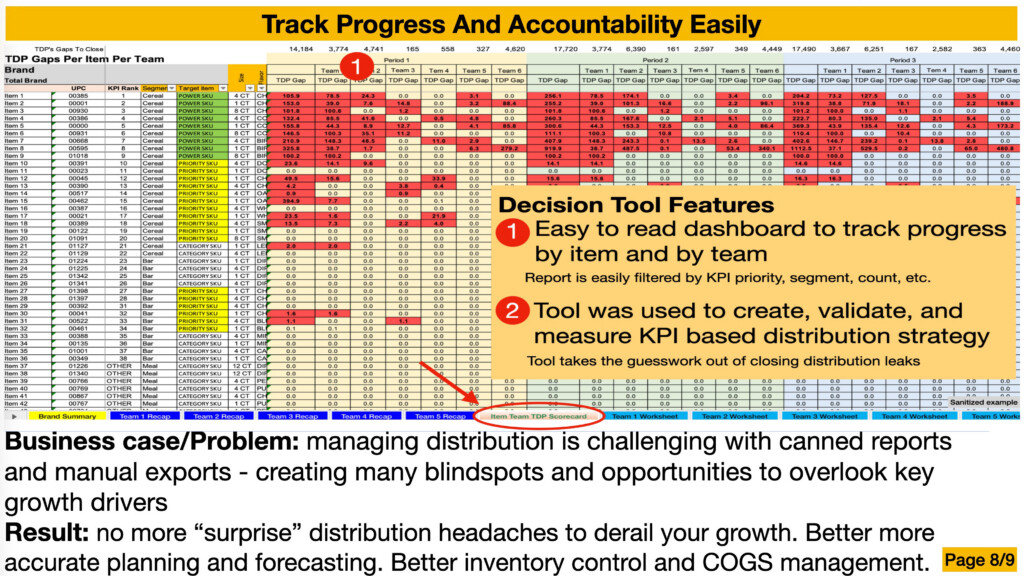
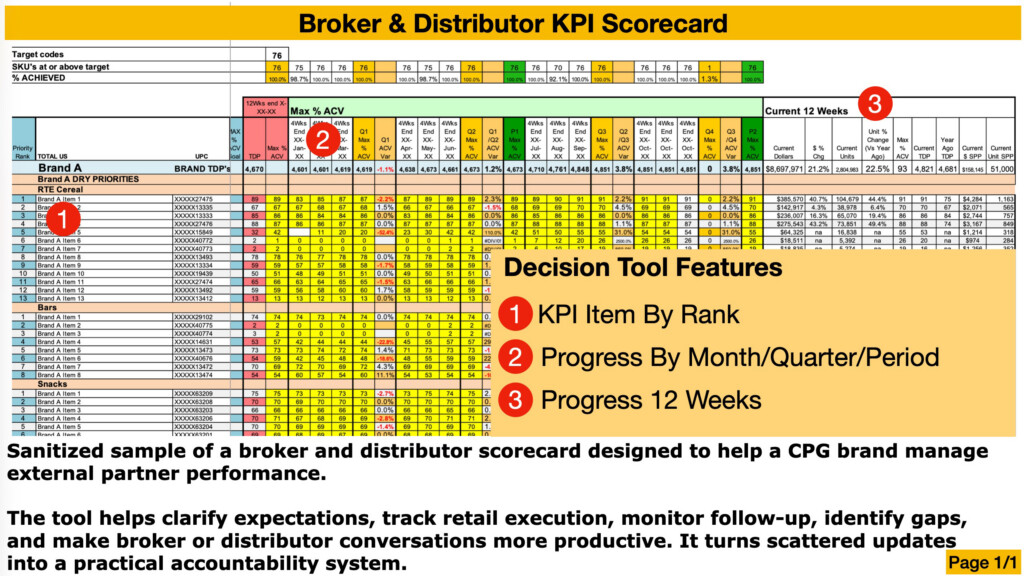
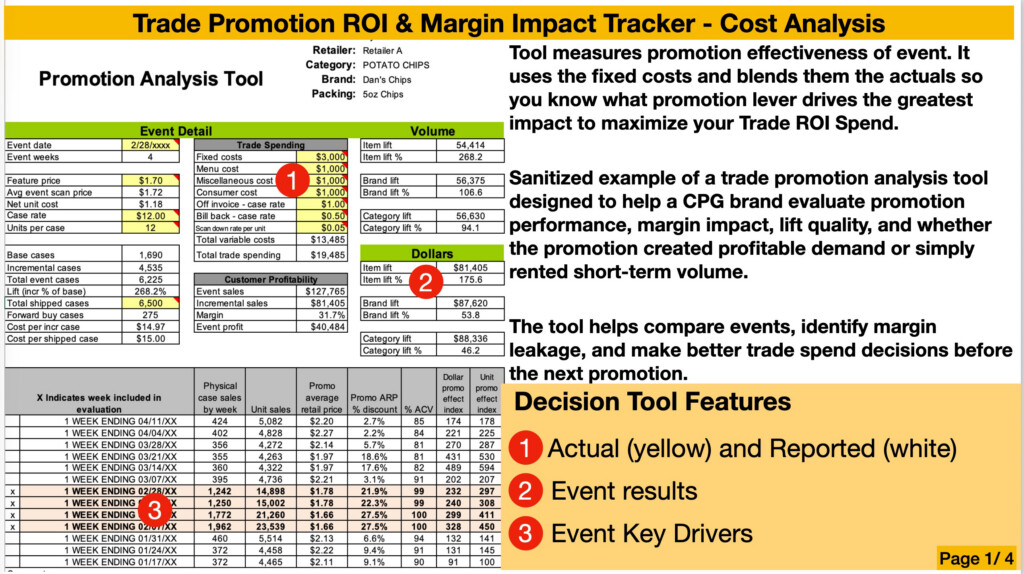
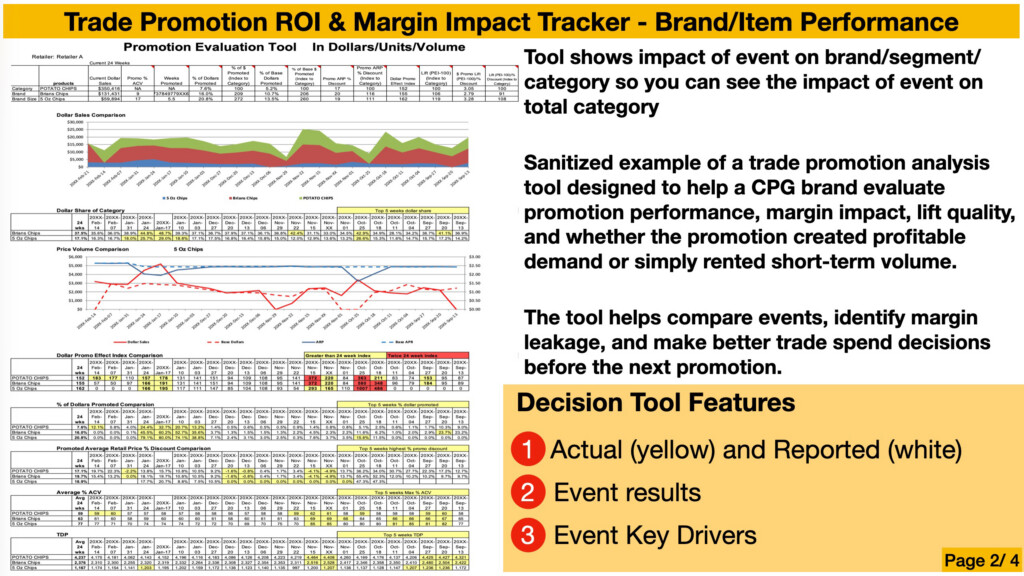
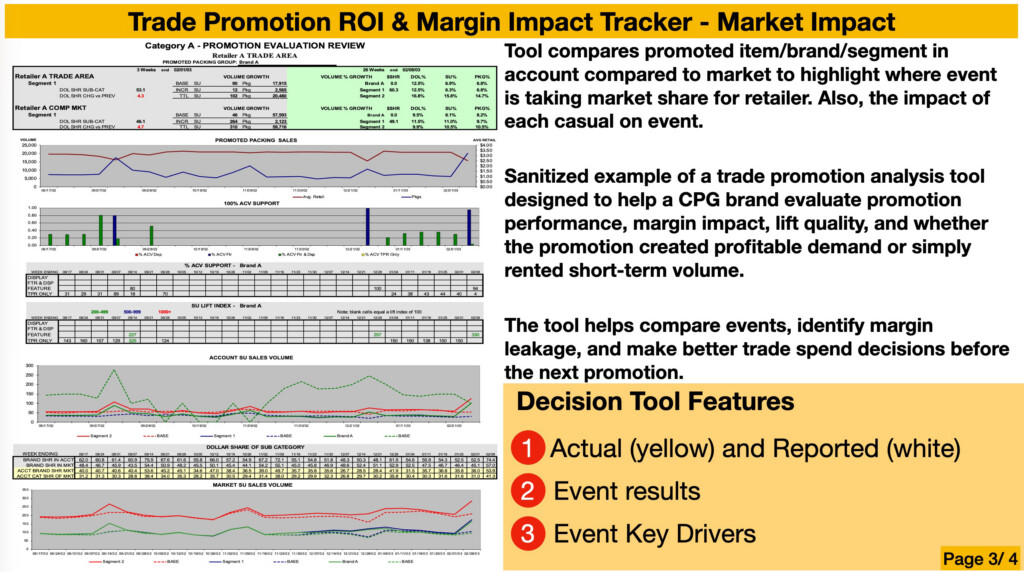
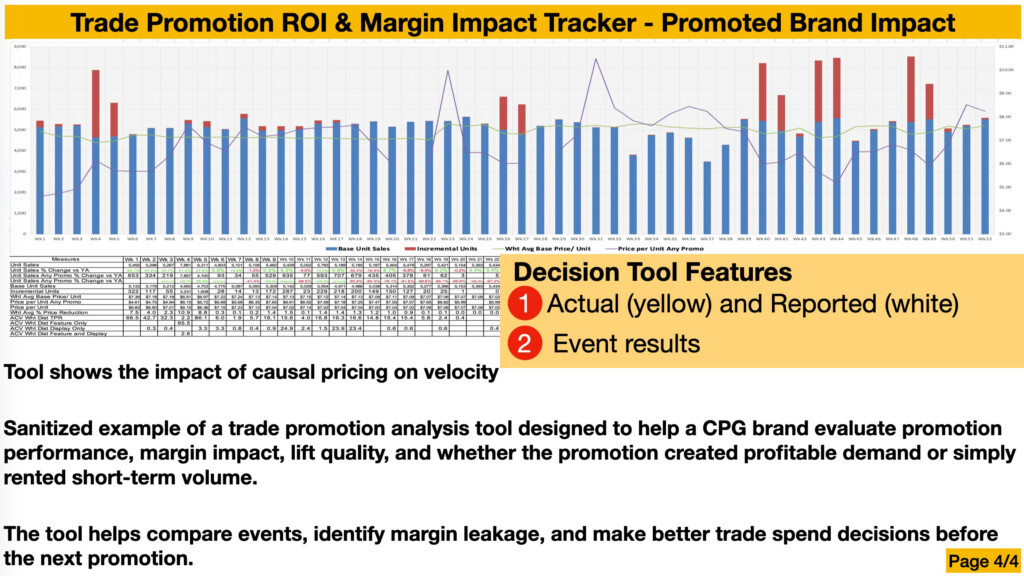
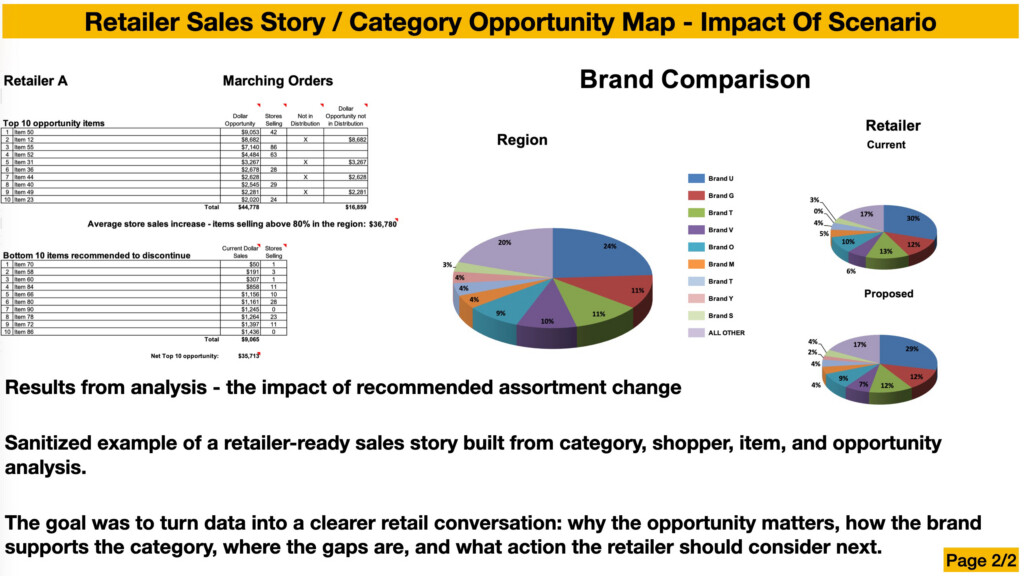
The appearance changes because the business question changes. The standard remains the same: make the decision easier to see, own, and act on.
BUILT FOR HANDOFF
NOT CONSULTANT DEPENDENCE
Your team should not need to call the consultant every time the data changes or someone asks a new question.
Every tool is built so the people closest to the business can understand the logic, update the inputs, recognize important exceptions, and use the output inside their normal operating rhythm.
EVERY HANDOFF SHOULD INCLUDE:
A clean, familiar structure
The tool should fit the way the team already works whenever possible.
Documented logic and definitions
The team should understand what the measures mean, where the information comes from, and what the tool can and cannot answer.
An update-friendly process
The inputs should be practical to maintain without rebuilding the file every month.
Clear outputs and next actions
The tool should make priorities, ownership, and recommended actions easier to communicate.
Training and handoff
The people using the tool should know how to maintain it, interpret it, and explain it to others.
The goal is not to make your team dependent on me. The goal is to leave the team stronger than I found it.
HOW A FOCUSED DECISION TOOL SPRINT WORKS
The goal is to solve one important recurring decision without turning the project into a company-wide transformation.
1. DEFINE THE DECISION
We clarify the exact question, intended owner, people using the output, deadline, and action the tool needs to support.
2. REVIEW WHAT YOU ALREADY HAVE
We examine the reports, retailer exports, syndicated data, broker updates, business rules, shopper context, and other information currently supporting the decision.
No perfectly cleaned data is required to begin.
3. DESIGN THE DECISION LOGIC
We define the measures, hierarchy, opportunity ranking, selectors, exceptions, and outputs needed to make the decision clearer.
4. BUILD AND TEST WITH THE PEOPLE WHO WILL USE IT
I create the tool, test the calculations and business rules, review important exceptions, and refine the output with the team.
5. TRAIN, DOCUMENT, AND HAND OFF
Your team learns how to update the inputs, interpret the results, explain the recommendation, and use the tool inside its regular operating rhythm.
Before paid work begins, you receive a clear scope, deliverables, timeline, and fee.
QUESTIONS TEAMS ASK BEFORE WE START
WHAT WILL I LEAVE THE FIRST CALL WITH?
A clearer definition of the decision, the most likely gap, and the most practical next step.
You will know whether the current report can be improved, a focused Decision Tool makes sense, or the problem is broader than reporting.
WHAT IF I DO NOT NEED A NEW TOOL?
I will tell you.
The right answer may be a clearer question, stronger ownership, a better workflow, or a change to the report you already have.
DO I NEED CLEAN OR PERFECT DATA?
No. Messy data is normal.
Begin with the reports, spreadsheets, retailer exports, broker updates, invoices, deduction files, or other information your team currently uses. Sensitive details can be removed before they are shared.
WILL MY TEAM BE ABLE TO MAINTAIN THE TOOL?
That is the goal.
The tool is built for handoff, with documented logic, an update-friendly process, clear outputs, and training for the people who will use it.
CAN YOU WORK WITH OUR SOFTWARE, BI, DATA, OR ANALYTICS PARTNER?
Yes.
Your business should own the strategy, definitions, decision rules, and operating requirements. A technology or data partner can then help automate and scale the approved process.
HOW MUCH DOES A PROJECT COST?
Every project is scoped around the decision, available information, users, required output, and timeline.
You will receive a clear scope, deliverables, timing, and fee before any paid work begins.
More proof from brands, data partners, and industry leaders
BRING ONE DECISION.
LET’S MAKE THE NEXT MOVE CLEARER.
Your team does not need another generic dashboard or a company-wide transformation.
Bring one report, workflow, or recurring question your team still debates. We will determine whether the gap is the question, ownership, evidence, operating rhythm, or the tool supporting the decision.
No polished presentation or perfectly cleaned data required.
If a custom tool is not the right answer, I will tell you.
That gives the visitor one final action after they have reviewed all the proof.