Shoppers don’t connect to features—they connect to stories. In Day 11 of 30 Days to Profitable CPG Growth, I break down why storytelling is the most powerful skill a founder can develop. You’ll learn how human-centered stories build belief, why your customer—not your brand—is the hero, and how to translate your WHY into a selling story that drives loyalty and repeat purchase. This episode shows how great storytellers turn everyday shoppers into passionate brand evangelists.
Storytelling is a powerful tool for building a brand that resonates with customers. By understanding your customer’s internal dialogue and articulating your brand’s value proposition, you can create a compelling story that positions your product as the guide to their success. This approach fosters loyalty, advocacy, and ultimately, brand growth.
Action step: write your story in 3 lines: problem → promise → proof.
Is your story consistent everywhere?
For additional inspiration listen to the following Bulletproof Your CPG Brand podcast episodes:
🎙️ 52 Selling With a Master Brand Storyteller Strategies, Jon Sebastiani with Sonoma Brands
🎙️ 8 Brand Building Strategies for Lasting Success, Joel Warady with Enjoy Life Foods
🎙️ 102 Sales Success Begins With Storytelling Techniques, Beau Haralson with Human Design
Day 11 of the Free 30 Days to Profitable CPG Growth
Tip of the day: Become a consistent and impassioned master storyteller. Shoppers want personalization which begins with a human focus. Stories that resonate and connect with shoppers inspire brand evangelism and fierce loyalty
Listen where you get your podcast








Welcome to day 11: Episode 283 — How To Become a Great Storyteller and Connect With Customers If you want to build a brand that people love—really love—you must become a master storyteller. Not in the sense of crafting clever taglines or flashy ads, but in the deeper sense of communicating your mission, your WHY, and your value in a way that resonates with your ideal customer. Because here’s the truth: Human-centered stories inspire belief.
Belief inspires loyalty.
Loyalty inspires evangelism. Today’s episode is about helping you turn your brand story into fuel—a strategic, emotional, transformative tool that converts shoppers into committed fans. Let’s dive in. Why Storytelling Is the Most Powerful Skill You Can Develop Now we bring it all together into the story your brand tells—your selling story. Because it’s your story that makes people: This is how you keep customers coming back again and again. The Data Behind Why Your Story Matters Let’s take one example. This pattern repeated across: This is why telling your story matters—because your shoppers are the ones driving growth. Why Big Brands Fail at Storytelling This is why your storytelling—rooted in your WHY and your customer’s lived experience—becomes a massive competitive advantage. Become the Expert in Your Customer’s Internal Dialogue Here’s my favorite example. Break the Curse of Knowledge But customers don’t know what you know.
They don’t think how you think.
They don’t live inside your brand every day. Your job is to: Tell your story the way they need to hear it Why Your Customer Is the Hero—Not Your Brand Your job is to: How to Craft a Story That Resonates Through out this series I talk about building a community or tribe of your loyal shoppers. This is the best, easiest, and most effective way to learn how to speak your ideal customers language. You can, and should, use their quotes in your marketing - the story you tell. Day 11 Action Item: Build Your Story Framework My brand exists to help them… In Closing: Stories Build Brands. Stories Build Movements. Stories Build Loyalty. Tomorrow, in Episode 284, we’ll talk about How to Influence Retailers by Using Storytelling + Shopper Insights in Your Sales Pitch, so you can walk into any meeting with unmatched clarity and confidence. For additional inspiration listen to the following podcast episodes: If you think about it, what's the difference between a $3 and a $3,000 bottle of wine? In this episode, John talks about exactly why a customer will choose the $3,000 bottle of wine, believing that it's certainly worth the value. They talk about the different attributes within the wine. John leverages those strategies when he's talking about his brands. He uses a term which is one of my favorite terms called the Romance of Storytelling. He talks about the romance of the brand that he's selling and why that brand is unique and how that brand solves a problem. For example, Krave is more than just a commoditized jerky that you would find at a gas station. Instead, this is a premium brand that aligns with the premium customer, that wants quality, that wants a soft jerky that tastes great. In this episode, John shares a lot of other stories about how he leverages master brand storytelling to build his brands, to develop a connected community around his brands. Episode 8 Brand Building Strategies for Lasting Success, Joel Warady with Enjoy Life Foods In this episode, Joel talks about how he leverages some of these strategies to put the customer first, and how by doing that, he's developed a connected community around the brand, Enjoy Live Foods. This is a great episode, because Joel is a master brand builder. In this episode, Joel shares what works and what didn't work, and how he uses these strategies to give Enjoy Live Foods a commanding lead in their category. Episode 102 Sales Success Begins With Storytelling Techniques, Beau Haralson with Human Design The way you do that is you develop a personal relationship with that customer, with that human. And the way you do that is you develop a personalized selling story so that you attract and connect with those consumers on a much deeper level. Tip of the day: Become a consistent and impassioned master storyteller. Shoppers want personalization which begins with a human focus. Stories that resonate and connect with shoppers inspire brand evangelism and fierce loyalty Thank you for listening. This episode has an accompanying video with illustrations and additional information I can’t share on an audio podcast. You can watch it at retailsolved.com/30daychallenge. You can get the show notes for this episode by going to retailsolved.com/session283. Tomorrows episode is How To Make It Easy For Shoppers To Buy Your Brand This episode will build on today’s conversation. Thank you for listening. I look forward to seeing you in the next episode.
Enter your name and email address below and I'll send you periodic brand building advice, tips and strategies.
Day 11 of 30 Days to Prosperity
Shoppers want personalization. But personalization doesn’t begin with data—it begins with humanity.
Everything we’ve covered up to this point builds toward today’s lesson.
Your WHY.
Your customer.
Your community.
Your mission.
Your values.
Know you
Like you
Trust you
Believe in you
Stay with you
Advocate for you
And despite what you’ve been told, price is rarely the primary motivator for why shoppers choose your brand.
If that were true, luxury products would be declining.
Premium categories would be shrinking.
Better-for-you brands wouldn’t be leading growth.
But they are.
And here’s the data that proves it.
When I was invited to write the feature article for the 2016 Category Management Handbook, I reached out to Nielsen and obtained all-outlet data across categories.
I broke it down by:
Category
Subcategory
Channel
Attribute segment
And here’s what I discovered:
Natural, organic, and better-for-you items were driving the majority of category growth—across every category I analyzed.
Mainstream products were flat or declining when isolated.
Better-for-you products were accelerating.
In dairy:
The entire dairy category was up 1.5%
Organic dairy alone was up 12.4%
Yet organic represented just 9.8% of the category
When I removed organic products from the analysis, the category was essentially flat.
Snacks
Frozen
Bakery
Center store
Beverages
Personal care
Your brand is part of a movement.
Big brands often reduce customers to broad stereotypes:
“All women shop the same.”
“All men shop the same.”
“All millennials value the same things.”
They commoditize shoppers.
They commoditize messaging.
They commoditize entire categories.
And they talk AT consumers, not WITH them.
But customers buy what they want, the way they want, for reasons only they understand. Most data sets don’t capture these nuances, especially in natural where assortment varies dramatically and data sets lack granularity.
You need to understand:
What goes on in your customer’s mind the moment they reach for your product.
Why they choose you over the cheaper alternative.
What trade-offs they consider.
What problem they’re trying to solve.
If I buy the cheapest mainstream bread, I’m hungry before I finish eating it.
If I buy a premium mainstream loaf, I may stay full for 3–4 hours.
But if I buy a nutrient-dense organic bread, I stay full even longer.
Yes, the organic bread costs more per unit.
But the cost per use is actually lower.
This is a selling story.
This is value.
This is what your ideal customer already understands instinctively.
Your job is to articulate it—clearly, passionately, consistently.
Founders often assume customers know:
How clean their ingredients are
Why sourcing matters
The functional benefits
The nutritional differences
The environmental impact
The product attributes that justify the price
This is the curse of knowledge—assuming customers understand the same things you do.
Walk in their shoes
See from their perspective
Learn what they care about
Speak their language
This unlocks loyalty.
This makes it memorable.
This makes you relatable.
And this builds belief.
One of my favorite books on storytelling in business is StoryBrand by Donald Miller.
He compares brand storytelling to cinematic storytelling:
Luke Skywalker is the hero.
Yoda is the guide.
Yoda never steals the spotlight.
He doesn’t brag.
He doesn’t lecture.
He teaches, supports, and equips Luke to succeed.
You are Yoda.
Your customer is Luke.
Help them solve a problem
Guide them through their struggle
Show them what’s possible
Foreshadow the transformation they’ll experience
And inspire them to take the next step
This is masterful storytelling.
This is how you create belonging.
This is how you create evangelists.
Here’s the formula:
1. Start with your WHY.
Why your brand exist. Why it matters. Why customers should believe you.
2. Identify the problem your customer is facing.
What pain point hasn’t been articulated yet?
3. Position your product as the guide—not the hero.
Your job is to help customers succeed.
4. Demonstrate the transformation your product creates.
What will life look like after they adopt your brand?
5. Reinforce the emotional payoff.
Hope. Relief. Confidence. Identity. Health. Alignment.
The more you anchor your story in the customer’s lived experience, the stronger your resonance and retention.
Today, complete the following prompts:
1. My customer is struggling with…
(physical, emotional, functional, lifestyle-specific)
2. They haven’t been able to solve it because…
The transformation they’ll experience is…
The emotional benefit they want most is…
When my brand becomes part of their life, they will…
(feel, act, live, behave differently)
This becomes the backbone of your selling story.
A great story:
Resonates
Humanizes
Differentiates
Inspires
Converts
Retains
Big brands can outspend you.
But they cannot out-story you.
They cannot match your authenticity.
They cannot replicate your WHY.
Make sure you’re subscribed.
Share this episode with a founder who needs to stop “selling features” and start telling transformational stories.
And download the series guide to go deeper into todays topic:
Your story is powerful.
Now let’s use it to create raving fans.
Episode 52 Selling With a Master Brand Storyteller Strategies, Jon Sebastiani with Sonoma Brands
If you're not familiar with Sebastiani, it's a premium wine that has a huge following and a lot of loyal consumers. This is the legacy John came from. John applies that strategy, those strategies that he learned selling wine, to selling brands.
Discover the secrets of effective brand building. Joel Warady with Enjoy Life Foods a leading gluten-free and allergy-free brand. By focusing on both the natural and conventional channels, and by continuously innovating and expanding their product line, Enjoy Life Foods has become a leader in the category.
Our customers want you to communicate with them on human terms. Your customers need to realize that you're talking to them as real people, not as just numbers on a spreadsheet like a lot of big brands do.
Sign up to receive email updates
FREE Trade Promotion ROI Calculator:
Click Here To Maximize Sales And Profits
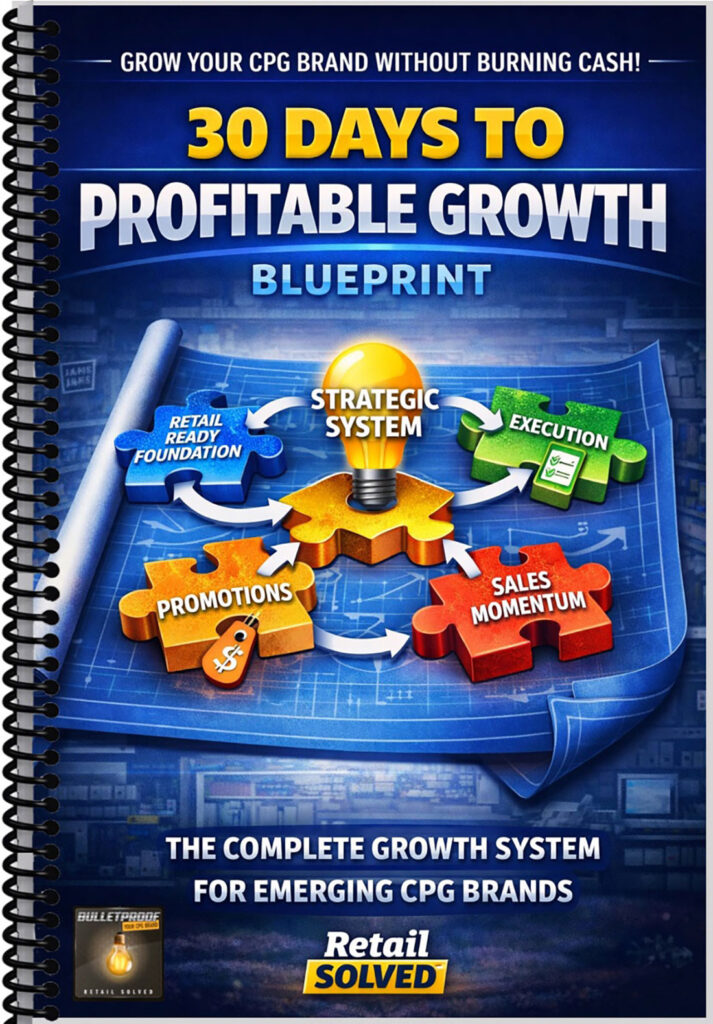
Image is the property of CMS4CPG LLC, distribution or reproduction is expressively prohibited.