Roughly 25% of your gross sales go to trade spend—and most brands have no idea if it’s working. In Day 21 of 30 Days to Profitable CPG Growth, I break down how to measure the true value of promotions so you stop burning cash and start extending your runway. Learn how to separate promo spikes from real growth, evaluate base sales lift, and turn trade marketing into a strategic weapon retailers and investors respect.
Trade marketing, often misunderstood as just discounts and promotions, encompasses a wide range of activities aimed at getting products into shoppers’ hands. To maximize the impact of promotions, brands should focus on increasing base sales rather than just generating short-term spikes. By analyzing the effectiveness of promotions and understanding their true impact on base sales, brands can extend their runway, improve profitability, and build stronger relationships with retailers.
Action step: define break-even lift before you run the promo.
Do you know your promo break-even point?
For additional inspiration listen to the following Bulletproof Your CPG Brand podcast episodes:
🎙️ 155 What is Trade Marketing Maximizing Revenue, Kurt Kaiser with ViaggioTrade
🎙️ 200 Trade Promotion Review Strategies – Enhance Your Profits
Unlock effective Trade Promotion Review Strategies
🎙️ Webinar Trade Management Essentials To Grow And Scale Your Brand https://RetailSolved.com/TradeStrategies.
Day 21 of the Free 30 Days to Profitable CPG Growth
Tip of the day: The best way to reduce wasted spending and explode sales is to maximize your promotional effectiveness. Get more runway to grow and scale, better valuations, and give retailers a reason to say yes to your recommendations.
Listen where you get your podcast








Welcome to Day 21: Episode 293 — How To Know the Value of Your Promotions: An Effective Strategy
Day 21 of 30 Days to Prosperity If you’re feeling like promotions are a necessary evil… you’re not alone. Here’s the hard truth: Today we’re going to fix that. Let me explain. Why Trade Marketing Feels Like a Black Hole The problem is that most brands: The Real Purpose of a Promotion (That No One Tells You) Consider this Those dollars could be much better spent: There are better and more cost effective ways to reward existing customers that we’ll talk about in future episodes. This is called subsidized volume. Why We Start With One Item, One Retailer, One Promotion So let’s simplify. Base Sales vs. Promotion Spikes: The Metric That Actually Matters If: Now back to the retailer’s perspective. Why I Doubled Down on Trade Marketing Founders are always wondering The answer was clear:
Trade marketing. So I launched a free weekly webinar series focused on: Why am I telling you this? The Trade Promotion ROI Calculator: Your New Best Friend The tool: Why Software Alone Won’t Save You But they rarely: Day 21 Action Item: Put One Promotion Under the Microscope In Closing: Turn Trade Marketing Into a Strategic Weapon When you know the value of your promotions, you stop guessing. In upcoming episodes, we’ll go deeper into deduction management, promotion planning, and how to align your trade strategy with your overall business plan so every dollar has a job and a measurable result. This is how you Build a Retail Execution System That Guarantees Performance at Shelf — the nuts and bolts that will ensure you never lose a sale again due to poor execution. Subscribe and share this with another founder For additional inspiration listen to the following podcast episodes: Episode 200 Trade Promotion Review Strategies – Enhance Your Profits Webinar Trade Management Essentials To Grow And Scale Your Brand https://RetailSolved.com/TradeStrategies. This is my most popular webinar. There are several additional trade marketing focused webinars on the events tab on my website. You’ll want to check them all out. Tip of the day: The best way to reduce wasted spending and explode sales is to maximize your promotional effectiveness. Get more runway to grow and scale, better valuations, and give retailers a reason to say yes to your recommendations. Thank you for listening. This episode has an accompanying video with illustrations and additional information I can’t share on an audio podcast. You can watch it at retailsolved.com/30daychallenge. You can get the show notes for this episode by going to RetailSolved.com/Session293. Tomorrows episode is Maximize Productivity Prioritize Important Tasks. This episode will build on today’s conversation. Thank you for listening. I look forward to seeing you in the next episode.
Enter your name and email address below and I'll send you periodic brand building advice, tips and strategies.
Most founders I talk to say some version of:
“We promote because we’re told we have to…
but honestly, I don’t really know if it’s working.”
Roughly 25% of a brand’s gross sales go to trade spend
70% or more of that is wasted or ineffective
Whether you agree with the exact percentages or not is irrelevant.
If even a fraction of your trade spend is wasted, that’s lost runway, lost growth, and Lost Negotiation Power.
We’re going to talk about how to know the value of your promotions, so you can:
Reduce wasted spending
Explode the impact of the promos that do work
Improve your brand valuation
Give retailers a strong reason to say “yes” to your recommendations
This is the lesson that can do most to extend your runway while boosting your sales and profitability - if you learn this well.
Trade marketing, broadly defined, is:
Everything required to get your product into a shopper’s hands.
Most people think “trade” = discounts + promotions.
That’s part of it. But it also includes:
Placement fees
Billbacks and deductions
Displays and features
In-store merchandising support
Temporary price reductions
Free fills and programs
Throw money at promotions because “that’s what you’re supposed to do”
Measure success only by the spike during the promo week
Assume “more promotions = more sales”
And when sales slow down?
The First instinct is to: cut staff, cut costs, cut investment
The Second instincts to: run another promotion and hope
Neither of those gets to the root issue.
The real question you should be asking is:
“Which promotions actually create long-term, profitable growth—and which ones are just burning cash?”
That’s what we’re solving for today.
Most brands use promotions to:
“Drive volume”
“Hit quarterly numbers”
“Make the buyer happy”
But the primary focus of a promotion should be:
To introduce your product to new customers and convert them into loyal repeat buyers - period!
If I’m already a committed loyal fan of your brand, I’m going to buy your product whether it’s on deal or not. That’s the goal, right?
So when you deeply discount to “reward” me, you are:
Giving away margin uncessarly
Training me to wait for promotions
Shrinking your runway
Reducing funds available for innovation and growth
Reaching new households
Funding strategic displays
Supporting new store launches
Building long-term awareness
Innovating
This is why the intent behind your promotion matters as much as the mechanics.
Trade marketing feels overwhelming because it’s complex:
Multiple SKUs
Multiple retailers
Different calendars
Different margins
Different expectations
For now, I want you to think in terms of:
One item. One retailer. One promotion. One window.
Because if you can’t evaluate one promo clearly, adding complexity will only make things worse.
On that single promotion, ask:
How much product did we need?
On the shelf
In the back room
In the distribution center
Did we have out-of-stocks during the promotion?
During weekdays?
Over the weekend?
On feature days?
What did the pricing look like?
Was it deep enough to be noticed?
Was it so deep that we threw away margin?
What happened after the promotion?
Did base sales grow?
Did they return to the exact same level?
Did they actually decline?
Here’s why that matters.
When you run a promotion, your sales will usually spike or increase. That’s expected. Its called lift.
But there are two critical questions:
What is your base sales level before the promotion?
What is your base sales level after the promotion?
Note: base sales are sales in the absence of a promotion. This is the benchmark you use to measure everything. The goal is to increase base sales after a promotion ends.
Sales spike during the promotion
Then drop right back to where they were
…you did not grow your business.
You just rented volume.
Retailers love the spike in the moment, but if:
There’s no sustained increase in base sales
There’s no incremental shopper
There’s no long-term category lift
…then much of that spend was wasted.
What retailers really want is:
More traffic
Sustainable, profitable growth
A competitive advantage in their market
Promotions that deliver only a sugar high—and with no base lift—do not help them win long-term.
This is your opportunity.
If you can design promotions that build base sales rather than just spikes, you become far more valuable than brands who just chase short-term volume. That especially includes brands that discount deep and pull profitable dollars out of the category.
Let me take you behind the curtain for a moment.
Trade marketing is where you can make the biggest impact on your bottom line and extend your runway. I made it my mission to become an expert in trade marketing throughout my career and I want share my playbook with you.
How to raise more money
How to pitch investors
How to survive the next round
I decided to niche down in a very different way.
I asked:
“Where can I help brands recover the most money and create the most runway, using skills the rest of the industry is overlooking?”
It’s one of your biggest line items on your P&L
It’s one of the least understood areas for brands of all sizes
It’s where the most waste is - where you leak the most cash
And it’s one of the easiest places to recover profit if you know what you’re doing
Trade marketing fundamentals
How to evaluate promotions
How to stop bleeding cash through deductions
How to use promotions strategically instead of reactively
And I built my Trade Marketing Essentials course as a soup-to-nuts roadmap to mastering this skill.
Because this isn’t just theory for me.
These are the same tools and strategies brands are using right now to reclaim margin, grow base sales, and dramatically improve their valuations.
To make this practical, I created a free Trade Promotion ROI Calculator. Its available on my website retailsolved.com
It’s designed to help you:
Plan a promotion
How much will it cost?
What lift do you need to break even?
What outcome do you need to justify the expense?
Evaluate a promotion after it runs
What actually happened?
Did you make or lose money?
Did base sales increase?
Game out scenarios
What if I promoted less frequently but more strategically?
What if I adjusted depth?
What if I layered in social or email support?
Does the math for you
Lets you email yourself the results
Creates a record you can review over time and compare with other scenarios
Here’s why that’s important.
When you can walk into a retailer and say:
“We’ve analyzed our last three promotions. Here’s what worked, here’s what didn’t, and here’s a smarter strategy that will grow both your profit and our base sales…”
You immediately separate yourself from 90% of the brands they work with.
You might be thinking:
“We already have trade promotion software. Aren’t we covered?”
Most TPM tools are like QuickBooks for trade marketing
They track what you spent
They organize deductions, accruals, and budgets
All of that is helpful. Keep using it.
Teach you how to design effective promotions
Help you understand what promotion levers drive the greatest impact
Imagine the opportunity for you if you can get even 10–20% better at this than your competitors.
Here’s what I want you to do:
Pick one SKU at one retailer and one recent promotion.
Calculate:
Trade spend (all-in)
Incremental volume during promo
Base sales before and after
Ask:
Did my base sales grow after the promotion?
Did we actually make money?
Did we attract new shoppers or just subsidize existing ones?
If the answer isn’t clear, that’s your signal:
You don’t have a trade spending problem.
You have a trade understanding problem.
And that’s fixable.
Promotions should never feel like a black hole.
They should be one of your sharpest tools for to:
Extending your runway
Funding innovation
Improving your valuation to investors
Attracting investors on your terms
Giving retailers a clear, fact-based reason to say “yes”
You become the founder who can say:
“Here’s how we make your category more profitable.”
“Here’s how we convert your shoppers into loyal buyers.”
“Here’s how we can grow base sales—not just promo spikes.”
That is incredibly attractive to retailers.
It’s also incredibly attractive to investors.
Make sure you’re subscribed, share this episode with another founder who’s drowning in trade spend, and grab the free Trade Promotion ROI Calculator and resources I built to support you.
Remember:
Every wasted promotion shortens your runway.
Every smart promotion extends it.
Let’s make sure your next one gives you the edge you deserve.
Downloads the free series guide to go deeper into these strategies
Episode 155 What is Trade Marketing Maximizing Revenue, Kurt Kaiser with ViaggioTrade
Explore what trade marketing is and see why it is crucial for brands to optimize their trade spending to enhance revenue. Trade marketing is crucial for brand growth and sustainability. Effective trade marketing strategies can significantly impact a brand’s bottom line and longevity.
Unlock effective Trade Promotion Review Strategies - Where To Begin & What To Focus On for better brand growth and profit. This podcast episode focuses on trade marketing, specifically the costs associated with getting products on store shelves and into the hands of shoppers.
Sign up to receive email updates
FREE Trade Promotion ROI Calculator:
Click Here To Maximize Sales And Profits
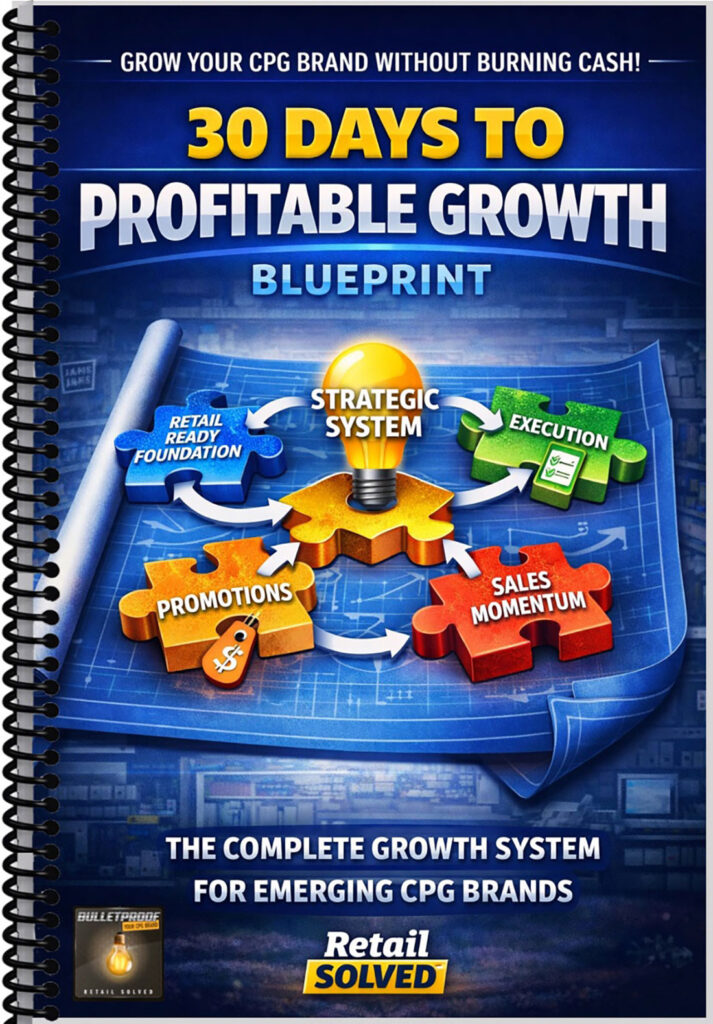
Image is the property of CMS4CPG LLC, distribution or reproduction is expressively prohibited.