Knowledge wins at retail—but applied knowledge changes the game. In Day 20 of 30 Days to Profitable CPG Growth, I show how combining book smarts with street smarts turns brands into indispensable retail partners. You’ll learn how to spot patterns competitors miss, anticipate retailer needs, and build playbooks that protect the shopper experience and drive predictable growth. This episode explains why retailers reward brands that make their job easier—and how to become that brand.
Brands that succeed in retail combine book smarts with street smarts to become indispensable to retailers. Street smarts involve anticipating retailer needs, understanding shopper behavior, and adapting strategies to each account. By becoming the trusted go-to resource for retailers, brands can move from chasing opportunities to having opportunities brought to them.
Action step: build your “retail playbook”: placement, promo, execution, story.
What’s your weakest pillar today?
For additional inspiration listen to the following Bulletproof Your CPG Brand podcast episodes:
🎙️ 137 The Future of Retail Insights from a Industry Leader – Whole Foods, Walter Robb with Stonewall Robb and Whole Foods Market
🎙️ 61 Success Strategies For Natural Retailers and Brands, Corinne Shindelar with INFRA
🎙️78 Best Practices To Build Legacy Brands for Success, Scott Jensen with Rhythm Superfoods and Stubb’s Legendary Bar-B-Q
Day 20 of the Free 30 Days to Profitable CPG Growth
Tip of the day: Knowledge is power – especially in this industry. Raise above your competition by becoming the trusted go-to resource retailers turn to get the edge they deserve.
Listen where you get your podcast








Welcome to Day 20: Episode 292 — Knowledge Is Power: How To Win at Retail Effectively
Day 20 of 30 Days to Prosperity If there’s one theme that runs through everything in this 30-day series, it’s this: Today you’re going to learn how to rise above your competition by becoming the trusted go-to resource retailers turn to when they need an edge. Because once that happens, everything changes: Book Smarts vs. Street Smarts — Why Most Brands Get Stuck Push-Button Category Management Won’t Win the Game Street Smarts = Seeing What Others Don’t See Let me give you an example. Retailers Need You to Make Them Look Good — Every Day How I Used Street Smarts to Beat the Category Giants Become the Expert in Every Retailer You Serve Make It Easy for Retailers to Say “Yes” Day 20 Action Item: Choose One Retailer and Study Their Patterns In Closing: Knowledge Isn’t Power — Applied Knowledge Is Power This is how you To Turn Retailer Meetings Into Strategic Work Sessions. Tomorrow, in Episode 293, we will take this further and talk about How to Build a Retail Execution System That Guarantees Performance at Shelf — the nuts and bolts that will ensure you never lose a sale again due to poor execution. For additional inspiration listen to the following podcast episodes: Episode 61 Success Strategies For Natural Retailers and Brands, Corinne Shindelar with INFRA Episode 78 Best Practices To Build Legacy Brands for Success, Scott Jensen with Rhythm Superfoods and Stubb’s Legendary Bar-B-Q He said that listening to a few of my episodes, while there were many, were like getting an MBA in entrepreneurship. Thank you Scott for sharing your thoughts. Scott validates that the strategies that we're talking about here throughout the podcast series. The same strategies that are going to help you stand out on a crowded shelf. Tip of the day: Knowledge is power - especially in this industry. Raise above your competition by becoming the trusted go-to resource retailers turn to get the edge they deserve. Thank you for listening. This episode has an accompanying video with illustrations and additional information I can’t share on an audio podcast. You can watch it at retailsolved.com/30daychallenge. You can get the show notes for this episode by going to RetailSolved.com/Session292. Tomorrows episode is How To Know The Value Of Your Promotions An Effective Strategy. This episode will build on today’s conversation. Thank you for listening. I look forward to seeing you in the next episode.
Enter your name and email address below and I'll send you periodic brand building advice, tips and strategies.
Knowledge is power — especially in this industry.
And the brands that win at retail are the ones that combine book smarts with street smarts to become indispensable.
You stop chasing opportunities…
Retailers start bringing opportunities to you.
Let’s dig in.
Every founder brings some book smarts into the industry:
What they learned in school
What big brands teach
What brokers and distributors repeat
What generic playbooks say to do
And the industry reinforces it:
“This is the way we do it because… this is the way we do it.”
But book smarts alone won’t get you far. In fact, they often hold you back.
Why?
Because book smarts lead to rinse-and-repeat behaviors:
Same canned reports
Same template decks
Same trade promotions
Same “best practices”
Same results
And we both know the definition of insanity.
Street smarts are where strategy becomes art.
It’s where creativity, insight, and intuition turn theory into results.
Street smarts are what separate category leaders from category followers.
In natural especially, the default is:
Print a ranking report
Highlight your brand
Show velocity
Ask for space
The problem?
Every retailer sees the same reports from dozens of brands.
They blur together.
There’s nothing memorable.
No insight.
No value.
Those reports tell you what happened — but they do not tell you:
Why it happened
What the retailer should do next
What the shopper needs
What the category is missing
How to grow sales profitably
That’s where street smarts come in.
Street smarts mean:
Looking past the surface metrics
Paying attention to shopper behavior
Noticing patterns in weekly sales
Studying your competitors' tactics
Anticipating retailer needs before they ask
Adapting your strategy to each account
This is how you “skate to where the puck is going,” as Wayne Gretzky famously said.
Most brands measure weekly unit sales.
Very few measure daily sales.
When you do, you learn:
How many days per week you’re actually out of stock
Whether your facings provide enough holding power
When demand spikes
Whether your distributor orders align with true sell-through
A brand may sell “24 units a week”…
…but if 12 sell on Monday and again on Tuesday and the next delivery isn’t until Friday, the retailer was out of stock for three days.
What canned reports show as a “good seller” may actually be:
Embarrassing the retailer
Frustrating your customer
Encouraging cross-shopping
Slowing the category
This is what street smarts uncover — insights your competitors overlook.
Every out-of-stock is the retailer’s embarrassment.
Every poor reset is their frustration.
Every misplaced item is their lost sale.
Every weekend outage hurts their image.
Shoppers don’t blame the distributor.
They don’t blame supply chain chaos.
They don’t blame staffing issues.
They blame the store.
This is why I want you thinking differently:
Everything with your name on it reflects you.
At shelf. In the cooler. In the back room. Online. Everywhere.
If you want to be the brand retailers rely on:
You must eliminate surprises
You must protect the shopper experience
You must deliver—consistently and predictably
Retailers reward brands that make their job easier.
They ignore brands that require babysitting.
Back when I sold potato chips for a regional brand, I learned something big:
Frito-Lay promoted on every major holiday.
Every Single One.
Most competitors tried to out-promote them during the holiday.
Not me.
I promoted before the holiday at a compelling price.
What happened?
Shoppers pantry-loaded
They bought enough to last the weekend
By the time Frito’s promotion hit, my customers had already stocked up
My brand captured incremental volume at lower cost
I avoided competing during the most expensive period
This is street smarts.
You’re not reacting.
You’re anticipating.
You’re strategizing.
You’re playing the long game.
You can apply this exact thinking to any competitor in any category.
To truly win at retail, you must understand each retailer better than your competition:
When they promote
How they promote
What their discount thresholds are
How their resets work
What their shoppers value
What their internal goals are this year
What their buyers are measured on
How your competitors behave inside their four walls
Your goal is to become the brand that:
Never steps on a retailer’s promotional calendar
Knows when competitors are most active
Adjusts timing to help the retailer avoid noise
Helps the retailer win in their local market
Brings insights tailored to that specific chain
This is how you become indispensable.
If the retailer sees you as:
Predictable
Prepared
Insightful
Strategic
Shopper-focused
Competitor-aware
And Category-first
…saying yes becomes effortless.
You get:
Extra displays
Better placement
More facings
Early resets
New item launches
Influence
And Respect
This is how you exceed your sales goals without begging for promotions.
Pick a single retailer and map out:
Their promotional cadence
Your competitors’ promotional cadence
Your ideal “white space” weeks for promoting
How your brand can help this retailer win in their market
Where creativity (street smarts) creates a competitive edge
Bring these insights into your next buyer meeting — not just canned reports — and watch how differently the retailer engages with you.
You now understand the difference between:
What everyone else does (book smarts)
What makes brands truly stand out (street smarts)
When you combine the two:
You become a trusted advisor
You become a category leader
You become the brand retailers turn to when they need help
You build a reputation that opens doors without begging
Retailers reward the brands that make their business better.
Subscribe, share with another founder
Downloads the free series guide to go deeper into these strategies
Remember:
Knowledge gives you clarity.
Street smarts give you power.
And together, they give you the edge you deserve.
Episode 137 The Future of Retail Insights from a Industry Leader – Whole Foods, Walter Robb with Stonewall Robb and Whole Foods Market
Explore the future of retail and discover how natural products will shape the industry's landscape in the coming years. Walter Robb, the former Co-CEO of Whole Foods, shares the history and future of the natural products retail industry. Walter discusses his journey from a small grocery store owner to a key figure in the growth of Whole Foods, highlighting the importance of understanding the industry’s past to anticipate its future.
Unlock your brand's potential with proven success strategies for natural retailers to connect with shoppers and drive sales. This podcast episode highlights the role of purchasing cooperatives like INFRA in supporting independent natural retailers.
Uncover best practices to build legacy brands through insights gained from mainstream CPG experiences and team training. Scott, co-founder of Rhythm Superfoods and the founder of Stubbs, discusses his journey from mainstream CPG to building two iconic brands. Leveraging mainstream best practices to build two legacy natural brands. After our interview, Scott gave me one of the best endorsements testimonies I've ever had.
Sign up to receive email updates
FREE Trade Promotion ROI Calculator:
Click Here To Maximize Sales And Profits
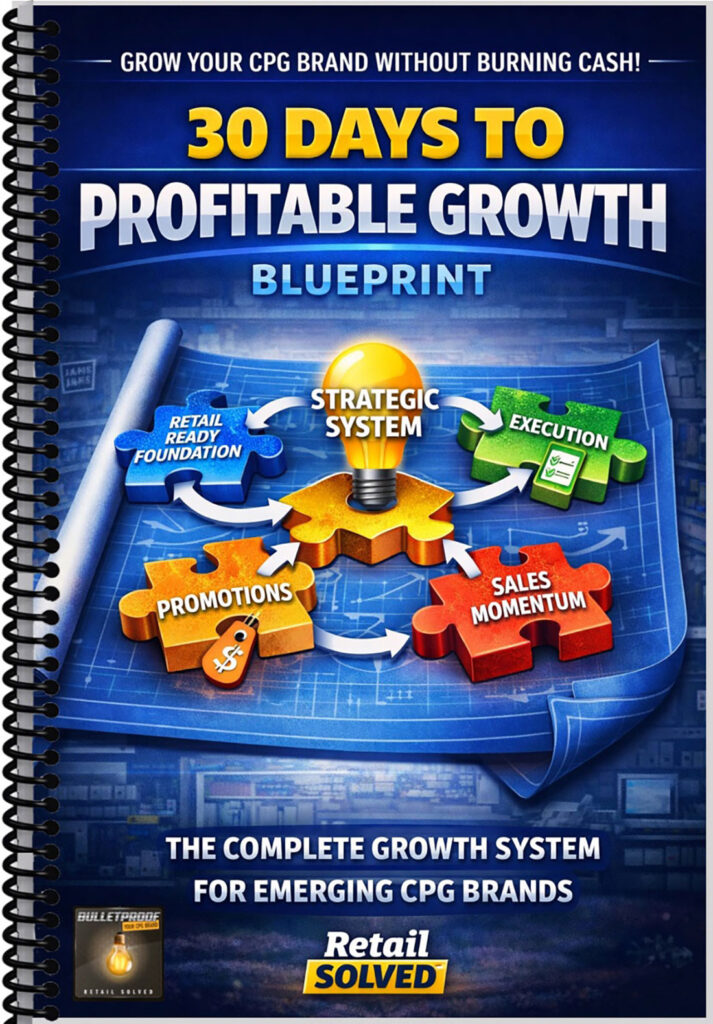
Image is the property of CMS4CPG LLC, distribution or reproduction is expressively prohibited.