You’ve invested in better dashboards, better reporting, and better trade marketing software. You’re tracking everything—promotions, lift, ROI, deductions—and yet your margins still feel unpredictable and your growth still feels inconsistent. If that sounds familiar, here’s the truth: what you think is giving you control is actually holding you back.
In this episode, I break down why trade marketing software isn’t the problem—but it’s not the solution either. Most tools show you what happened, but they can’t tell you why it happened or how to win next time. That blind spot keeps brands stuck optimizing performance instead of building strategy.
You’ll learn how to shift from reporting to real strategy by understanding shopper behavior, category dynamics, and competitive context—so your trade marketing actually compounds.
Register for the Trade Marketing Reality Check Webinar on the home page
Listen where you get your podcast








Like what you’ve heard?
Please leave a review and comment on iTunes
Let me know your most pressing question, I’ll do my best to answer it on a future episode.
🎙 EPISODE 312 — Your Trade Marketing Software Isn’t the Problem… But It’s Not the Solution 🎯 THE STORY — When “Better Data” Didn’t Fix the Problem 💡 INSIGHT — Trade Marketing Is Not a Reporting System 🧠 THE REAL PROBLEM — Data Without Context Creates False Confidence ⭐ THE 6 INSIGHTS YOUR SOFTWARE CAN’T GIVE YOU ⭐ 1. Internal Data vs External Reality ⭐ 2. You Can’t See Your Competitive Position ⭐ 3. Volume Is Not the Same as Incrementally ⭐ 4. Brand Growth vs Category Growth ⭐ 5. Software Can’t Build Strategy 🔄 REFRAME — You’re Using the Right Tool for the Wrong Job 🚀 THE BETTER WAY — Start With the Shopper 🎯 CTA — Invite to Webinar 🔁 RECAP — The Truth Most Brands Miss
Enter your name and email address below and I'll send you periodic brand building advice, tips and strategies.
What You Think Is Working… Is Holding You Back
If you’re an emerging CPG brand, you’ve probably invested in better data.
Better dashboards.
Better reporting.
Better trade marketing software.
You’ve been told:
👉 “If you can measure it, you can improve it.”
So you track everything.
your promotions
your lift
your deductions
your ROI
And yet…
👉 your margins still feel unpredictable
👉 your growth still feels inconsistent
👉 and your strategy still feels reactive
So you double down.
More data.
More reporting.
More analysis.
But here’s the uncomfortable truth:
👉 What you think is giving you control…
👉 is actually keeping you stuck
Because you’re optimizing something that was never designed to help you win.
Let me explain.
I’ve worked with brands at every stage—pre-launch to hundreds of millions in revenue.
And I’ve seen a pattern that doesn’t make sense on the surface.
The brands that are the most “organized”…
The ones with the cleanest reporting…
The ones with the best dashboards…
Are often the most frustrated.
They can tell you everything:
what their lift was
what their spend was
what their deductions were
what their ROI “should be”
They’re not guessing.
They’re informed.
And that’s what makes it dangerous.
Because it feels like control.
But nothing is changing.
Margins are still tight.
Promotions aren’t compounding.
Growth isn’t predictable.
And the founder starts asking:
“What am I missing?”
Here’s the answer:
👉 You’re measuring performance…
👉 but you’re not understanding behavior
And that is the difference between reporting… and strategy.
This is the shift.
And it’s one of the most important shifts you can make in your business.
👉 Trade marketing is NOT a reporting system
👉 Trade marketing is a competitive system
Let that sink in.
Because most brands treat trade marketing like accounting:
track the numbers
analyze the results
optimize the spend
But trade marketing doesn’t exist in isolation.
It exists inside a system:
competitors
retailers
categories
and most importantly… shoppers
And here’s the blind spot:
👉 Most brands are optimizing their business in isolation
They’re asking:
“Did our promotion work?”
“Did our sales go up?”
“Did our ROI improve?”
But they’re NOT asking:
Why did shoppers choose us… or not?
What else changed in the category?
What did competitors do at the same time?
Did we actually create new behavior?
This is why your results feel inconsistent.
Because you’re only seeing part of the system.
Consider this.
Your data can tell you:
what sold
when it sold
how much you spent
But it cannot tell you:
👉 why it sold
And that’s the problem.
Because if you don’t understand why something worked…
👉 you can’t repeat it
👉 you can’t scale it
👉 and you can’t build a strategy around it
This is the exact blind spot I see across almost every brand.
And it’s reinforced by the tools they’re using.
Because those tools are built to:
👉 track performance
Not explain behavior
Let’s break this down in a way you can actually use.
Your software shows you your world.
Your sales.
Your performance.
Your trends.
But it doesn’t show you:
👉 what’s happening around you
competitor promotions
pricing shifts
assortment changes
category dynamics
So you think:
👉 “We improved performance”
But in reality:
👉 the market moved
And you didn’t see it.
Action Step:
Start asking:
👉 “What changed in the category while we were measuring ourselves?”
Most systems are brand-centric.
They show:
your results
your trends
But not:
👉 your position
You don’t see:
who gained share
who influenced your results
who changed shopper behavior
So you optimize based on incomplete context.
This is why brands feel like they’re working hard…
But not gaining ground.
Action Step:
Every promotion should answer:
👉 “Did we outperform our competition—or just participate?”
This is one of the most expensive misunderstandings in CPG.
Your software celebrates:
lift
volume
spikes
But it doesn’t tell you:
👉 what was truly incremental
Did you:
attract new shoppers?
increase basket size?
drive new behavior?
Or did you:
👉 discount existing demand
Most brands don’t know.
And that’s why trade spend quietly destroys runway.
Action Step:
Stop asking:
👉 “Did sales go up?”
Start asking:
👉 “Did we create new behavior?”
A different way to think about this is, What are the goals and objectives of your trade strategy?
Build awareness
Increase trial
Steel share
All strategies should focus on building base sales and maintaining margin
This is where experienced operators separate themselves.
You see:
👉 your sales increased
So you assume:
👉 you’re winning
But retailers care about:
👉 category growth
👉 shopper value
👉 profitability
👉 basket growth
👉 customer conversion
Not just your brand.
This is where your unfair advantage lives.
Because many natural and better-for-you brands:
👉 drive more profitable category growth
But they’re judged on the wrong metrics.
This is how you change that conversation.
Action Step:
Start framing everything as:
👉 “Here’s how we grow your category more profitably.”
Remember that natural better-for-you shoppers are typically less price sensitive, more loyal, spend more per trip, and they don’t settle.
Let’s be clear.
Software is not the enemy.
It’s a tool.
It can:
organize data
track performance
visualize trends
But it cannot:
👉 think
👉 interpret behavior
👉 identify opportunity
👉 build strategy
And that’s where most brands get stuck.
Because they expect the tool…
👉 to do the thinking
⭐ 6. Category Growth vs. Brand Growth
Here’s something most founders miss.
👉 Your brand can grow… while the category stays flat
That means:
👉 you’re taking share—not creating value
And over time…
👉 that limits your upside
Savvy retailers reward brands that:
grow the category
bring in new shoppers
increase basket size
improve profitability
Because that’s what drives their business.
This is why everything I teach connects back to:
👉 shopper value
👉 category growth
👉 retailer success
Here’s the simplest way to think about this:
👉 Trade marketing software is like QuickBooks
It tells you:
what happened
where the money went
what your numbers look like
But it does NOT tell you:
👉 how to grow
👉 how to compete
👉 how to win
And if you rely on it for that…
👉 you’ll stay reactive
This is why so many brands feel stuck.
Not because they lack effort.
Not because they lack data.
👉 Because they lack a system
This is where everything changes.
And this is where I start with every brand I work with.
One question:
👉 “Why did what happened… happen?”
And to answer that…
You don’t start with the data.
👉 You start with the shopper
what problem were they trying to solve?
what did they value?
what triggered the purchase?
what alternatives did they consider?
Why did they choose your brand or your competitors?
Then you connect that to:
category dynamics
retail execution
trade strategy
competitive positioning
Now you have:
👉 a complete view of the system
Not just a report.
This is how you:
improve trade marketing ROI
make better retail decisions
increase basket size
build loyalty
and extend your runway
If this episode made you rethink how you’re looking at your data…
Then the next step is to see how this actually works.
I’m hosting a live working session where I’ll walk you through:
👉 how to evaluate trade performance beyond your dashboards
👉 how to uncover where your growth is really coming from
👉 how to identify blind spots your competitors are missing
👉 and how to turn trade marketing into a true competitive advantage
This is not a presentation.
👉 It’s a working session
We’re going to break this down step by step so you can apply it immediately.
If you want to join:
👉 Register on my home page RetailSolved.com
Trade marketing software is not the problem.
But it’s also not the complete solution.
Because:
data shows what happened
the shopper explains why
strategy determines what happens next
And when you combine all three…
👉 that’s where your advantage lives
You don’t need more data.
You need better context.
Better clarity.
And a system that actually helps you win.
If this resonates with you,
Share this with a founder looking for more runway
Connect with me on LinkedIn
Visit retail solved for more brand building strategies
I’m Dan Lohman
And this is the Bulletproof Your CPG Brand podcast
Sign up to receive email updates
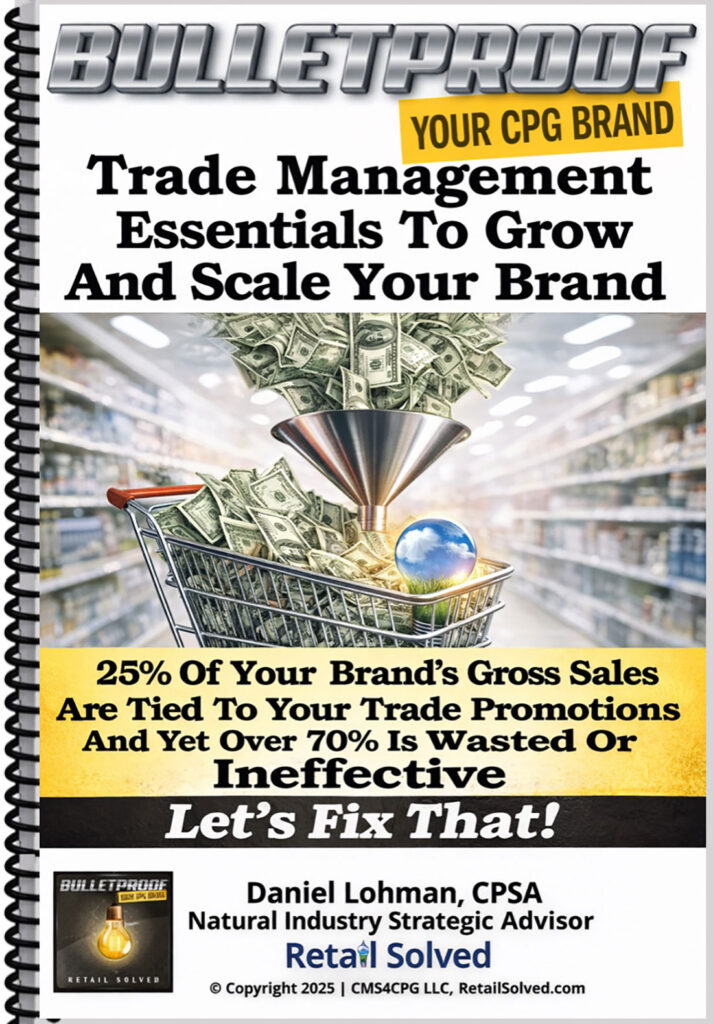
FREE Trade Promotion ROI Calculator:
Click Here To Maximize Sales And Profits
If your trade spend feels unpredictable, it is not under control.
Manage trade strategically instead of reacting to retailer pressure, deductions, and last-minute asks.
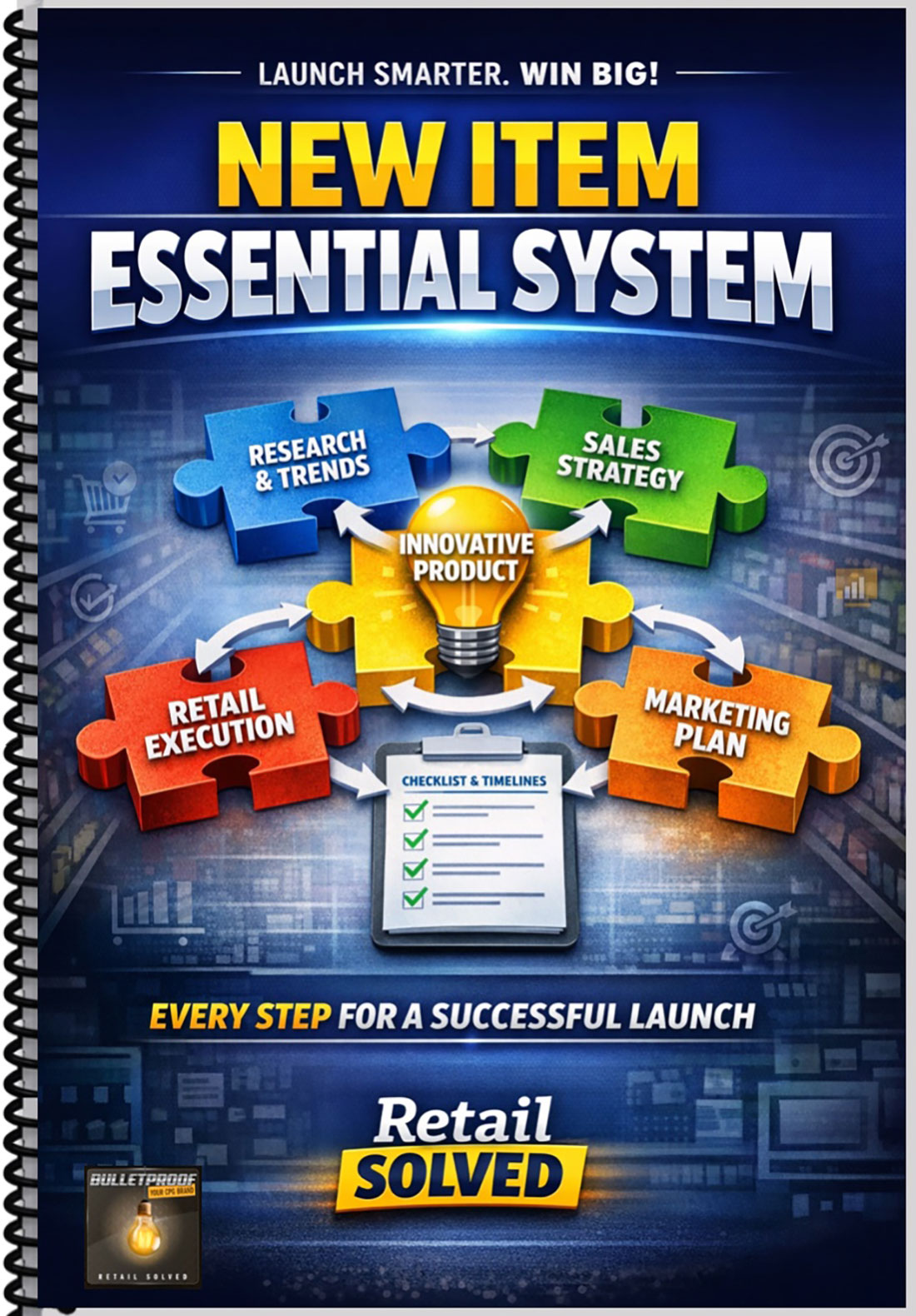
Most new items do not fail. They never had a real chance.
Pressure-test the shopper, placement, retailer value, execution, economics, and support behind the launch.
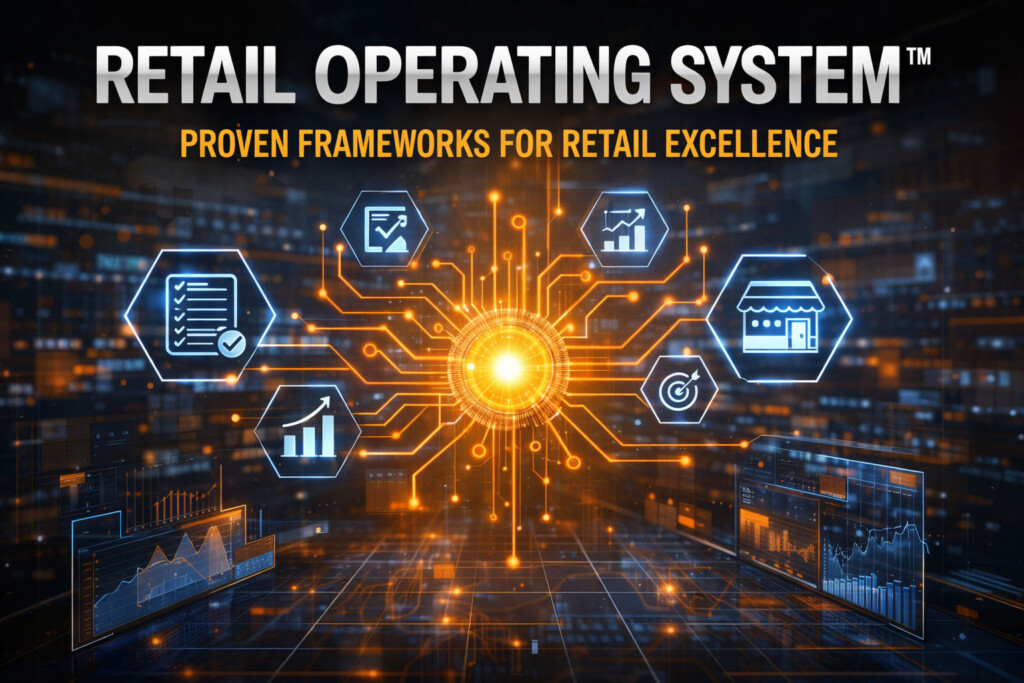
Retail Operating System™
The complete 11-module framework for protecting margin, optimizing trade spend, and scaling distribution with confidence.
Retailers run on systems.
Most brands run on hustle.
That gap is expensive.
The Retail Operating System™ is the only structured, data-driven retail growth framework built by a Certified Professional Strategic Advisor who has sat both in the founder seat and across the table from retailers.
It gives emerging CPG brands the same operational discipline, trade strategy, and category leverage that big brands use — simplified and systemized to protect margin, optimize trade spend, and extend runway while scaling distribution.
This is not education.
It’s infrastructure.
Image is the property of CMS4CPG LLC, distribution or reproduction is expressively prohibited.