You’re not losing at retail because of weak marketing. You’re losing because you don’t understand how the category works. Most brands rely on reports, velocity, and promotions—but retailers don’t buy products, they buy category performance.
In this episode, I break down True Category Management—the strategy that separates brands that win shelf space from those that get delisted. You’ll learn how to think like a category leader, turn data into actionable insights, map how shoppers actually buy, identify assortment gaps retailers can’t see, and position your brand as a trusted advisor instead of another vendor.
Data tells you what happened. The shopper tells you why. The brands that combine both win.
Listen where you get your podcast








Like what you’ve heard?
Please leave a review and comment on iTunes
Let me know your most pressing question, I’ll do my best to answer it on a future episode.
🎙 **EPISODE 309 But first, I coined the term True Category Management too highlight the difference between those who rely on I call pushbutton category management where they hit a button to spit out canned generic reports and those of us who use creative strategies to build brands and give them an unfair competitive advantage. So why does this matter. Advanced creative strategies found in category management give your brand the edge it deserves. For example some of my wins include growing brand sales by 215% in 4 years, gaining premium placement and distribution in over 1,600 stores for a struggling brand, a key retailer instantly adopting a new assortment and merchandising strategy nation wide growing their sales over 9% while other retailers were flat or declining. That strategy dramatically increased shopper foot traffic and marketing basket sales in the category by leveraging the strength of our brand. The key point is that the same generic charts and graphs your completion uses don’t drive sales. Being able to tell a compelling story that leverages the strength of your unique customer is what gives your retail partner predictable profits, a distinct competitive advantage in their market, and invites new customers into their store. This is how you give your brand an unfair competitive advantage in any economy. Those strategies can give small brands an equal seat at the retailers table with the best funded most sophisticated brands on the planet. This is exactly how I pushed around the biggest most iconic brands. Those strategies are sprinkled throughout all of my podcast episodes, in the free guides at then end of every episode, and throughout the Retail Solved website. Back to our story. If you’re an emerging CPG brand, chances are someone has told you that the key to winning retail is: But here’s the uncomfortable truth you only learn once you’ve been in this industry long enough: 👉 Most brands don’t fail because of a lack of marketing or distribution.
They fail because they don’t understand how retail actually works. And retail — real retail — is driven by: Everything else is noise. Today, I’m going to walk you through the single most important capability you can master in your business — the skill big brands groom aggressively and small brands desperately need: True Category Management Not templated reporting.
Not syndicated data dumps.
Not a deck filled with charts no one understands. I’m talking about the strategic discipline that helps you: This is the kind of knowledge big brands send people to week-long trainings for.
I was lucky enough to receive that training — month after month — at the highest level. Today, I’m opening that playbook for you. Put a different way, I’m going to show you how to skate to the puck before the play even starts. But first, let me tell you the story of when I realized how powerful — and how misunderstood — category management really is. THE STORY — When Data Lied and the Shopper Told the Truth Years ago, early in my category management career, I was working with a major retailer who was convinced a certain premium brand was underperforming. The retailer’s ranking report showed: The recommendation from their internal team?
“Cut the brand. Replace it with something cheaper and faster moving.” But something felt off. Shoppers weren’t ignoring the brand because it was unappealing.
They were searching for it. It was: The data said the brand was failing.
The shopper said something entirely different. Remember that a confused mind will always say no. That’s when I learned a lesson I’ve carried with me through my entire career: And true category management is about combining both — strategically, intelligently, creatively — so you can give retailers something 99% of brands never offer: That single insight not only saved the brand — it made them one of the retailer's preferred partners. That’s the power of category management done right. WHY CATEGORY MANAGEMENT IS THE NORTH STAR True category management sits at the center of: It is the backbone of every other strategy you’ll use. When founders ask me: My answer is always the same: Because: This episode is your roadmap to understanding how to think, act, and sell like a category leader — no matter your size. Let’s break it down into five micro-strategies. ⭐ STRATEGY #1: THINK LIKE A CATEGORY, NOT A BRAND Stop Selling Your Brand. Start Selling the Category. The Founder Mistake Most brands talk about: All great things — but none answer the question retailers care about: “How does this improve my category?” The Retailer’s Lens If your product doesn’t help them do these things, they don’t need it. The Better Way — Become a Category Interpreter True category management is the art and science of: When you speak that language, buyers listen. ⭐ STRATEGY #2: RETAILERS WANT INSIGHTS, NOT REPORTS Data Doesn’t Sell. Insights Do. From the “Mining the Data Field” mini-course: Most brands throw syndicated tables into a deck and call it a category story. But true insights are: The Founder Mistake is The Better Way Suddenly, you’re not a vendor.
You’re a strategist. Action Steps This Week STRATEGY #3: MAP THE SHOPPER DECISION TREE The Shopper Decision Tree: Your Placement Superpower. This is a core principle of true category management. The Problem The Power Big brands spend a lot of money paying outside consultants to solve this puzzle. You can simply just ask your loyal customers how they shop for your brand and what is important to them. I talk about the power of building an online community for your customers on several podcast episodes. This is one of the best way to leverage the strength of your brand with retailers. Imagine being able to tell retailers this is exactly where your most profitable shoppers look for your brand and here is a list of the products they purchase with it. Priceless. Action Steps This Week This becomes your placement logic — and your negotiation leverage. ⭐ STRATEGY #4: LEARN TO SEE ASSORTMENT GAPS LIKE A BUYER Retailers can’t possibly be experts in every category and in every product they sell. They need your help. This is your opportunity to help them and gain a significant competitive advantage in the process. Helping retailers get what they want equals more traffic in their stores, a competitive advantage in their market, and a reasonable profit is how your earn their trust and admiration. Savvy retailers might even reward you with incremental opportunities not available to other brands. The is the exact playbook I use when I work with brands. This is how small brands compete head to head with better funded more sophisticated big brands. Retailers don’t look at products.
They look at patterns. I go deeper into this in my True Category Management - The Roadmap To Sales Success mini-course Tools like: The Better Way That one slide can win you the shelf. Action Steps This Week Highlight and quantify the opportunity. ⭐ STRATEGY #5: USE CATEGORY MANAGEMENT TO EARN TRUST Retailers respect brands who: The Founder's Competitive Advantage The Better Way Solve their problems before you pitch your brand. Then align the strengths of your brand to help them achieve their objectives. Category management turns you into a trusted advisor, not another brand begging for space. Action Steps This Week This builds reciprocity. 🔁 The Five Principles of True Category Management Master these, and you’ll never walk into a category review or retailer meeting insecure again. This episode is part of the Retail Operating Series series — the system I created to help founders confidently launch, place, and scale items at retail using the same strategic foundations big brands invest millions to train their teams on. You can learn more about the foundational building blocks in the New Item Essential guide. In the coming episodes, we’ll go deeper into: If you found value in this episode: I’m Dan Lohman, and this is the Bulletproof Your CPG Brand podcast.
Together, we’re helping mission-driven founders get on more shelves — and into the hands of more shoppers who need what you create.
Enter your name and email address below and I'll send you periodic brand building advice, tips and strategies.
True Category Management: When Data Lied and the Shopper Told the Truth
The Truth Every Founder Eventually Learns the Hard Way
“More velocity.”
“More promotions.”
“More social media.”
“More doors.”
“More influencers.”
The shopper
The category
The retailer’s strategy
And The brand’s ability to solve a problem better than anyone else
understand your shopper,
anticipate trends,
identify category opportunities,
drive retailer profit,
and become the most valuable partner in the room — even if you’re the smallest brand on the shelf.
And I’m doing it as the next chapter in the New Item Essentials series.
poor velocity
low distribution
below-average sales contribution
So I did something most analysts never do:
I went into the stores.
I watched shoppers interact with the set.
I watched how they moved, what they touched, what they compared, what they put back, and what they carried to the register.
I asked shoppers to walk me through their decision making process.
And here’s what I saw:
And often, they couldn’t find it.
misplaced in some stores
blocked by a shelf tag in others
stocked incorrectly
replenished late
and in one store, literally behind the wrong product
Data tells you what is happening.
The shopper tells you why.
actionable insights that grow the entire category.
Let’s zoom out and see where this fits in the Retail Operating System roadmap.
new item success
merchandising
assortment
brand health
data storytelling
retail relationships
and trade marketing ROI
“How do I get more distribution?”
“How do I avoid delisting?”
“How do I get better placement?”
“How do I stop overspending on trade?”
“How do I build a selling story retailers care about?”
👉 Start with the category.
Retailers don’t buy brands — they buy category performance.
Retailers don’t buy stories — they buy outcomes.
Retailers don’t buy products — they buy solutions to shopper problems.
Retailers don’t buy products — they buy category performance.
their mission
their ingredients
their clean label
their certifications
their packaging
their values
Retailers are responsible for:
increasing trips
increasing profit
maximizing space
improving conversion
responding to trends
beating competitors
understanding shopper behavior - specifically how your unique customer shops
identifying unmet needs - the gaps that increase customer churn in their stores
mapping trends to assortment - improving the shopper journey
highlighting contribution - not your sales but the profitable dollars your brand generates
showing incremental growth opportunities - how your brand gives retailers a distinct and unique competitive advantage
Action Steps This Week
Write a one-sentence answer to:
“What problem in the category does my product solve better than anyone else?”
Identify the shopper segment that drives category growth.
Rewrite your pitch so it leads with category logic, not brand logic.
If your data isn’t telling a story, it’s just decoration.
Data ≠ insights.
shopper-behaviors
switching patterns
mission-based needs
premium trade-up trends
category value drivers
seasonality patterns
basket linkages
Market gaps
Presenting data without interpretation.
This is what most brands are trained to do, including big brands.
Tell the buyer:
“Here’s what the shopper is telling us — and here’s how we help you respond.”
Pull your category’s last 52, 26, and 13 weeks sales.
Identify:
top-growing attributes
fastest-growing shopper segments
declining mainstream behaviors
Turn each insight into a two-sentence takeaway for your deck.
For example: there is a $1.5MM gap in your category and here’s how we plug it
If you understand how shoppers navigate the shelf, you can win any shelf you want.
The shopper decision tree explains:
how shoppers navigate the shelf
what they look for
what they compare
where they go next
their emotional and functional priorities
Most founders never build one.
Once you map the decision tree, you instantly understand:
where your item belongs
what it competes against
what it complements
where it should be blocked
what signage improves conversion
which attribute drives trial
Identify the top three reasons a shopper enters your category.
Identify the attributes they check first.
Build a 3-level decision tree:
Category need
Attribute group
Product type
Find the Gap the Retailers Can’t See.
The fastest way to land shelf space? Show the retailer the opportunity they're missing.
They ask:
Where is the duplication?
Where is the white space?
Which items trade shoppers up?
Which items drive premium baskets?
Which items attract new shoppers?
Which items serve future trends?
The Pareto curve
Generic ranking reports
Share analysis by band and segment
market vs. account comparison
…let you see what the buyer sees — sometimes even before they do.
Show the buyer:
“Here is the unmet need in your category — and here is how our product fills it.”
Somethings this requires an adhoc analysis. This is where a talented category management expert is worth their weight in gold!
Run a simple gap analysis:
What the market sells
What the retailer sells
What are shoppers searching for
What’s missing
Become the category Advisor, Not the Vendor.
Category management is the fastest way to earn a retailer’s trust — and the shelf.
bring insights
simplify complexity
anticipate problems
support execution
take a shopper-first approach
Identify opportunities
Keep them at least one-step ahead of their competition
You are closer to your shopper than big brands ever will be.
This is a big reason why I encourage brands to build an online community and to get to know your loyal customers intimately. I go deeper into the power of this strategy and how to set it up on other podcast episodes.
Show the buyer you understand:
their shopper
their goals
their limitations
their competition
their operational reality
Send your retailer one insight that helps them — with no ask attached.
Think like a category, not a brand.
Turn data into insights, not reports.
Build a shopper decision tree.
Identify and articulate assortment gaps.
Use category insights to earn trust and partnership.
merchandising
assortment strategy
data storytelling
brand health diagnostics
market basket growth
broker performance
Landing shelf space
and how all of this supports extending your runway
Subscribe to the show
Listen to other episodes. You can see the entire library complete with guests at RetailSolved.com/podcast
Visit RetailSolved.com for more resources
Connect with me on LinkedIn
Share this with a founder who needs a competitive advantage
And download the New Item Essentials Guide in the show notes
Sign up to receive email updates
FREE Trade Promotion ROI Calculator:
Click Here To Maximize Sales And Profits
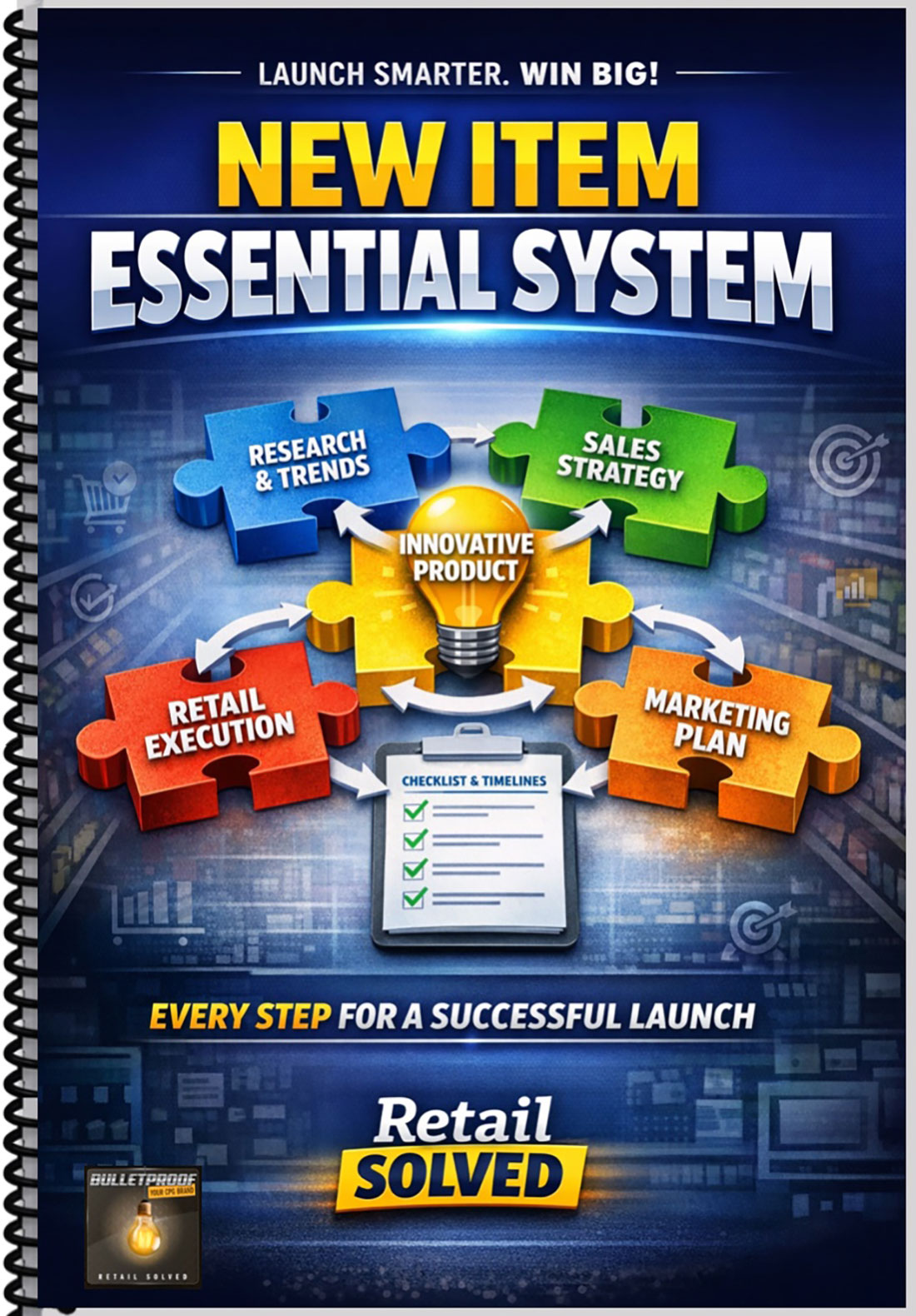
Most new items do not fail. They never had a real chance.
Pressure-test the shopper, placement, retailer value, execution, economics, and support behind the launch.
Retail Operating System™
The complete 11-module framework for protecting margin, optimizing trade spend, and scaling distribution with confidence.
Retailers run on systems.
Most brands run on hustle.
That gap is expensive.
The Retail Operating System™ is the only structured, data-driven retail growth framework built by a Certified Professional Strategic Advisor who has sat both in the founder seat and across the table from retailers.
It gives emerging CPG brands the same operational discipline, trade strategy, and category leverage that big brands use — simplified and systemized to protect margin, optimize trade spend, and extend runway while scaling distribution.
This is not education.
It’s infrastructure.
Image is the property of CMS4CPG LLC, distribution or reproduction is expressively prohibited.