You’re doing everything “right”—promotions, social media, brokers, distribution—and still not growing. Your cash flow feels tight. Your strategy feels reactive. And your product is at risk of being discontinued. The problem isn’t you. It’s the advice.
Most CPG advice fails because it’s incomplete. It focuses on tactics instead of systems and ignores how retail actually works. In this episode, I break down why brands struggle—and how merchandising, execution, and alignment silently determine success at shelf.
You’ll learn why velocity without profitability destroys your runway, why retailers buy confidence—not products—and how poor execution (not demand) causes most brands to fail. Most importantly, you’ll see how to connect pricing, promotion, merchandising, and messaging into one system that actually works.
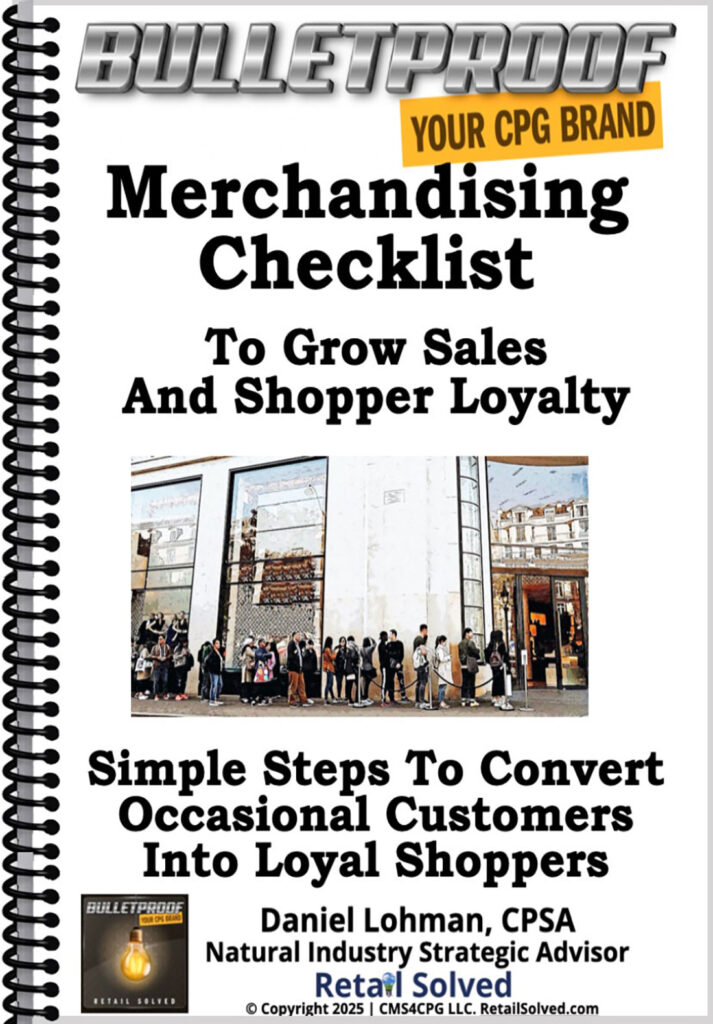
Download the free Merchandising Checklist at RetailSolved.com/session310 and start building the system that drives consistent sales, stronger retail relationships, and sustainable growth.
Listen where you get your podcast








Like what you’ve heard?
Please leave a review and comment on iTunes
Let me know your most pressing question, I’ll do my best to answer it on a future episode.
🎙 EPISODE 310 — Why Most CPG Advice Fails (And What Actually Works) You’re Not Failing. The Advice Is. You’re: And yet… Your sales aren’t moving.
Your SKU looks like it’s underperforming.
Your retailers are losing confidence. And suddenly, you’re staring at the one thing every founder dreads: Here’s the uncomfortable truth most founders never hear: Most brands are not discontinued because they aren’t loved.
They’re not discontinued because they didn’t promote enough.
They’re not discontinued because their velocity was poor. No—most brands are discontinued for a far simpler, more frustrating reason: 👉 Execution. Your merchandising is the first impression shoppers have of your brand. Because in retail, you rarely get a second chance. So you start asking: Here’s the bigger truth: It’s fragmented.
It’s tactical.
And it ignores how the business actually works as a system. No one teaches founders how to connect the dots. That’s exactly why I built the Retail Operating System™—
but we’ll save that for another episode. Today, we’re focusing on something far more immediate: THE STORY — When “Good Advice” Almost Cost Everything But something didn’t sit right. Not because they weren’t working hard. And most importantly… I remember sitting in conversations where founders were being told: And I kept thinking: Because I had also sat on the other side of the table. And I knew something most founders weren’t being told: That’s when it clicked. WHY THIS MATTERS — Advice vs. System Each one sounds good… on its own. Everything is connected: 👉 If you don’t see the system, you can’t fix the outcome. ⭐ STRATEGY #1: CHASING TACTICS INSTEAD OF BUILDING A SYSTEM The Trap The Reality The Better Way 👉 This alone can dramatically improve your promotion ROI. Action Step ⭐ STRATEGY #2: CONFUSING VELOCITY WITH VALUE The Trap The Reality The Better Way Real Example We showed them something simple: We used their own produce section as proof. 👉 The answer was already in their store. Action Step ⭐ STRATEGY #3: TREATING RETAIL LIKE A TRANSACTION The Trap The Reality The Better Way Action Step When you do this consistently, you stop being a vendor… ⭐ STRATEGY #4: IGNORING EXECUTION (WHERE EVERYTHING BREAKS) The Trap The Reality The Story That brand had: The retailer assumed: The Better Way Action Step ⭐ STRATEGY #5: BUILDING A BRAND WITHOUT ALIGNMENT The Trap The Reality The Better Way Action Step 🔁 RECAP — WHY MOST CPG ADVICE FAILS WHAT TO DO NEXT If this resonated: I’m Dan Lohman, and this is the Bulletproof Your CPG Brand Podcast.
Enter your name and email address below and I'll send you periodic brand building advice, tips and strategies.
If you’re an emerging CPG founder right now, you’ve probably felt this:
You’re doing everything people tell you to do.
running promotions
posting on social media
working with brokers
pitching retailers
investing in trade
hiring help
chasing distribution
Your growth feels inconsistent.
Your cashflow feels tight.
Your strategy feels reactive.
And nothing quite seems to “click.”
👉 The threat of discontinuation.
👉 Shoppers couldn’t find the product.
That’s it.
Not strategy.
Not marketing.
Not demand.
Specifically:
inconsistent merchandising
incorrect placement
missing shelf tags
out-of-stocks
broken schematics
Make it a good one.
“What am I missing?”
“Why isn’t this working?”
“Why does this feel harder than it should?”
👉 Most CPG advice doesn’t fail because it’s wrong.
👉 It fails because it’s incomplete.
👉 How merchandising—and the lack of a system behind it—silently destroys brands.
And how to fix it so shoppers can actually find, buy, and come back for your product.
Years ago, when I was building and preparing to launch a brand, I did what most founders do.
I became a sponge.
I:
joined incubators
attended industry events
listened to experts
followed “best practices”
studied successful brands
And I learned a lot.
Because when I looked around, I kept seeing the same pattern:
Great brands.
Great products.
Great missions.
👉 All struggling.
But because the advice they were following was:
disconnected from execution
disconnected from retail reality
disconnected from profitability
disconnected from how shoppers actually buy
👉 It lacked strategy, purpose, and intention.
“Just drive velocity.”
“Just run more promotions.”
“Just get more distribution.”
“Just hire a broker.”
👉 “That sounds right… but it’s not complete.”
I had:
worked for big CPG companies
been classically trained in category management
managed retail stores including being a grocery manager
worked directly with buyers
Worked with clients of every size
Mentored brands
seen how decisions actually get made
👉 Retail doesn’t reward activity.
👉 Retail rewards alignment.
Emerging brands don’t need more advice.
👉 They need better strategy—from people who understand how the entire system works.
Most advice in this industry lives in isolation:
marketing advice
retail advice
trade advice
broker advice
pricing advice
But your business doesn’t operate in silos.
pricing impacts promotions
promotions impact margin
margin impacts runway
merchandising impacts velocity
messaging impacts conversion
execution impacts everything
So let’s break down the five biggest reasons most CPG advice fails—and what to do instead.
👉 “Most CPG advice doesn’t fail because it’s wrong…
…it fails because it’s incomplete.”
Founders are taught to chase tactics:
run a promotion
launch a campaign
post more content
get more doors
Advertise more
But tactics without a system create chaos.
Tactics only work when they connect:
pricing
promotions
positioning - merchandising on shelf
retail strategy
execution
Without that, you’re reacting—not leading.
Build a simple operating system:
What drives your growth?
What drives your margin?
What drives repeat purchase?
Then align everything to that.
Write this down:
👉 “Our growth system is driven by ______.”
If you can’t answer it clearly, start there.
👉 “Velocity isn’t your problem…
…it’s what you’re sacrificing to get it.”
“Velocity is everything.”
So brands:
discount aggressively
promote constantly
chase spikes
Velocity without profitability destroys runway.
And worse:
👉 It trains your customer to only buy on deal.
Focus on contribution, not just velocity:
profitable dollars
high-value shoppers
bigger baskets
sustainable margins
That’s what retailers actually take to the bank.
I once worked with a retailer obsessed with contribution.
Their premium shoppers:
bought more per trip
spent more per basket
and were driving category growth
Everything was easy to find.
Everything was merchandised logically.
And the premium items were outperforming.
Sometimes the best insights are hiding in plain sight.
Stop asking:
“What’s our velocity?”
Start asking:
👉 “What is our contribution to the category?”
That changes the conversation instantly.
👉 “Retailers don’t buy products…
they buy confidence.”
Founders try to “get placement.”
They pitch:
their brand
their mission
their story
Retailers aren’t buying your product.
👉 They’re buying confidence.
Confidence that you:
understand their shopper
understand their category
can help them grow profitably
will support execution
Shift from:
👉 “Here’s why we’re great”
To:
👉 “Here’s how we help YOU win.”
Write this:
👉 “Our brand helps [Retailer] win by ______.”
Build your pitch around that.
👉 and start becoming a trusted advisor.
👉 “Shoppers can’t buy what they can’t find.”
Founders spend:
months on strategy
weeks on launch
days on execution
Then wonder why nothing works.
Execution is where everything breaks:
poor placement
inconsistent merchandising
out-of-stocks
missing shelf tags
A listener once told me she went to support her friend’s brand launch.
She walked into the store excited, ready to buy.
She went to the section her friend told her.
👉 It wasn’t there.
She searched.
Asked an associate.
Still nothing.
Eventually…
They found it.
👉 In the wrong category.
👉 On the wrong shelf.
👉 Nowhere a shopper would ever look.
spent thousands on promotion
driven traffic
built excitement
And it all failed.
Not because of demand.
👉 Because of merchandising.
the product didn’t perform
the promotion failed
the SKU wasn’t worth keeping
👉 That one mistake nearly killed the brand.
Treat execution like a system:
placement
inventory
merchandising
replenishment
store-level consistency
Ask:
👉 “What must be true in every store for us to win?”
Then enforce it with scorecards and audits.
👉 “A confused brand doesn’t convert.”
Ask 10 people what your brand stands for…
You’ll get 10 answers.
Inconsistency leads to:
weak marketing
poor conversion
wasted trade spend
confused shoppers
👉 A confused mind always says no.
And inconsistent merchandising makes it worse.
Create a unified voice:
clear positioning
simple story
repeatable language
consistent execution everywhere
Align merchandising with how shoppers actually shop.
Make it frictionless.
Define:
what you stand for
who it’s for
why it matters
Then make sure it shows up everywhere.
It focuses on tactics, not systems
It prioritizes velocity over value
It treats retail as a transaction
It ignores execution
It lacks alignment
Fix these—and everything changes:
your strategy becomes clear
your execution becomes consistent
your trade spend becomes effective
your retail relationships improve
your runway extends
You don’t need more advice.
You need:
👉 clarity
👉 consistency
👉 and a system you can run every week
Choose one strategy from today and implement it immediately.
Then do it again tomorrow.
That’s how this becomes your operating system.
Subscribe and follow the show
Visit RetailSolved.com for tools and resources
Download the free Merchandising Checklist in the show notes
And share this with a founder who’s working hard… but stuck
Because you don’t need to play the same game as big brands to win.
👉 You just need to understand how the game actually works—
and how to stack the odds in your favor.
Sign up to receive email updates
FREE Trade Promotion ROI Calculator:
Click Here To Maximize Sales And Profits
If shoppers do not notice you, nothing else matters.
Pressure-test visibility, placement, availability, and shelf execution so your product is easier to find and buy.
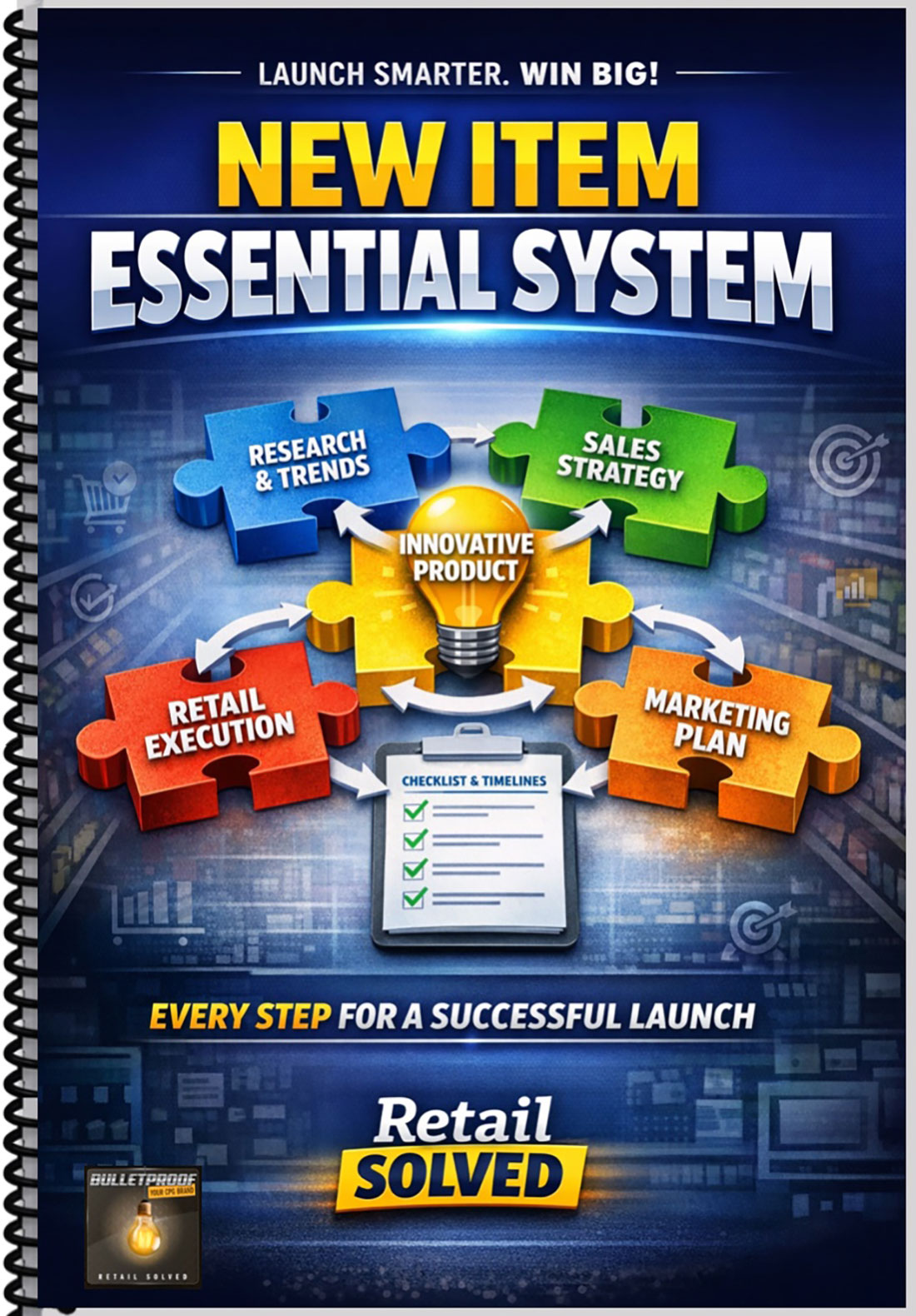
Most new items do not fail. They never had a real chance.
Pressure-test the shopper, placement, retailer value, execution, economics, and support behind the launch.
Retail Operating System™
The complete 11-module framework for protecting margin, optimizing trade spend, and scaling distribution with confidence.
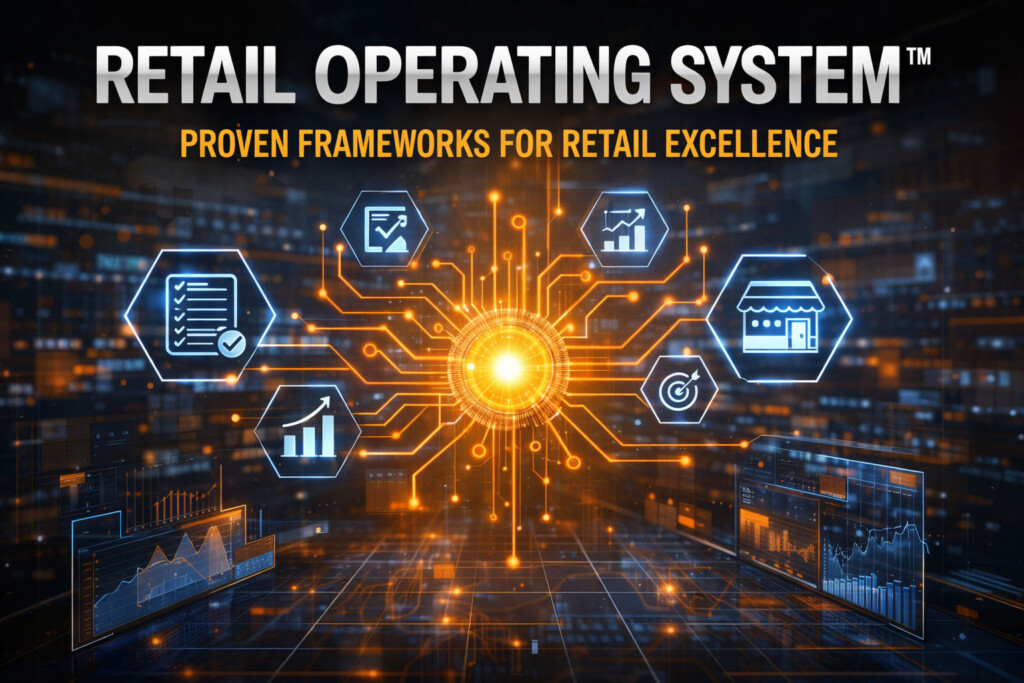
Retailers run on systems.
Most brands run on hustle.
That gap is expensive.
The Retail Operating System™ is the only structured, data-driven retail growth framework built by a Certified Professional Strategic Advisor who has sat both in the founder seat and across the table from retailers.
It gives emerging CPG brands the same operational discipline, trade strategy, and category leverage that big brands use — simplified and systemized to protect margin, optimize trade spend, and extend runway while scaling distribution.
This is not education.
It’s infrastructure.
Image is the property of CMS4CPG LLC, distribution or reproduction is expressively prohibited.