Most founders believe growth solves problems.
More distribution.
More retailers.
More sales.
More opportunities.
But what if growth isn’t the thing that’s putting pressure on your business?
What if the real problem is complexity?
In this episode, I sit down with Mike Fata, founder of Manitoba Harvest and author of Grow, to discuss one of the most overlooked challenges facing entrepreneurial brands today.
Scaling.
Not the exciting part.
The messy part.
The part where communication breaks down.
Departments become disconnected.
Priorities drift.
Execution suffers.
And founders find themselves working harder while feeling less in control.
Mike shares the systems, rhythms, governance structures, leadership disciplines, and planning processes that helped him scale Manitoba Harvest into a $100 million business and what he teaches founders today through his mentoring and advisory work.
We discuss:
• Why growth creates complexity
• How communication breaks down as teams scale
• The Rhythm of Scale framework
• Why governance is not a corporate exercise
• The transition from founder to CEO
• How to buy back your time
• The role of KPIs and scorecards
• Why planning matters more than hustle
• How founders can avoid scaling chaos
• Why sustainable growth requires alignment
One of my favorite takeaways:
Most founders don’t need more opportunities. They need more capacity to absorb the opportunities they already have.
Because growth doesn’t break brands.
Complexity does.
And clarity is what helps you scale through it.
Listen where you get your podcast








Like what you’ve heard?
Please leave a review and comment on iTunes
Let me know your most pressing question, I’ll do my best to answer it on a future episode.
00:17:46.000 --> 00:17:52.000 00:17:52.000 --> 00:17:58.000 00:17:57.000 --> 00:18:12.000 00:18:12.000 --> 00:18:28.000 00:18:28.000 --> 00:18:39.000 00:18:39.000 --> 00:18:52.000 00:18:52.000 --> 00:18:58.000 00:18:57.000 --> 00:18:59.000 00:18:59.000 --> 00:19:13.000 00:19:13.000 --> 00:19:37.000 00:19:37.000 --> 00:19:49.000 00:19:49.000 --> 00:19:53.000 00:19:53.000 --> 00:20:01.000 00:20:01.000 --> 00:20:16.000 00:20:02.000 --> 00:20:03.000 00:20:16.000 --> 00:20:30.000 00:20:27.000 --> 00:20:28.000 00:20:31.000 --> 00:20:53.000 00:20:54.000 --> 00:21:10.000 00:21:10.000 --> 00:21:26.000 00:21:26.000 --> 00:21:47.000 00:21:47.000 --> 00:22:02.000 00:22:02.000 --> 00:22:20.000 00:22:20.000 --> 00:22:41.000 00:22:41.000 --> 00:22:57.000 00:22:57.000 --> 00:23:08.000 00:23:08.000 --> 00:23:23.000 00:23:23.000 --> 00:23:32.000 00:23:32.000 --> 00:23:54.000 00:23:37.000 --> 00:23:38.000 00:23:54.000 --> 00:23:56.000 00:23:56.000 --> 00:24:11.000 00:24:12.000 --> 00:24:22.000 00:24:22.000 --> 00:24:30.000 00:24:30.000 --> 00:24:45.000 00:24:45.000 --> 00:25:05.000 00:25:05.000 --> 00:25:24.000 00:25:24.000 --> 00:25:42.000 00:25:42.000 --> 00:25:56.000 00:25:56.000 --> 00:26:06.000 00:26:06.000 --> 00:26:20.000 00:26:20.000 --> 00:26:31.000 00:26:31.000 --> 00:26:51.000 00:26:51.000 --> 00:27:14.000 00:27:14.000 --> 00:27:30.000 00:27:30.000 --> 00:27:36.000 00:27:36.000 --> 00:27:53.000 00:27:53.000 --> 00:28:02.000 00:28:02.000 --> 00:28:19.000 00:28:19.000 --> 00:28:35.000 00:28:35.000 --> 00:28:56.000 00:28:56.000 --> 00:29:14.000 00:29:14.000 --> 00:29:31.000 00:29:31.000 --> 00:29:42.000 00:29:42.000 --> 00:29:58.000 00:29:58.000 --> 00:30:07.000 00:30:08.000 --> 00:30:29.000 00:30:29.000 --> 00:30:59.000 00:30:59.000 --> 00:31:06.000 00:31:06.000 --> 00:31:35.000 00:31:35.000 --> 00:31:50.000 00:31:50.000 --> 00:32:02.000 00:32:02.000 --> 00:32:18.000 00:32:18.000 --> 00:32:24.000 00:32:24.000 --> 00:32:27.000 00:32:28.000 --> 00:32:52.000 00:32:52.000 --> 00:33:08.000 00:33:08.000 --> 00:33:24.000 00:33:24.000 --> 00:33:39.000 00:33:39.000 --> 00:34:03.000 00:34:03.000 --> 00:34:13.000 00:34:13.000 --> 00:34:29.000 00:34:29.000 --> 00:34:35.000 00:34:35.000 --> 00:34:53.000 00:34:53.000 --> 00:35:08.000 00:35:08.000 --> 00:35:30.000 00:35:30.000 --> 00:35:35.000 00:35:35.000 --> 00:35:51.000 00:35:52.000 --> 00:36:07.000 00:36:07.000 --> 00:36:24.000 00:36:24.000 --> 00:36:46.000 00:36:46.000 --> 00:36:59.000 00:36:59.000 --> 00:37:24.000 00:37:24.000 --> 00:37:41.000 00:37:41.000 --> 00:37:48.000 00:37:48.000 --> 00:37:55.000 00:37:55.000 --> 00:38:11.000 00:38:11.000 --> 00:38:30.000 00:38:30.000 --> 00:38:42.000 00:38:42.000 --> 00:39:09.000 00:39:09.000 --> 00:39:39.000 00:39:39.000 --> 00:39:43.000 00:39:43.000 --> 00:39:59.000 00:39:59.000 --> 00:40:13.000 00:40:14.000 --> 00:40:31.000 00:40:31.000 --> 00:40:51.000 00:40:51.000 --> 00:41:17.000 00:41:17.000 --> 00:41:34.000 00:41:34.000 --> 00:41:37.000 00:41:36.000 --> 00:41:43.000 00:41:43.000 --> 00:41:59.000 00:41:59.000 --> 00:42:01.000 00:42:02.000 --> 00:42:18.000 00:42:18.000 --> 00:42:32.000 00:42:32.000 --> 00:42:34.000 00:42:34.000 --> 00:42:37.000 00:42:35.000 --> 00:42:37.000 00:42:37.000 --> 00:42:52.000 00:42:52.000 --> 00:43:07.000 00:43:07.000 --> 00:43:27.000 00:43:28.000 --> 00:43:33.000 00:43:33.000 --> 00:43:50.000 00:43:50.000 --> 00:44:06.000 00:44:13.000 --> 00:44:38.000 00:45:00.000 --> 00:45:16.000 00:45:16.000 --> 00:45:33.000 00:45:33.000 --> 00:45:44.000 00:45:44.000 --> 00:45:56.000 00:45:56.000 --> 00:46:15.000 00:45:57.000 --> 00:45:59.000 00:46:15.000 --> 00:46:19.000 00:46:19.000 --> 00:46:39.000 00:46:39.000 --> 00:46:57.000 00:46:55.000 --> 00:46:57.000 00:46:57.000 --> 00:47:15.000 00:47:15.000 --> 00:47:25.000 00:47:25.000 --> 00:47:39.000 00:47:39.000 --> 00:47:52.000 00:47:51.000 --> 00:48:06.000 00:48:06.000 --> 00:48:22.000 00:48:22.000 --> 00:48:38.000 00:48:38.000 --> 00:48:56.000 00:48:56.000 --> 00:49:14.000 00:49:14.000 --> 00:49:31.000 00:49:31.000 --> 00:49:53.000 00:49:53.000 --> 00:50:04.000 00:50:05.000 --> 00:50:18.000 00:50:18.000 --> 00:50:24.000 00:50:24.000 --> 00:50:40.000 00:50:40.000 --> 00:50:49.000 00:50:50.000 --> 00:51:06.000 00:51:06.000 --> 00:51:26.000 00:51:26.000 --> 00:51:28.000 00:51:28.000 --> 00:51:49.000 00:51:49.000 --> 00:52:07.000 00:52:07.000 --> 00:52:23.000 00:52:23.000 --> 00:52:25.000 00:52:25.000 --> 00:52:29.000 00:52:29.000 --> 00:52:46.000 00:52:46.000 --> 00:53:03.000 00:53:03.000 --> 00:53:32.000 00:53:32.000 --> 00:53:57.000 00:53:57.000 --> 00:54:04.000 00:54:04.000 --> 00:54:10.000 00:54:09.000 --> 00:54:28.000 00:54:12.000 --> 00:54:13.000 00:54:28.000 --> 00:54:36.000 00:54:37.000 --> 00:55:02.000 00:55:03.000 --> 00:55:18.000 00:55:18.000 --> 00:55:21.000 00:55:23.000 --> 00:55:41.000 00:55:41.000 --> 00:55:59.000 00:55:59.000 --> 00:56:26.000 00:56:26.000 --> 00:56:42.000 00:56:42.000 --> 00:56:57.000 00:56:57.000 --> 00:57:13.000 00:57:05.000 --> 00:57:06.000 00:57:13.000 --> 00:57:18.000 00:57:19.000 --> 00:57:38.000 00:57:38.000 --> 00:57:44.000 00:57:44.000 --> 00:57:47.000
Enter your name and email address below and I'll send you periodic brand building advice, tips and strategies.
Dan Lohman: There you go. And that's, I agree with that philosophy. So thank you so much. I appreciate it.
Dan Lohman: Mike, thank you for coming on. Can you please tell us a little bit about yourself and your journey to where you're at today?
MikeFata: Sure, yeah, I'm, uh, my name's Mike Fata, I'm from Winnipeg, Manitoba, right in the center of Canada. Been an entrepreneur for 28 years, focused on the natural and better-for-you food and beverage space.
MikeFata: My claim to fame was pioneering hemp foods in 1998 with Manitoba Harvest. And over 20 years, we grew that to $100 million business and sold it. And now I'm involved as a investor, advisor, growth coach, mentor to a portfolio of companies.
Dan Lohman: Thank you for sharing that. We met 1st a long time ago at Expo West, actually a couple of times, and I was thinking back. I think the last time I saw you you had a full beard, so it's been a while.
Dan Lohman: But but anyhow, so thank you for making time for me today. 1st of all, I love what you're putting out there on Linkedin, and I love the fact that you're mentoring and helping to support the community. You wrote an article rhythm of scale.
Dan Lohman: And there's so much great information meat in there that I thought we'd focus on that if that's okay.
MikeFata: Sure.
Dan Lohman: Okay, so you wrote that every founder starts with clarity, and then the company grows, and the founder knows one thing, the leadership team knows another, and the frontline team hears something entirely different. Where do you think that breakdown starts or occurs?
MikeFata: Yeah, just naturally, I think as a business grows, there's more complexity. You know, when we start out as a founder and there's just one of us, and then we hire our first team member, we're talking one-on-one. And then I found as the business grows and all of a sudden we have five team members, 10 team members, 20 team members, we don't have the time to talk one-on-one. And so we get a little bit more.
MikeFata: as founders, thinking, how do we make sure that everybody's on the same page? And it's just harder, you know, without a system or a structure, intentional system or structure, most.
MikeFata: Team members that you survey aren't gonna know.
MikeFata: what's all going on in the business, where the business is going, and so then they don't… if they don't know where the business is going, they don't know what they should be doing, what their part in is of the business.
MikeFata: But it happens just… it's a… it's a challenge of scale. It doesn't happen when you're just, obviously, a solopreneur or a small team where you have time to talk one-on-one, but it's… as the business gets larger, it's very predictable that that's going to happen.
Dan Lohman: Hey.
Dan Lohman: Thank you for sharing that. So how do you think brands can get around that? How do you navigate around it? And here's why I think that is the single biggest Achilles heel of literally every brand. So how does a brand make sure that doesn't happen?
MikeFata: Yep.
MikeFata: Yeah, I think it's really about a system of, I'd call it governance, but that's why I term the system of scale and the rhythm of scale. It's really having clear communication. I like, and I run this in not only my business for over a decade, but all of the portfolio companies in my investments and basically everyone that I growth coach and advise.
MikeFata: One-on-one direct meetings with your senior leadership team, the people that report to you. So as founder, as CEO, you're likely going to have a head of sales, a head of marketing, a head of ops, and a head of finance, and then maybe a head of HR administration as well as the business grows.
MikeFata: Having a weekly meeting, with each one of your direct reports. It doesn't have to be a long meeting. It could be 30 minutes, 20, 30 minutes. But it's critical that you are talking and understanding what's happening in the department, the key things that are happening that week in the business.
MikeFata: I like to do that cadence of meetings on a Monday. So we start the week with my one-on-ones, and then on Tuesday, we have a full meeting with the cross-functional senior leadership team. So you'd have the head of sales, marketing, ops, and finance, and HR in a meeting together, and in that meeting, now we're talking about all the activities that are happening across the business, because.
MikeFata: Your head of marketing should not only be knowing their key projects that are happening, but also new customers that are coming on from sales, or challenges that our operations is having. And that is the mechanism to do it, because you have all the input as a CEO from your one-on-one meetings on Monday, you carry that into a.
MikeFata: a cross-functional senior leadership team meeting on Tuesday. And then the real kicker for me, and I encourage every business to do this, is on Wednesday, have that town hall, have that all-team meeting. And that started for us at Mental Harvest. We had literally six people, and we had it in our warehouse. Every Wednesday morning at 9 a.m, we'd meet.
MikeFata: This is a 15, 20 minute meeting to talk to the whole team on what is happening this week across now the whole business. Right. Here's the new customers that are coming on. We're launching this new product. We have this audit that's happening. Any other not only the good stuff, the challenges that are happening in the business so that the whole team understands and you could spoon feed the team where the business is going week by week.
MikeFata: If you combine all three of those together, you have a natural cadence to… for everyone to know what's going on, ask questions if they… if they're not sure, double down on anything that's, like, really, um, uh, extra important in the business, and then when the…
MikeFata: month-end financial review comes up, or the quarterly planning meeting. You already have those cadence of meetings, and so that extra level of governance, or that long-term governance, fits into that as well.
Dan Lohman: Love that idea. In fact, actually, one of the challenges that I find is that the message that we give to the brokers, to the retailers, to distributors, everyone else, that's where it becomes most convoluted. And what I meant by that is, let's say you put out a deck about a new item.
Dan Lohman: By the time that deck gets down to retail, it looks radically different. So thank you for sharing it. So I imagine that's probably one of the things that you go over in your meetings.
MikeFata: Yeah, we want to make sure that, yeah, you know, I call it lack of surprises, right? So if we can't tell, if our left hand can't tell what our right hand is doing internally, we have a big problem and we're going to be externally even more challenging, whether it's talking to, yeah, our trade or to media or to our investors and board members or other advisors, right? And so.
Dan Lohman: There we go.
MikeFata: Yeah, I, um…
MikeFata: I found that if you grow a small business, you could probably do it without a proper, governance system. But as soon as you're $5 million or north, you're going to risk death by a thousand cuts because everyone's not aligned on on where the business is going.
Dan Lohman: Thank you for sharing that. I could not agree with you more. Another point that you made is that a lot of founders want growth, but they do not yet have the rhythm to absorb the growth, which I could not agree with you more.
Dan Lohman: What operation rhythms should CBG founders put in place before the business gets too complex? Which is kind of what you were talking about a minute ago.
MikeFata: Yeah, yeah, it's really all about the plan, right? I can't tell you how many founders that, that want to double their business, but they don't take the time to put together a strong strategic plan annually to say, how are how are you going to do that? Not only the budget.
MikeFata: but also the activities in sales, marketing, ops, and finance that are going to… whether you're going from… you want to be… grow from a $1 million business to a $2 million business, what are the activities? What does that actually look like from sales? We need this extra 500 points of distribution for our products, and each one of those points of distribution is going to sell six units. Like, understanding what you're trying to do.
MikeFata: from a sales standpoint or a marketing standpoint of bringing in new consumers and how that relates to the budget, and not just doing that activity once, right? Not doing a budget for the year and then putting it into a filing cabinet and not looking at it. You need to review it on a quarterly basis to see if you need any adjustments to that plan and review the financials on a.
MikeFata: monthly basis to know if you're on or off. So, I find too many founders, too many entrepreneurs want to grow. Maybe they have some growth coming into the business naturally, but they're not planning that growth, and then you can get yourself into a whole bunch of trouble, whether you don't have the proper resources to execute, and there's nothing wrong, there's nothing worse than.
MikeFata: having an opportunity to grow, but you don't ship on time, or you have quality issues, or you have bigger issues than that, and it's actually, like, financial cash flow problems or working capital problems, which could literally sink your ship.
Dan Lohman: Could not agree with you more. Thank you for sharing that. So next thing I wanted to ask you about is you scaled Manitoba harvest well past where most founders dream about.
Dan Lohman: what changes from the founder perspective, from a founder-led business to an operating company. And the reason I wanted to touch on this, Mike, is that you've done a phenomenal job about sharing the behind-the-scenes stuff on LinkedIn.
Dan Lohman: So 1st of all, I want to applaud you on that. And then, secondly, how do you coach? How do you help founders understand how to make that transition so that they don't get derailed, or whatever.
MikeFata: Yeah, and I say it openly, I'm a born entrepreneur and I'm a made CEO. I always had an entrepreneurial mindset in my blood because I grew up poor and I wanted to make something of myself and make something out of nothing, even though I was a high school dropout. How that happens, you need to become a CEO, you need to become a chief executive officer. Just because you're a founder.
MikeFata: And you're in the CEO seat because that's what you started the business doesn't mean you're a good chief executive officer. Understanding what a good chief executive officer, the activities, the systems and the process of leadership is what you have to become, right? And so a lot of founders can go out there and say, I'll just do it myself because they started this company and maybe they could, but over time.
MikeFata: especially as you grow a team, that has a diminishing law of return. You have to know how to lead the team through proper planning, through execution, and create, hopefully, a culture of self-governance in an organization, because that's when, really, you can scale.
MikeFata: To, you know, not only a, a, seven and eight figure, but hopefully a nine figure business.
Dan Lohman: Thank you for going over that. So you were talking about what a founder should and shouldn't do to drill a little bit deeper. So let's say I took an accounting class in college. So as a founder, I'm doing accounting. At what point do you coach brands that that's not my superpower. You need to farm that out, or maybe.
Dan Lohman: That's something I don't like doing. I resent it. So it keeps me from being creative, from being a part of the business, being more invested in it.
MikeFata: Yeah, you have to understand what you're really bringing to the business as a founder and everyone's a little different, right? But generally, there's the front end of the business, sales and marketing, and then there's the back end of the business, ops and finance. And so not too many people are great at both.
MikeFata: But, you know, we know that sales cures all evil. So, you know, if you're a founder, I can tell you my own story. Like, yeah, when we started Mantle Harvest, I was doing QuickBooks. And so I was, invoicing customers and, and, and doing some of the back end accounting work. But I found and said.
MikeFata: hey, if I could go and, um, up my sales targets, uh, even $1,000 a day, if I could sell $1,000 a day more, then it would make sense for me to hire a controller and do all the financials, and then I could go focus on sales as a founder. And that's exactly what we did. One of our first hires was a bookkeeper controller, so that she could be doing.
MikeFata: QuickBooks and the invoicing, and then I had a daily sales target of $1,000, and I was dialing, uh, dialing for dollars, dialing up stores, and sending emails out. Less emails then, actually, emails later, but, uh, you know, hitting the yellow pages and, uh, and, and, and looking for those orders, and when I hit $1,000 orders a day.
MikeFata: guess what? I use that as a frame to do the next thing. Okay, if I had someone helping me market now and, like, put together our brochures and our flyers and advance our website and stuff, if I sold $2,000 more a day, then I could pay for that person. So I like that lens of.
MikeFata: I think every founder needs to be a good salesperson, and if you can think about what sales opportunities are there, if you had the support in other ends of the business, then that's a good… that's a really good lens to look through.
Dan Lohman: I was gonna share that when I was talking to Susie York a couple of weeks ago she was asked her the same question, and she was she as an engineer kind of being the the nerdy. Gotta put this in, you know, math behind it, and I mean that as a compliment she was taught, figured out how much it cost her.
Dan Lohman: her time, you know what's her time worth, and how much that cost her to not be more involved in the business. So I like the way you frame that your thoughts.
MikeFata: Yeah, I think, you know, Dan Martell says it best. He wrote a book about it, Buy Back Your Time. If you could put together, if you could understand what your hourly rate is as an entrepreneur, as an executive, then anything that's worth less than a quarter of your hourly rate, use the example, if you have an hourly rate of $100, you know, that's approximately $200,000 a year kind of salary.
MikeFata: things that are $25 an hour, you should probably get someone else to do it, you know. So if you take some things like, you know, bookkeeping, administration, those are very trainable, actionable. You could pay someone else to be able to do that, where sales, for sure, sales and marketing are a lot more complex. You need a certain skill set to be able to do that. I'm coming from a place where I never naturally didn't have those skill sets, but I knew that the more that I learned those and hired people to take some of the other fundamental.
MikeFata: roles, it would just be better for our business. And another way to look at that, from a technical standpoint, is.
MikeFata: Doing a SWOT analysis. And if your listeners aren't familiar with strengths, weaknesses, opportunities and threats, you could do that for a business as part of a strategic planning. Understand what are the strengths of our businesses? Do we have solid investors or do we own our own manufacturing? What are some of our weaknesses? Oh, we suck at social media. We can't make organic content, whatever it is, right? Identifying those. We do that in business, but you could do that as an entrepreneur. You could sit as a founder and say, what are my strengths and weaknesses? And if you have a natural strength.
MikeFata: for sales and marketing, then go higher for your operational and financial weaknesses and quite opposite if you if maybe if you're just a real back of the house guy or gal and you know how to run operations and you're really financially minded, but you don't sell.
MikeFata: maybe a salesperson should be your first hire, right? So do that through an understanding of really your strengths and weaknesses, and that SWOT analysis is the exercise to do to be able to get at that clarity.
Dan Lohman: Love that. Thanks for sharing, you know. Another thing I've heard to kind of drill down a little bit further is that in your personal life, hiring someone to clean your house and do things like that that gives you time back. One of the things that you've shared a lot with about Mike is your quality of life, that balance between.
Dan Lohman: Being a founder and working 2,000 hours a day versus the quality of life you get back.
Dan Lohman: Can you talk about how that's all intertwined?
MikeFata: Yeah, I think it's hard when you, it depends where you're at in your life. You know, I started Mental Harvest when I was 21 years old, right? And so I had, I didn't have a family. I didn't have a lot of responsibilities outside of the business and I could just work my butt off. And I did, you know, many, many, many 80 to 100 hours a week. I basically, I woke up, I worked out because I was taking care of myself. I'd exercise.
MikeFata: I'd spend time to at least have a good breakfast, lunch and dinner, like healthy food. But all the rest of of my time was focused on the business because I really, really enjoyed that. Obviously, people that are started as entrepreneurs later in life or they have other responsibilities in life.
MikeFata: It gets a little bit more complex if you do have a, if you do have a family, uh, if you do have other responsibilities, you, you are going to have to find a time how you, how you can spend more time in the business without sacrificing some of those other pieces of your life. Because if you do too much.
MikeFata: it'll fall apart. And so how do you afford to spend more time in the business? Because the business is going to need it. You know, every business needs it, especially when you're in startup mode and you're getting off the ground. How do you afford some more time? Yeah, look for opportunities to get support in other areas of your life, you know.
MikeFata: people used to say back in the day. It's like you pay someone a hundred dollars a month to cut your lawn, you know. You're like, yeah. But I travel for trade shows and business and stuff. I'm not home consistently enough to do that. I need that support right? And you could take that as an example. And every day some people buy meal prepped meals that they get shipped to them so that they don't have to take time to go to the grocery store and shop and eat. But they're still eating.
MikeFata: healthy, you know? Whatever that is that gives you that extra advantage of being able to spend more time on your business, I think is likely going to make you more successful.
Dan Lohman: I agree. Could not agree more. In fact, I think it's really critically important, especially nowadays. You kind of hinted at this a little bit in your article. Where the founder needs to be a present and available in the business, and if your mind is elsewhere, if you're drained, if you're tired, you don't have.
Dan Lohman: you're not taking good care of yourself, then you can't be your best when you show up for work. Your thoughts?
MikeFata: Yeah, I think being an entrepreneur or being an executive is like being an athlete. You have to, uh… you gotta be ready to compete, so the best way to be ready to compete is be well-slept, eat good, exercise, de-stress through meditation or fun time with your friends and family, and so when you show up, you can be.
MikeFata: you know, you could just really, really hit it. There's a lot difference of going to an office or going to a workplace and working 8 hours or 10 hours, and showing up there really refreshed and ready to do deep work. Um, I find that, um, you know, in the years that I let myself.
MikeFata: get too overworked. And I was just not effective for a number of the hours of the day where now I do less hours of work, but I'm way more productive in all the things that I do because I'm thinking like a business athlete. You know, I'm coming at it always refreshed and making sure that I'm my best self. And I say that openly. I write about that in my book.
MikeFata: uh, you know, be your best self, then you could do your best work. That's how you're going to build ultimate success.
Dan Lohman: Thank you for sharing that. In fact, to go one step, and by the way, I love the athlete analogy. So, to go one step further, what are the warning signs of a founder that's scaling a chaos? When does that become an issue? How do you help founders navigate around that?
MikeFata: Yeah, I mean, it's a slippery slope, right? If you… because we think… especially, I think, men have a bigger problem than this than women entrepreneurs, but if you think that you can go, you know, continuously with limited amount of sleep.
MikeFata: Or you're sacrificing, you're not going to the gym and exercising, or you're like just choosing fast food because it's convenient. You could do that for small periods of time, but over long periods of time it's going to have a really negative effect, and so.
MikeFata: I think it's a simple audit of your daily habits and your practices like I have as much, and I've developed as much a personal growth plan as I do a business growth plan each year to say like I am going to. I know I need 8 h of sleep a night to be refreshed. Can I go a night or 2 with like 7 h of sleep or less because I'm traveling or something. Yeah, but.
MikeFata: I'm not doing that for long periods of time. Same thing with, like, you know, I eat whole foods and make sure that I get enough protein and healthy fats and fruits and vegetables in my diet, like.
MikeFata: I'm very conscious of that because I know over longer periods of time it just has an ill effect. So a best way to do that is, yeah, just do a simple audit of like, how are you sleeping, what exercise are you doing, what's your diet looking like, and then just compare that to what optimally it should be for long-term performance. And if it's not there, if it's not in that optimal place, make a plan to get there.
Dan Lohman: Thank you for sharing that you were talking about at 1 point, how you're leveraging AI. So do you leverage AI for these kind of things, and where I'm going with that Susie was talking about, and and that's something I do, too. Where you can take a lot of that quote unquote mundane stuff off your plate.
Dan Lohman: or you can use it to help you see white ocean and avoid blind spots and stuff like that. How do you use it?
MikeFata: I'm using AI every day in my life, and I have been over the last 3 years. In business, a lot of it…
MikeFata: Is coming to more, agentic AI, you know, so setting up workflows that, and I like Claude Cowork for that, but I'm using both chat, and, and, and agentic flows, because, you know, we're living in a time where.
MikeFata: Hey, you don't need to spend hours and hours and hours writing a design brief if you need to create a new logo or a new product or brand for your business. Right? As as one example, if you're putting together a trade show or event, you could have a full plan for that event, objectives, your your list, your shipping, your your budget, everything.
MikeFata: Done just by talking to and asking the right questions of or having the AI chat ask you questions and so one of my best.
MikeFata: Strategies for anything that's new, and I've employed this for the last number of years that AI started to develop, is I schedule 3 30-minute sessions a week for myself just to practice and play, and now I find I'm very comfortable. So I always, instead of going to the old way of doing something, I go to the new way and either go to ChatGPT or to Claude to do those activities because I feel comfortable.
MikeFata: Because I've spent the time researching and playing around with it. So if anyone is, you know, if you look at the stats, only one or 2% of people in businesses are using AI on the regular right now. I think it's going to hit the tipping point in a big way. But if you're not there already, the best way to get there is just schedule some time in your calendar, because time blocking and making time is actually how we perform. Just to get familiar, read about it, play around with it, and take some courses on it so that you can understand.
MikeFata: And how it can impact your business, and you start actually utilizing it.
Dan Lohman: I am so impressed with what I've learned from it. I've taken courses, et cetera, too. It adds a punctuation, a clarity, and a brevity to everything I share. And the point being is if you take to your point, if you set it up properly, the deliverable, the ROI is just.
Dan Lohman: phenomenal. So thank you for sharing that I should have asked you. So when we're talking about all these things about systems and holding people accountable, do you use scorecards a lot? And if so, how do you use them? How do you leverage them in your business?
MikeFata: Yeah, I mean, I think it's always KPIs and scorecards have always been a part of the business. We use it, you know, both for our, how we're doing in business, like, you know, are we hitting our revenue number? Are we hitting our trade spend and discount number and other financial terms? But also, you know.
MikeFata: Are we shipping on time? How are our customer complaints doing against a target that we have? Other kind of operational, because we're in manufacturing, what's the uptime of our equipment? What's the efficiency of some of our employees? You could take that down to sales and marketing, like how many new doors are we in versus what our plan is?
MikeFata: What's our velocity? Like if we're trying to sell five units per week per store, we'd have a KPI and a scorecard so that we measure and say, hey, we're only doing four. What are we going to do about that? Same thing with advertising and ad campaigns, like whether we're making organic content and looking for a certain amount of impressions and conversions from those impressions, or we're doing paid advertisements and seeing that through conversions, through direct consumer sales.
MikeFata: basically in every department of the business, developing KPIs as part of the annual plan, and those are refreshed quarterly, and then turning that into a monthly scorecard that we can understand how we're doing versus what we thought.
MikeFata: Our plan should be, and then make any adjustments from there.
Dan Lohman: Thank you. I think of Kpis as being the guardrails for your business, and where I wanted to go. There is that.
Dan Lohman: Kind of what we're talking a little bit about earlier. It's important that your brand is represented properly on the shelf, the right price, the right placement, everything else. If you have KPIs, that helps keep everyone in lockstep so that your brand shows up on every retailer shelf.
Dan Lohman: The same way. Your thoughts?
MikeFata: Yeah, I mean, it's a roadmap, right? You need to know where you're going. Like, key performance indicators are lagging indicators, you know? So you want some leading indicators in your business, too, to know where… if you're heading into sunny territory or stormy waters, but…
MikeFata: yeah, like, it's… the whole basis of business is make a plan, execute your plan, report on it, that's the KPI, and then do analysis of it, check and readjust your plan, and then go back into that circle again and execute again.
Dan Lohman: Mike, you make it sound so simple.
MikeFata: It is pretty simple, but I've been…
Dan Lohman: No, I know, I just…
MikeFata: I've been doing this for 28 years, and I didn't see it as simply as that when I was starting out, because there's a lot of complexity of what are some of the right ways to run a business, and especially when you're… Listen, the biggest challenge for entrepreneurs is.
MikeFata: They're right in the middle of doing every day, and so they're spending 99% of their time working in the business, and a very small fraction of their time working on the business, right? That planning and that execution, and they think they have no time to spend.
MikeFata: working on the business because they're already spending 12 hours a day working in the business. And I've been there. I've been there for years and years and years. Just from the maturity of growing multiple companies right through to exit, I've learned that you have to schedule the time to work on the business and you have to make it a priority. And if you do, it makes working in the business so much easier.
MikeFata: So much more enjoyable and and likely more successful as well.
Dan Lohman: Well, and you said it yourself. If you learn how to do it the right way, takes a lot of pressure and a lot of stress off. So thank you for sharing that. And on that note a lot of the one of the biggest indictments or frustrations I have with this industry as a whole is that we teach founders what retailers, distributors, and.
Dan Lohman: Brokers expect, but we don't teach them how to grow and scale. We don't teach them how to compete. I know that you are a champion of strategies around that. You've got a company, et cetera. Can you talk about what you're doing on your website as far as how you help brands?
MikeFata: either play a governance role or an advisory role. So I help them on an annual basis, create the plan on a quarterly basis to review it and make sure that we're on or off. And how are we adjusting that plan down to a monthly basis on our financial reviews, and then really on the ad hoc strategies as we're working through new customer development and.
MikeFata: you know, through my whole Linkedin recommendations. People would say that I help make their vision of their plan clear, you know. So it's not my plan. It's just it's working with them so that they get really clear on what their growth plan is, and and then they have their roadmap, and I enjoy doing that.
MikeFata: I also do some more, some of that through mass mentorship, right, through sharing, through social, doing some workshops. I wrote a book on growth and then I do keynote talks and walk people through some of those frameworks of scaling their business as well.
MikeFata: I can't turn growth off, Dan. After 28 years, I enjoy it, I know it's part of me, it's just part of my head, and I'm impacting now, you know, hundreds of thousands of entrepreneurs.
Dan Lohman: You know, on that note I just responded to a post that you made just a little bit ago. About mentoring people, and the point that I made was when you can get when you mentor people. That's where mastery.
Dan Lohman: kicks in. And when you can get people to take those skills and then mentor someone else, and give them the freedom, etc, to turn that into their own idea, that's where this becomes a lot of fun, because then you get to see the people that you work with grow and scale and develop.
MikeFata: Yep.
Dan Lohman: and then they contribute at a much higher level. Your thoughts.
MikeFata: Yeah, a couple. I mean, you know, we remember 20% of what we learn, but 90% of what we teach, so if you want to master something, go out and teach it to somebody else. Even if you… I take it on as even if I don't know something really well, I'll go and start teaching it to other people, and just the fact of teaching it, I will learn more of it, and then it'll become part of me, and uh…
MikeFata: Yeah, the second part, listen, my legacy that I'm building isn't like, look what Mike Fata has done, it's look the impact that I've had on other people that are having a further impact on making this world a healthier place. So, two of my portfolio companies won three awards yesterday at the Scale-Up Awards in Calgary.
Dan Lohman: Okay.
MikeFata: Biggest smile on my face because when we started out in business together, um, they, they, they, no one was giving them awards, right? It's been the development over the last, like, years of becoming stronger in team, culture, structure, planning, uh, operations management that, that has really grown the business, and now.
MikeFata: They're, they're seen as the, um, examples for, for other entrepreneurs that are coming up behind them, and, and that, that for me really feels, uh, feels amazing, it feels good.
Dan Lohman: Well, and again, I can't thank you enough for being such a champion. The way that you help and support the community, the brands, but not just the brands you're working with, giving, sharing those insights with everyone in the community. So thank you for what you do.
MikeFata: I appreciate it, yeah. I'm doing it because it feels good, you know? It's the selfish, selfless part of my life, but I enjoy it, so if I wasn't enjoying it, then I wouldn't be doing it.
Dan Lohman: Well, and I, again, again, thank you enough for doing that, so appreciate it. So, when you're working with a business, at what point do you start thinking about exit? And then, how do you help coach the founder to move toward that point, to that, to be able to do that?
MikeFata: Yeah, I mean, there's different things that drive towards what the right timing is of an exit. It depends on the structure of the business. It depends on the shareholders that are in the business, but somewhere in between the founder deciding that it's the right time for them.
MikeFata: The shareholders, it being the right time for a liquidity event for the shareholders and the market conditions being right. But most of that, you know, planning starts well before the exit day because you need to destination plan your business of.
MikeFata: of what structure and what targets the business needs to hit to be saleable even. And so there's usually work there of a good couple years of work to prepare before you're going to market the business. And then after that, unless someone's chasing you to buy your company.
MikeFata: Usually it takes a formal type of auction process where, you know, in my case, you know, we hired an investment banker to represent the company, and then there's a whole process to put marketing materials together for the business, and then going through and talking to.
MikeFata: Um, you know, top of funnel of maybe 100 companies that may be interested, and having multiple meetings, and getting them the information, and seeing, you know, who is interested enough to make a bid in the company, until you get down to, hopefully, you have a number of bidding companies, and then you accept one.
MikeFata: and go through a due diligence legal financial due diligence process, which is months on its own before you'd come to the close, and you see the big headline of Xyz company sold for hundreds of millions of dollars, you know. So I found the 1st time that we sold mantle harvest. It was almost an 18 month process. It happened quicker the the second time, and.
MikeFata: And so, but it's usually driven by founder interest, shareholder interest, and market timing, and then a good, solid execution of an exit plan.
Dan Lohman: Well, thank you for sharing that. And because I think that's 1 of the question. One of the things I don't think founders think about from day one. Not that they need to think about it from day one, but that does need to be part of the process, part of the thinking process in my mind.
Dan Lohman: right away. More importantly, when when you can deliver. I don't want to put this.
Dan Lohman: if you can provide less risk to investors. That's the win. So that's where you can negotiate better terms and stuff like that. But my point is, if you can think of how you're going to grow this business, and from infancy to where you exit.
Dan Lohman: To your point, that gives you a lot of opportunity to kind of back up and re-engineer how you're gonna get to that point. Your thoughts?
MikeFata: Yeah, I think, you know, it's one of my pet peeves as an investor. If you ask, hey, what's your exit strategy? People say, I'm going to grow this business for four years and I'm going to sell it, you know, because I think the timing is usually hard in that. But I think it's very good to always think about.
MikeFata: what you're building from both an enterprise value and who would maybe acquire this business as part of your strategic planning, right? Meaning, so you don't paint yourself into the corner, and I've seen it in different businesses where, you know, there's a company that's saying, you know, oh, you know, we're a beverage business, we started selling this soda.
MikeFata: Um, and you know what?
MikeFata: our founder really likes protein bars. And so now we're selling. Now we launch a line of protein bars. So now we're selling soda and protein bars. And you're like, Okay, well, if you start to think about the universe of companies that would maybe want to buy a soda business. There's probably a lot of them, and there's ones that want to buy a protein business. There's probably a lot of them. But.
MikeFata: Ones that want to buy a company that does soda and protein bars, it's more and more limited, right? So thinking about the type of business that you're building and the value that you're creating that would be looking through a lens of someone else acquiring the business is just a good part of annual strategic planning.
Dan Lohman: I like the way you put it a lot better than I am, because I did, because exit really wasn't what I was trying to get at. But the point being is, at what point should the brand start thinking about different things, bringing on more capital, bringing on more investors, bringing on the right people, the right teams and stuff like that.
Dan Lohman: How do you help brands through that?
MikeFata: Yeah, I think it's understanding.
MikeFata: Again, I always look through everything through the through the lens of enterprise value. So you have to understand what market enterprise value is. But I'll use an example that may help you or your listeners is that, you know, right now we probably see market valuations and better for you food companies somewhere in between.
MikeFata: one-time sales to four times sales, four times revenues. But if you… so if you use the middle of that, and you said two times sales. If you… if you got your business off the ground, and you grew it for a couple of years, and you found yourself, you did a half a million dollars in sales, okay? At two times sales, your business is probably worth a million bucks.
MikeFata: And so if you came to me in a situation like that and said, hey, I want to grow the business, but I'm a solo founder, I've bootstrapped it up to a half a million dollars, I'd say, okay, you probably have a million dollars of enterprise value in the business. What if you went and sold, you raised $100,000 of capital or $200,000 of capital, what could you do with that money? And then a lot of founders say, if I had that money, I would hire XY team member or I'd launch this new product and that would help me get to a million or $2 million in sales.
MikeFata: Well, great, because if you got to $2 million in sales, now your business is worth $4 million, and maybe you sold a couple hundred thousand dollars of shares to get there, but still it's overall accretive to your financial net worth. And the same is true if you have multiple shareholders in the business, you're always trying to use new equity dollars that you raised in the company.
MikeFata: to drive your enterprise value larger. And the best way to drive your enterprise value larger is to drive sales larger.
Dan Lohman: And so the real value is not just the growth. It's the growth that your business can repeat your thoughts.
MikeFata: Yeah, growth rate is important, right? So, it's not only the size of business. You have large businesses that don't return, you know, a large multiple at exit if they haven't been growing, but you have smaller businesses that have been growing really quickly because, you know, growth.
Dan Lohman: Okay.
MikeFata: creates this FOMO for people, they want to be part of it, other businesses want to see the future in it, and so, you know, I think if you can grow your business.
MikeFata: on an annual basis more than 25%, you can probably afford to have shareholders in your business. And if you can't grow your business more than 25%, which obviously gets harder the larger the business gets, but that's probably a number for people to think about as they're thinking, hey, can I raise some capital and unlock some more growth for my business? Well, you'd probably want to be growing more than 25%.
Dan Lohman: Well said. Thank you. So I appreciate. I want to be respectful of your time, and I know we're coming up on the end of our our time together. Again. Thank you for what you're putting out there on Linkedin. At what point should founders be careful about what they publish publicly.
Dan Lohman: and help them avoid the noise.
MikeFata: Well, you know, I'm a… I've always been a very transparent operator, both internally in our business. I've learned that I, you know, give full disclosure of our business growth plan and our financials to our team, because we think that that's, you know, it gives clarity to everybody so they can operate better. I'm also… I like sharing.
MikeFata: publicly, and I've learned that we don't need to just share the highlight reel publicly, we can also share the challenges that we're personally having, our business is having, and that's how more people get attracted to us. Remember, most people buy why we're doing what we're doing more than what we're doing, and so the best way to do that is share our story.
MikeFata: I'm a big believer in sharing my story. I wish I did it earlier. I used to be a little bit anti-social media. Mantle Harvest obviously had a good social media consumer following, but I know as a founder, and I encourage all founders to do this, just get on. I love LinkedIn because it's a more business-focused platform than some of the consumer-facing platforms, and share what you're learning this week. Share some of the challenges that are happening in your business. Share some of your wins too.
MikeFata: Connect with other founders in the industry, in the space that you guys can, be do some peer to peer, mentoring with each other. But I've just found when you when you have a broadcast channel, and people get to know you, you're going to have more opportunities. You're going to unlock.
MikeFata: New opportunities and across LinkedIn, we see it with new investors, new customers, maybe it's broker partners or distributors, like right across the whole industry. But if you don't share who you are and what you're doing, people will just, less people will know about you.
Dan Lohman: I love what you're putting out there. And on that note, I absolutely love what your mentee is doing and taking that to the next level. Jake, that guy's amazing. In fact, I actually had an opportunity to listen to him speak once. He's fantastic, but the way that he connects with his followers in the community.
MikeFata: Yeah.
Dan Lohman: Unbelievable. So, thank you for all you do. Anything else you want to share?
MikeFata: I don't think so. You know, if anyone wants to connect, send me a note on LinkedIn, say that you listened to the episode, I'm happy to connect. If you want to get deep on Mike Fata, go get a copy of Grow, and you'll get probably inspired, and take some of my actionable advice of how you can be, you know, grow personally, and also help grow your business.
Dan Lohman: Appreciate that. Thank you. Cannot thank you enough for what you do for this industry. So thank you, Mike. I appreciate all your time.
MikeFata: Yeah, yeah, thanks again for having me.
Sign up to receive email updates
FREE Trade Promotion ROI Calculator:
Click Here To Maximize Sales And Profits
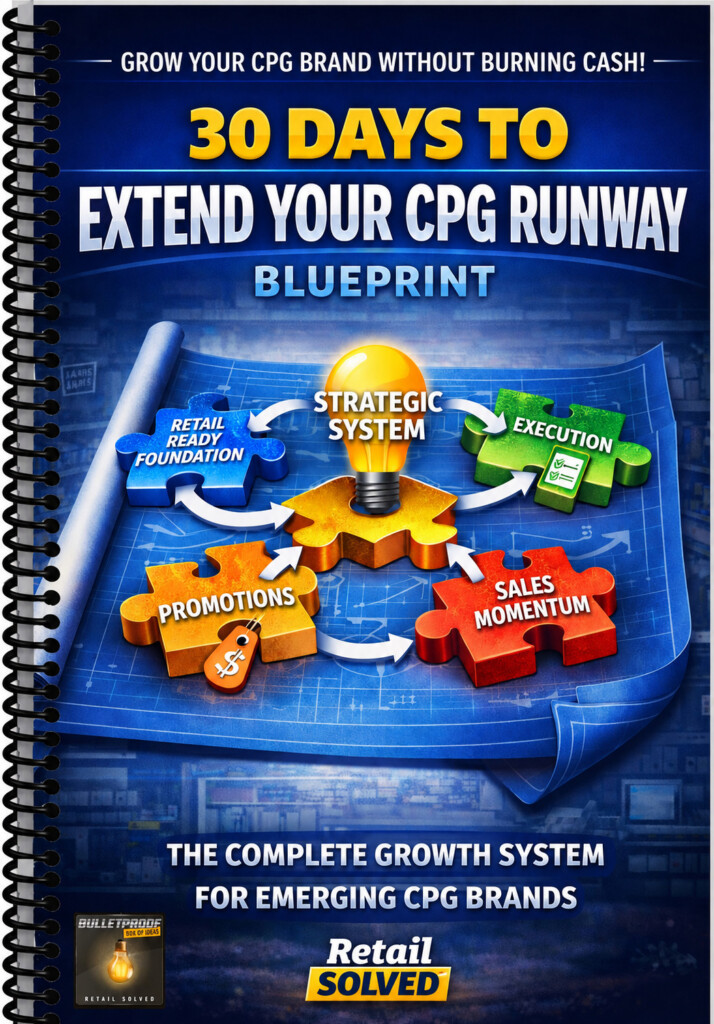
Extend your runway one focused day at a time.
Build the retail fundamentals behind profitable growth with one practical skill, one action, and one better decision each day.
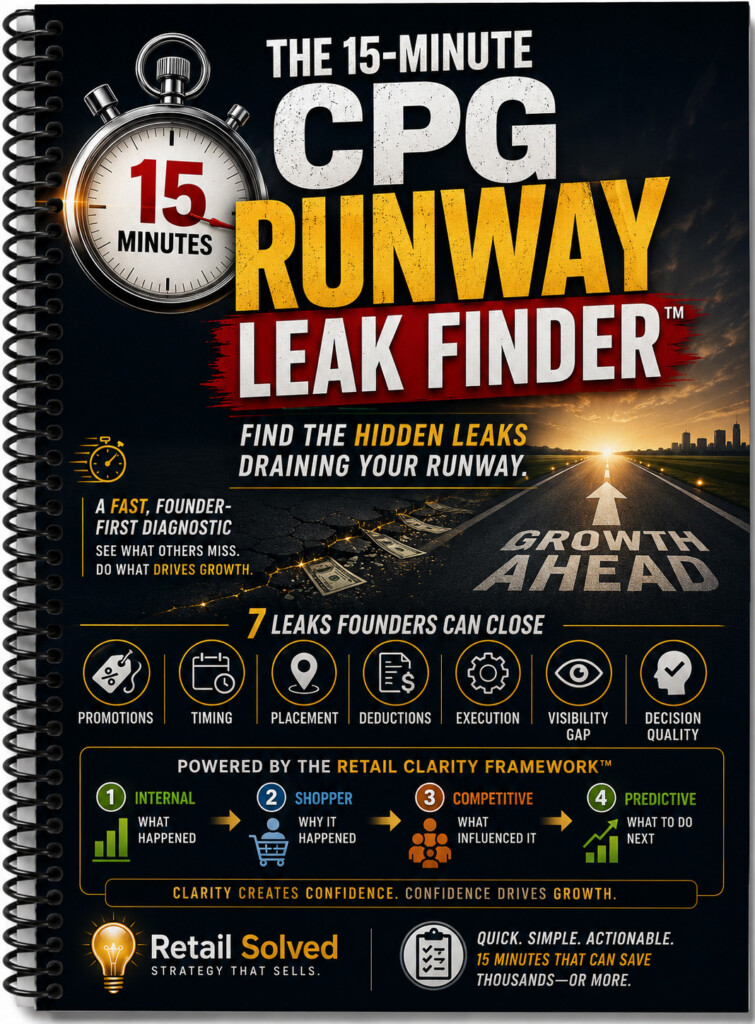
Start here: Find where your CPG brand is losing cash, margin, and runway.
In about 15 minutes, identify the leak creating the most pressure so you know where to look first.
No friction, no email required.
Retail Operating System™
The complete 11-module framework for protecting margin, optimizing trade spend, and scaling distribution with confidence.
Retailers run on systems.
Most brands run on hustle.
That gap is expensive.
The Retail Operating System™ is the only structured, data-driven retail growth framework built by a Certified Professional Strategic Advisor who has sat both in the founder seat and across the table from retailers.
It gives emerging CPG brands the same operational discipline, trade strategy, and category leverage that big brands use — simplified and systemized to protect margin, optimize trade spend, and extend runway while scaling distribution.
This is not education.
It’s infrastructure.
Image is the property of CMS4CPG LLC, distribution or reproduction is expressively prohibited.