What happens when one of the most influential founders in natural products decides to start over?
In this episode, I sit down with Seth Goldman, founder of Honest Tea and co-founder of Just Ice Tea, to discuss what it takes to build a mission-driven brand in today’s retail environment.
We explore:
• Why Honest Tea’s discontinuation created an unexpected opportunity
• How Just Ice Tea scaled faster than Honest Tea did in its early years
• Why retailers actively sought out the brand when shelves went empty
• The importance of authenticity and transparency
• Why mission alone is not enough
• How mission-driven brands can create profitable category growth
• The pressure today’s shoppers are facing
• Why value and values must work together
• What founders can learn from the changing retail landscape
One of my favorite moments in the conversation is Seth’s reminder that consumers can tell when a brand’s mission is authentic—and when it isn’t.
Because the brands that endure don’t just sell products.
They stand for something bigger.
And they consistently deliver value for the shopper, the retailer, and the communities they serve.
Listen where you get your podcast








Like what you’ve heard?
Please leave a review and comment on iTunes
Let me know your most pressing question, I’ll do my best to answer it on a future episode.
Well, this time around, we, you know, um,
Enter your name and email address below and I'll send you periodic brand building advice, tips and strategies.
the learning curve, which was very steep, because Badon is T.
We were really creating a category.
There wasn't a category of less sweet drinks.
There wasn't a category of organic bottle tea and there wasn't a category of fair trade bottle tea.
So we had to sort of go out and educate the consumer, develop
the supply chain for all those things.
And we had to convince retailers and distributors
that those were viable business opportunities.
This time around, when we heard
the news about honesty, every retailer we reached
out to, in some cases, retailers reached out to us and said, hey, we need
you to, our shelves are gonna be empty.
So this was in May of 2022
and I started talking to retailers.
Really, by June, they said our shelves are going to be empty by the fall.
So as soon as you can make the product, we're going to put it on the shelves.
Are you ready to hear more?
Welcome to the bulletprivier CPG brand podcast.
The podcast or entrepreneur of CPG founders who want
to protect runway, improve execution, and compete
smarter with the resources I already have.
I'm your host Dan Loman.
Most brands do not have a spend problem.
They have a visibility problem.
The reports tell them what happened, but not always why
it happened, what influenced them, whether profits leaking, or what to fix first.
That is where cash, margin, execution,
and runway quietly disappear.
Each episode gives you practical strategies
to see what others miss, act faster.
It built a stronger retail business.
Every episode as a free guide to help you go deeper.
Use it with your team.
Look for the places where cash, margin, execution,
or decision quality, may be slipping, then run,
the free 15 minute CPG runway league finder,
at retail solve.com forward slash fine leaks,
to see where your biggest issues may be hiding.
Because the goal is not more information.
The goal is knowing what to fix first.
Now let's roll for sleeves and get started.
Seth, thanks for coming on today and thank you again for this
is your 2nd time.
You are on episode 38.
That's almost 300 episodes ago.
Well, that was a long time.
So thank you so much for coming on and and just being here.
I look so forward to talking to you.
So, for anyone who doesn't know you, which I can't
believe there's anyone left in the world.
Tell us a little bit about yourself.
Sure.
Well, it's great to be with you again and appreciate how you've been able
to share the stories of what's going on in CPG.
It's, uh, it's such a dynamic, uh, sector
and I think, I can't imagine 300 episodes ago,
uh, how much has changed since then.
Um, so I, I, um, I guess 1st got into
this business as the founder of Honest T back in 1998.
I had started that out of my house in Bethesda, Maryland.
Really, the simple idea that there should just be a less sweet
drink, less sugary drink on the market, and we got
that up and running into 17 whole food
stores, and then evolved to become the
1st organic bottle tea, and then the 1st fair
trade bottle tea.
We scaled it nationally and became the best-selling tea in the natural foods industry.
And then, um, in 2008,
we sold a portion of the company to the Coca-Cola company who saw
that there was, you know, believed in the potential of what we were building there.
Uh, and they bought the rest of the business in 2011.
Uh, and then it continued to grow, and I continued
to stay on there through 2019, though,
along the way, I also got involved with some other natural food companies.
Uh, one was Happy Baby, which, um, eventually sold
to Dunone, and then, Um, once I finished that work,
I got involved with Beyond Me.
And joined as an investor, board member advisor,
and then became chair of the board, and I'm still chair of the board.
Today of Beyond Meet.
Uh, and I left my, um,
work with Coca-Cola on his T in 2019,
and, um, was sort of thinking about
new things to get involved in.
I got involved with a restaurant plant burger,
um, where I'm chair of the board.
Uh, but also launched a company, uh, which initially was called Ethe Change.
It was focused on planet friendly snacks and uh, Um,
healthier snacks.
Uh, but in 2022 just
about 4 years ago.
I got a call from the Coca-Cola company telling me they were
going to be discontinuing honest tea.
Uh, and of course, that led to uh,
this moment of uh, a pivoting moment where I said, well, just
because Coca-Cola's made that decision doesn't mean what honesty
stood for should go away and got back to work with
a lot of the same folks who built honesty and uh, created
just iced tea.
And we're now scaling that nationally and it's been fun.
We're now larger than honest he was in its 11th year.
So it's happening quickly.
And, uh, That's certainly keeping me on my toes.
Well, congratulations on all that.
That's really exciting.
And I'm really thrilled that you're back into the tea business.
That's, I mean, you needed one.
I wonder why Coca-Cola let go of it.
Why did they turn their change your mind?
During the pandemic, they really lost track of
honesty, I would see in the stores where there should be, um,
11 or 12 facings.
There'd be one or 2 or sometimes for weeks at a time, nothing.
Um, and so honest kids continue to do very well.
That was the brand we also created and is still doing very well.
But after the pandemic, Coca-Cola said, we
got to simplify our business model.
They made a decision that was called fewer bigger bets.
So, um, they went from having 3
different brands of bottled tea to 2
And so that left honest tea out.
And, um, well, of course, it was very sad
for me at the time when I heard the news, it was really
a gift they gave us in, in, you know, this opportunity
to go back in and to do it.
You could think about all the, um, things you've learned
in your career, and if you could apply them.
Uh, you know, uh, it
was really a great opportunity for us and and it's certainly been both more fun
and grown more quickly than honesty.
I'm so glad you're able to fill the void.
And I'm so glad that you're doing this again, and that you're
scaling and growing so much faster.
Now, you mentioned that you're growing faster or you're
ahead of where they were before.
How did that happen?
Well, this time around, we, you know, um,
the learning curve, which was very steep, because Badon is T.
We were really creating a category.
There wasn't a category of less sweet drinks.
There wasn't a category of organic bottle tea and there wasn't a category of fair trade bottle tea.
So we had to sort of go out and educate the consumer, develop
the supply chain for all those things.
And we had to convince retailers and distributors
that those were viable business opportunities.
This time around, when we heard
the news about honesty, every retailer we reached
out to, in some cases, retailers reached out to us and said, hey, we need
you to, our shelves are gonna be empty.
So this was in May of 2022
and I started talking to retailers.
Really, by June, they said our shelves are going to be empty by the fall.
So as soon as you can make the product, we're going to put it on the shelves.
Wow.
Um, so we we had both a deadline, had
an opportunity that we wanted to capitalize on, so we moved really quickly.
That's exciting.
It's like,
And one of the things you were, so one of the things you said earlier, is we're
talking about change, a lot has changed, and there are
a lot more pressures on brands today.
The focus of what we talked about before was mission driven brands.
And I see that on your LinkedIn profile,
you've doubled down on supporting brands that are mission driven.
So let's 1st talk about that and then why it's so important.
Sure.
So I've always thought of myself more as an activist that a
straight business person, you know, business is
the channel or the venue that I choose to
practice my activism.
And so, uh, I really, uh, when I
look at the companies I've shared with you, whether it's beyond me, happy baby,
to me, they've all had that mission driven component.
And another one we didn't mention, but I'm also involved with this Tony
Chocalonely, which is working to end exploitation in
a cocoa supply chain.
Um, and so,
In all those cases, uh, purpose
is a critical part of these brands and of these businesses.
And so, We actually have become
part of the initial group of companies who have signed
on to purpose pledge, which is a initiative that,
um, started just really in the past year, uh,
where we have 10 commitments we've made around, um, around
environment around, uh, labor, um, and
sourcing and the communities we work with.
And so it's this idea that it's broader.
There's,
shareholder capitalism where just the shareholders are the folks
you listen to and stakeholder capitalism where shareholders are still important.
But so are other stakeholders that aren't necessarily
at the table, and we try to factor all of them into our decision.
And just to make it clear, this is still capitalism.
We're still taking investors money.
We still have a duty and an opportunity to to compound it and that's the goal.
Um, but we're just trying to do it with a broader lens.
Thank you for sharing that.
And to reframe Mission, the reason why I'm
so focused on that is because back then,
Mission was a key driver and a lot of brands.
You proved that, you've proved it several times since then.
During the pandemic, when the world shut down,
mission brands were, it was difficult,
but we understood what was going on, the supply chain disruptions, et cetera.
Now we've got a lot of other factors and shoppers
are under a lot more pressure.
And so what I'm seeing, and tell
me if you agree with this.
is that not only is there a lot more pressure on, on the brand,
but there's also a lot more pressure on the shopper.
And what I'm getting at is that, you know, a gas price doubled,
literally doubled up the street for me.
And from just a couple months ago.
And so because of the volatility, customers
are rethinking the way they spend money.
And where I'm going with that, is that
the mission driven brands, if they're strategic, if they're
smart, have an opportunity to carve out a niche,
because you stand for something, you provide
value and quality well beyond what most brands
produce or provide.
That's true, but you know, we also have to operate
in the economy that exists, right?
So, we, you know, when we see prices, uh,
rise due to tariffs or the other inflation,
you know, we've got to be involved in that too.
We can't, we can't.
I mean, part of me would just love to not raise prices, but we're
looking at the landscape and we've got to be competitive economically
within the context we're in.
It's great when our missions give us
a value added or an extra degree of loyalty.
Or maybe we get a little bit of extra attention.
But we still got to deliver on
all the other basic economic, um, deliberables
that are expected of a business.
We have to get margin.
We have to get profit.
We have to, you know, make sure that we're creating economic opportunity for employees.
We have to pay competitive salaries, and then we have to think about the other benefits,
and for us, in particular, you know, all of our employees
have stock options, for us, that's an important way to make sure they
get to experience the upside of the business
we create, and and we're certainly, you know, feel like we're creating that upside.
They should benefit at least as much, if not more than our investors from doing that.
Thank you for sharing that.
And I agree with you completely.
I mean, I understand that every brand's under the same, has the same
constraints to deal with.
However, what's really cool about what you're doing specifically
in the mission space, and this is where I was going there, is that you
help provide profitable growth to the category.
And what I mean by that is big brands
commoditize their products.
So the former, you know, co pick on them for a little bit.
You know, when you, when they have a lot of money to deep discount,
they pull profitable dollars out of the category.
What the retailers take to the bank is the contribution
that you provide one.
And then two, you have the ability to build larger baskets.
So you also have the ability to drive more traffic.
So I'm sorry, yeah, please go ahead.
No, that's a really good point.
And in fact, what happened, it's funny.
You know, when I got the call from Coca-Cola
about honesty being discontinued, the 1st thing I did was look at what happened,
what's happened in the tea category since I've been away.
You know, I've been away for, Oh, more than 3 years.
What's happened?
And what it, it felt like it was, uh, you rented
your house out to somebody, you traveled overseas, whatever, you come home, and you're like,
0 my gosh, what did you guys do to the place?
You just let it all go to pot?
you didn't you didn't maintain it.
You didn't, you didn't give it a new coat of paint.
You didn't invest in in quality or marketing,
and so the category was declining.
And so we went to the retailers
and said, this category needs innovation.
And it's really striking to see, and we look
at, really around the country, you'll see, you know,
the category still is declining, but we're, we've been growing so quickly.
Um, and even you look at the top legacy tea
brands and they're all in red and then you look down and you see us with
double digit growth in every market and realize this
is an opportunity to bring back growth to the category to bring back excitement.
And you're right that when you look at the shopping cart.
Are, it's, and every chain we've
looked at, we are, we are connecting with a more valuable
shopper, the shopper who is, um, spending more
in this category, and also has a, has just a,
a bigger basket.
So it's a valuable customer to the retailer.
So, those are really important insights
that we can bring to, um, the retail partners.
We approach.
Thank you for sharing it.
So we were talking about how your your success.
Um, you mentioned innovation.
So how are you helping to grow the category with your innovation?
What's unique or different now than what you had before?
Well, it's funny.
A lot of it is what we had before, but the category moved away.
So the category had just moved to cheaper tea.
So, Um, glass bottles when
we were back at, you know, honesty, where, where, there were far more prevalent.
Now, we're really one of the only brands, if not the only brand in
the glass bottle in most of these chains.
Um, they moved away from organic.
They moved away from fair trade.
And you're looking at tea, which is one of the least
expensive commodities in the world.
So from our point of view, we should be able to buy tea that
is high, super high quality, and still
be organic, and still be fair trade, to invest
back in these communities, and still be, you know, economically
competitive on the shelf.
Um, and then investing in new flavor
fun flavors and different blends.
You know, they, what's on the shelf had just gotten,
frankly, just stale and plain, it's a consumer got tired.
Everyone's just selling a lemon tea.
So we have, we launched this summer, a watermelon lime, white tea.
We have an orange mango herbal tea that I'm drinking here today.
So there are a lot of, uh, ways to bring back
fun and excitement and then the marketing, creating
a fun social presence, a dynamic social presence, not
just hiring some spokesperson, but with authentic
field marketing, being out in events, whether it's
in New York City or in California, having passionate
people become ambassadors for our brand, connect with consumers.
So few consumers actually get to meet people connected
to companies, and we just have an amazing dynamic
team of people who really love sharing the story of what
we're doing and can get people excited about it.
That's cool
Well, and we were talking about this before.
Big brands tend to talk at us where we talk
to our customers and treat them like people.
So that's exciting you're able to leverage it.
I was going to say, one of my favorite LinkedIn posts that you
have that you put out there, your company, is where
you're talking about all the things you're doing, and you're talking about
how, I forget your exact words, but
you're looking at a cooler, all glass bottles,
all, and the point being is that everything that every
single thing that you're doing is in line with or
in lockstep with your mission, your values, where
a lot of companies aren't doing that.
Can you talk about the importance of that, not only
to your brand, but as you're working with these other brands,
how can brands leverage that to increase
loyalty and convert occasional shoppers into loyal customers?
Sure, well, one of the key things is it has to be
authentic and consistent.
So, we can't say, oh, it's Earth month.
going to go be environmentally friendly.
And then sell product, for example, plastic.
We're, we have, uh, when we launched just iced tea.
We said we're not going into plastic at all.
We're gonna just do glass and cans.
Um, and, um, so from that point of view,
the organic piece may, you know, this is a through line.
It's not just kind of an opportunistic approach.
Um, you know, and then the, the, the way we formulate,
we, we talk about this idea.
We use we have the the name justice in our name, right?
Justice, tea, justice.
So we have to make sure that we are investing
in the right kind of relationships with our partners.
And so for us, that's why fair trade is so important.
So, with fair trade, it means the working conditions in the tea gardens
are inspected, both the wages and the conditions.
But in addition to that, we actually, um,
invest back into these communities through through the fair trade purchasing,
uh, these premiums go to the community for them to invest
in whatever they deem, uh, appropriate.
And so the community where we've done most of our tea buying is in Mozambique.
And uh, when we met with them back in 2023,
early 23, they said, what we really need here is a health clinic.
This is a province where the average life expectancy is 54 years old.
Um, so super early,
you know, um, mortality among adults, and,
um, we, they said we need it to be able to diagnose when someone,
we can't tell when, if someone has malaria or AIDS or cholera.
We don't know the difference.
And so a diagnostic clinic could help, um,
address those illnesses, all of which, by the way, are curable
if they're detected early, if they're not detected early, they're fatal.
And so, um, building that clinic is very
much in line, with the name of our brand,
the fair trade commitment we have.
So this idea of trying to be consistent, uh, with what we're doing is important.
And, and, you know, I always say there's no such thing as a perfect company.
We're going to make mistakes and, and uh, we try to be
honest about where we're, where our shortcomings are.
But, um, that that commitment is authentic
and we do everything we can to, uh, carry through with it.
It's so desperately needed.
Like you said, something that is completely preventable,
and then, you know, they have no idea how to diagnosis, so thanks for
all you're doing beyond just our country.
What else are you doing to help brands?
Because I see that you're working with a lot of brands?
mentoring them and supporting.
Well, I try to, when I, I do try
to get involved in a deep and meaningful way.
I, I, um, I've got a full-time job, so I'm
not looking to be a consultant.
So, you know, beyond meat, uh, as chair of the board, really
do work closely with the CEO and the leadership team to help guide
that business as, as you may know, the whole plant-based category has
been challenged, uh, over the past few
years, the categories declined significantly.
And so helping think about how do we pivot to still be relevant.
Um, science is is, is really impressive.
The impact is very impressive and that you, both from a
health perspective, environmental perspective.
So how do we pivot?
Um, to still, you know, meet the needs of
consumers?
Um, uh, and again, with Tony's chocolate only.
This is, um, the role I have there is to be a chair book
called Mission Guardians, and our specific task is
to make sure that this fast growing, Candy
company, chocolate company, upholds its commitments around
its sourcing, these 5 principles to make sure there's
no child labor, that everything is traceable.
And so, um, being uh, basically
a voice within this company to, to, to protect
that critical piece of that business.
So, for me, um, you know, when I can help,
um, be a leader in enforce
standards or, or, um, direct
towards opportunities, that's where I like to get involved.
I, I, I, I'm certainly, like, I think so many people in this industry.
I'm always a student of the industry, always looking at what's happening, but
there's just so many companies I can get involved with and for me,
Um, I, you know, I want to do it in a deep and meaningful
end, you know, long-lasting way.
Thank you for sharing that.
So, when you said that the plant-based category
is suffering or is not doing as well, from your perspective,
what do you think is causing that?
You know, it's been a really interesting thing to watch.
So there's definitely some cultural shifts, right?
I mean, the whole maha movement.
Um, actually has some useful
elements in terms of the dialogue, but some of the dialogue around,
you know, we should only be eating, you know, red meat.
That's just not, um, something I believe is best
for health or for the environment or for the planet.
But that's just been interesting to see that um,
that's been a shift there.
There's been this narrative put out and a lot of it has been put
out by, I would say, that the incumbent industries, like the meat industry,
uh, against, um, ultra processed
food, and, and that, uh, the
label has been applied to all types of things that aren't ultra processed.
So I certainly am not going to be out there promoting Doritos
or soda.
Those don't grow on trees or tea bushes.
Um, but something like uh, uh, beyond burger
is an example, is used with the exact same equipment that pasta is
made with, an extruder.
So, That, you know, if someone has a problem with that
processing on that kind of product, then they shouldn't be eating pasta.
I'm a big fan of pasta, so you won't see me doing that.
But I think there has been a bit of a confusing narrative.
Um, and I think also, you know, what,
um, companies like Biami have done are sort of, or
the whole industry has raised the question, well, do we need to
be as dependent on animal, um, carcasses as we are for our diets?
And I think in some people take that question as
threatening, uh, because, you know, meat tastes good.
I, you know, I certainly, before I became vegans certainly like the taste of meat.
But, um, so, so it's
easy, it's easy to try to, um,
avoid that question by saying, oh, well, it's really processed, so I don't want to
eat it, rather than think about, well, is it really processed,
and if I can meet my dietary needs without killing another
sentient being, you know, is that, is there a role for that in my diet?
It doesn't certainly have to be vegan all the time, but is
there a way to incorporate more plant-based foods?
And so in the long term, I'm confident.
Uh, the plant-based category will, will thrive,
but it's, you know, like a lot of different businesses, they go through different cycles,
and I think, certainly these days it's been a challenging one.
I appreciate your sharing that.
One of the things, I mean, I agree with you.
It's a political argument.
I don't mean to get into the deep politics.
Well, my point is this.
If you go to Europe, you don't buy products
with GMOs in them.
But those same companies that sell products in
Europe are spending tons of money to fight
getting rid of GMOs in this country.
So from a political standpoint, it doesn't really make sense.
And so we are polluting ourselves, I believe.
So it goes back to the mission.
Yeah, it's also notable that in Europe that some of
these narratives around plant-based foods just don't get any traction.
So, in Europe, where I would say the environmental issues
are more front and center harder to avoid, a
great example in the Netherlands, where, you know, they literally
are surrounded by water and sort of,
um, so there's real risk to climate change.
And there you see the plant-based categories thriving.
Um, so, um, sometimes the
people who have a, uh, clear understanding of
the threats of the environment.
Um, uh, are, are more tuned
and and embrace these diets more readily.
I used the last project that I did, the
last thing I was working on, I actually leveraged
the, the value of plant-based, and was able
to deliver a 9% growth to the larger retailer.
And the way I did that is focusing on the
fact that it's digest better, et cetera.
So the point being is there's so many good things about it.
getting back to what we were talking about earlier in terms of mission-based.
We need to do a better job of communicating the values,
not only the value we're producing, but the values of
the brands that we are producing to the consumer we sell to.
Your thoughts?
I think it's true, but at a certain point, there's only so
much consumer education you can do.
So as an example, with Beyond Meat.
You know, this whole narrative, again, um,
part of it, Maha narrative about seed oils being really bad for your health.
Um, I personally, um, don't have an
issue with seed oils, but, you know, at beyond meat, we said, it's, um, they
were using canola oil, and they, we just switched, um, to coconut, uh, to,
I'm sorry to avocado oil.
And.
Um, just, because you're not gonna win that,
or we're, we're too small a business to try to win that
big argument.
Um, so you have to meet the consumer where
they are within the context and just, you know, a similar example.
Look, I talk about environmental responsibility, but what
we sell at Justice T, our single serve containers.
And I can certainly make an argument that environmentally,
it just, we should only be selling large models
or just tea bags.
Um, but, you know, that would,
that would be a tough business because I'm not being the consumer where they are.
So, um, yes, we sell single serve containers,
but they're organic, uh, and they are in packages that are
completely recyclable.
Um, so, you know, you have to, um, like
I said, there's not a perfect company.
And so we do it within the context that we operate in.
I think that, you know, that's.
You just have to have that lens rather than say,
the only thing we're gonna do is something that's the highest
ideals and but isn't doesn't become a real business.
How would you go about helping other
founders communicate those values better?
Tell this, tell the story?
I think transparency really is the key here.
So, you know, one thing we do a lot of it, just iced tea is
just show, uh, everybody, what's in, uh,
you know, I, I, we have a policy and our
social media, no, no posed photos, no
fake, uh, no, you know, um, AI treatment of a photo.
It has to be real.
And so, um, We'll show people what's going on.
We had a, we had a typo on one of our labels.
Instead of saying farmers, it said, uh, famers.
We left the, uh, and we just, you know, we just owned it.
Like, we didn't, we didn't,
We didn't try to, uh, claim we meant to do that.
It's like, oh, that was that was just a typo.
Um, just as an example, like we've got to be,
we are, you know, real people, uh, and,
um, show that we're, we're doing the best we can with
what we have, but we're gonna make mistakes as well.
And um, so that transparency across
all the different ways we operate is important.
Well, and you're sharing that, that authenticity,
it helps bring more value to your brand.
It says that your feet and your lips are moving in the same direction.
So I think it's a great idea.
Yeah.
Yeah.
Again, it should be, you know, in
the same way that our our tea, right?
It's just the ingredients that on the label, right?
There's no, um, there's nothing fake.
It's, it's all real brewed ingredients and, um, you
know, everything we say is in there is in there and, uh,
again, with having that paper trail around organic,
around fair trade, all these things that are, any claim we make needs to
be, you know, um, holed up under scrutiny.
Thank you for sharing.
Well, and also the packaging, everything that you do, you're doing it right.
And actually, where I'm going with that is microplastics are such a huge issue.
Yeah, so trying to get away from that.
is going to be challenging, but yet I guess
it's in almost everything that we have now, especially
in fish, which is...
It's wild.
I mean, and look, again, being fair or transparent,
you know, honesty, which wasn't that long ago sold plastic bottles
and glass bottles, but we also sold plastic.
And I think part of that just is for me has been an education as well.
Basically, what I learned since then, helped me appreciate why
I don't, for all the reasons you mentioned, the microplastics,
the pervasiveness of them, these chemicals in our,
in our bodies and in our ecosystem, and let's try, try, do
everything we can to try to move away from them.
Um, is is all we can do.
Isn't tea a good way to detox too?
If I'm not mistaken?
Well, tea has incredible antioxidants, um, it
has, it certainly is a, well, look, tea is the world's 2nd most popular drink.
So it is consumed and water is number one.
So, it's consumed all around the world.
It really is a, um, the
most consumed liquid, really.
And it has great health properties to it.
We always, again, just are careful not to make any
direct health claims.
I mean, I can tell you, and we know when you brew tea,
the way we do it, and it's important to understand, we use, um,
the ingredient that comes to our bottling plant, our tea leaves, whereas
most bottling plants are going to take in a barrel of flavoring
or a barrel of powder or syrup and add that to water and say that's tea.
We're brewing tea just like you would in a teacup.
And that means you're getting all of the antioxidants, all the
health benefits of tea.
In a bottle of just iced tea, and I
certainly, um, would not claim that's
what's going on in a lot of the other bottle cheese.
I would venture to guess that it's not, and while
we're on that path, I would venture to guess that you're
probably also being careful not to bake out or not to cook out the good stuff.
Yeah, that's right.
Yeah.
Yeah, tea is, it can be a delicate ingredient.
You can absolutely create bitterness.
So green tea.
You have to be careful not to overbrew because it will create
a lot of tannins.
Um, you know, with black tea.
You've got to get sort of just the right infusion.
Um, and, and, um, so yeah, this is something we've perfected.
And, and the, another advantage of with just ice tea is we had all
the knowledge about brewing tea at scale, that we painfully
learned in the 1st 5 years of honesty.
So we were able to take advantage of all those learnings.
I know, but anyhow, I love what you're doing, so that's fantastic.
So what else can you share with us about the
brand about what you're passionate about?
Yeah, so what's really exciting is we're at this
stage now where just iced tea is scaling rapidly.
So just this summer we're launching in Publix, Kroger and Safeway,
uh, as well as, um, expanding dramatically
in both Walmart and Target.
So, you know, we go back to the goal of the business
is to democratize organic and healthier drinks.
And so it's really rewarding to see that happening at the scale.
Uh, and then, you know, this health clinic that we've
been, um, working on, it's it's funny.
We, as I said, we were in the garden in 2023
when they told us that's what they wanted to build.
We said, let's do it.
Um, we, through our purchases, generate
the money to operate the clinic, but we needed to raise
the money to build the clinic, meaning on
a day-to-day basis, we'll be able to cover it, but we needed to,
to, to basically construct the building, to buy the medical equipment.
And for that, we brought an outside partners.
We worked with Rotary International.
And we raised over $100,000.
From rotary chapters all around the world.
Um, which May not
sound like a lot for a health clinic, but in Mozambique, it goes really far.
So the building now is built.
Just this week we got the license to operate
the clinic, which was, Felt like it took a long time.
The government, um, they are just has its process.
And, um, so it'll be really exciting.
It's now looking like November is when, uh, we'll be there to
cut the ribbon on this health clinic.
And, you know, it is exciting.
I think if I were doing it myself, I might have it
happened more quickly, meaning just our company, but they
say, you know, if you want to go far, you know, if you
want to go fast, go go alone, if you want to go far, go together.
And so with this, um, you know, working with
rotary, doing this through the proper channels, uh,
probably took a little longer, but I do feel like it'll be more enduring
and we're really excited about that.
Congratulations.
That's exciting.
So is this a model for something more?
What's next?
I hope so.
Well, 1st we got to build the clinic, so it's, I mean, and open it.
So, uh, if we can open it and we can demonstrate the
benefits to the community, which I'm confident we will.
I mentioned that life expectancy of 54 years old.
So it's a very low bar, but if we
can document that we're helping, you know, increase
the quality and and and length
of the lives of the 10,000 villages in this community, that hopefully
will inspire others to look at their supply chains in a different way.
Uh, and obviously for us, that's something
that's very exciting to share with our consumers as well, to
know that when they buy our tea, they're supporting this kind of initiative.
Well, and I think that underlying message, so
from my mission, is to help brands like you, scale,
grow, et cetera, so that you can do more good on my our behalf.
And my point being is that that underlying mission that
you're sharing with your consumers, I'm sure they feel the same way.
So thank you for that.
Sure.
Yeah, this will be a really fun moment.
It's something that we, as I've said, been working on for more than 3 years.
So, um, looking forward to it.
It is a long time.
But it's, it's got to be, it, that's really cool you're being able to do that.
So thank you.
Yeah for sure.
Sure.
Anything else you wanna share?
We've got other innovations in the pipeline.
I don't, I can't give it away yet, but, um, you know, we start with tea.
Uh, obviously, tea isn't our name, so everything we're
doing is gonna be tea related, but, um, it won't
just be the glass bottle.
We've got some other innovations we're working on extensions
of the business, and again, they'll have the same equities.
They'll be organic.
They'll be fair trade.
They'll be lower calorie or healthier taste profile.
Um, so there are a lot of, um, fun things we're working on.
That's exciting here.
Well, we'll stay tuned.
Well, thank you.
Anything else you want to share?
Um, no, I would just encourage your
listeners to look at purposepledge.org.
Uh, we we think it's a really exciting new direction and
we certainly invite others to join.
It, it is, um, often
the standards, uh, certifications that are out there for
businesses are kind of, uh, um, paperwork
related and sort of a low, a low bar.
This is a high bar.
This is about continuous aspiration.
So we as a business need to challenge ourselves to
continue to elevate our game around purpose.
And so, yes, we're organicists for fair trade, but one
thing we're looking at now is can we be regenerative, organic.
certified.
And so that's, that's an higher level of certification
around our environmental practices.
And, and we just got, um, our main garden got
certified, regenerated this, this, this month.
So, um, we're looking forward to seeing that.
So I think the, the, the, the big picture of that is, it's a continuous process.
It's not a destination.
That's very cool.
And congratulations.
I actually had, um, Jeff Moyerarn with Rodale
years ago, back when they were 1st rolling this
out, talked about older podcasts.
That is such a cool process.
And the fact that you're embracing it, I think, honestly,
that's going to be one of the things that's going to differentiate the
the organic movement because I see, I
know a lot of people, at least back then, had a lot of confusion around this.
Non-GMO is that organic or not versus organic.
Do you still run into that a lot?
I do.
We even had a buyer.
This was now 10 years ago, but who was saying, well,
we should get the non-GMO seal.
I said organic means non-GMO.
It means so many more things.
Why would I try to confuse the consumer?
I said, I kind of said you should be ashamed.
of asking me to do that.
That's, that goes cat.
We're trying to make this simple and approachable to the consumer.
We start putting on labels that are kind of counter
contradicting each other, uh, or overlapping.
It just creates confusion.
So, I do think we have to continue educating
consumers about what these certifications mean.
And there are real rigor to them.
I mean, the USDA certification is a US government enforced standard.
Um, and it's applied to growing
farms all around the world.
And and so there's real rigor to them.
Thank you for sharing it.
And your point being that it's enforced.
Whereas not GMO.
That's not enforced.
I've heard stories and I'm not trying to pick on the non-GMO movement.
They've done a great thing.
However, I've heard of a lot of brands
that had something non-GMO in it.
Something changed in the crop or whatever, all
things, you know, different things can happen.
And a company got in trouble for that.
But if it's organic, it's certified organic
and it's recertified organic and so on.
Yeah, and you have to, and there's a paper trail, literally
from the garden, through the bottling plant to
the, to the warehouse.
So, It's all got to be documented.
Well, I believe that if you are what you eat, what
you matter, so organic is the closest thing
to the, what is the best thing, obviously, but thank you for sharing that.
Yeah, and it's also important to know with respect to tea.
Tea is one of the few agricultural crops that's never rinsed.
So, if chemicals are sprayed on team leaves
and pesticides, herbicides.
Um, those would stay on the TV until you're
brewing the tea and that gets washed into the tea.
That what you'd be drinking.
So from our point of view, organic, where none
of these chemicals get sprayed on the leaves is a great place to, to, um, start.
You know, I don't want to go far on a tangent, but I've
always wondered, I've never understood the value of a lot of people.
They don't appreciate what herbicides and pesticides do.
And I was trying to describe it to someone.
It's like, you spray something on a bug that
destroys their nervous system.
We eat the byproduct of it and we don't
think that we're going to have problems.
Yeah.
Well, I say, uh, so, you know, pesticide, herbicide, pundicide.
They all have that word side, the same root as suicide homicide,
which is killing a living organism.
And so, if you can ingest ingredients
without those sides on them, uh,
and and you can avoid putting those sides into the ecosystem.
Uh, it's just, uh, you know, just intuitively, it's just
a, a better choice.
And the other thing that I would say, you know,
all the farm, um, the agricultural industry
would tell you, well, these are all safe at extremely diluted levels.
And, you know, I, I, I, I won't argue with that,
but what I will say, is we know that in our ecosystems,
and in our bodies, they don't, that those applications
build up, right?
Because they don't they don't just wash away to nowhere.
Somewhere they're building up.
And you do see, you'll see in, in the
spinal cord fluid of, you know, newborn babies, you'll see these chemicals,
um, present, and you'll certainly see them in water systems and
ecosystems, even ones not near farms.
So, um, it's a very deliberate choice
to not, uh, to avoid these ingredients when you can.
Certainly from our point of view, in our tea, they don't
add anything to the taste of our or the health profile of our tea.
Well, and it's actually kind of scary to think, what am I risking?
So I wish people, and
to your point, and this goes back to what we're talking about earlier.
I think we as an industry need to do a better job singing our praises.
And talking about why those values matter
and how, not only were you doing what's
right, but the customers that drink and support you, drink
your product and support you, are also supporting your mission.
Yeah, yeah, and we certainly do our best to express
our appreciation to them, but they, we wouldn't be here without them.
Well, and then, I'm sorry, LinkedIn profile, you had a post.
I'm sorry, I missed, like a couple days ago, National Ice T Month or something.
Yes, yes, June.
It's nationalized team month.
So, uh, we are, you know, observance of it.
We hope everyone is.
It's a great, you know, these national holidays
are, you know, what do you say, Hallmark holidays, but from
our point of view, great opportunities to just make sure people remember this
is the season for what we're selling and, you
know, especially as the weather gets warmer.
Our drinks are delicious and fun.
So should I be sending out cards to people?
Oh, yeah, absolutely.
That's funny.
Go ahead.
I sorry.
Send them tea, not just cards.
There you go.
that would work.
That would work.
So cool.
Well, it's so great talking to you.
Anything last comments, anything you want to share?
It's been fun chatting with you, Daniel.
You know, it's always great seeing you, and I always appreciate your time,
and, and, again, thank you for making time first.
And more importantly, thank you for what you do for our community
and thank you for what you do for our environment and other
environments, other communities as well.
Thank you.
Great to be with you.
Appreciate.
Sales may be up, but cash may still feel tight.
That's a warning sign
Most brands do not have a spin problem.
They have a visibility problem.
The reports tell them what happened, but not always why it happened.
What influenced it whether profits leaking or what to fix first.
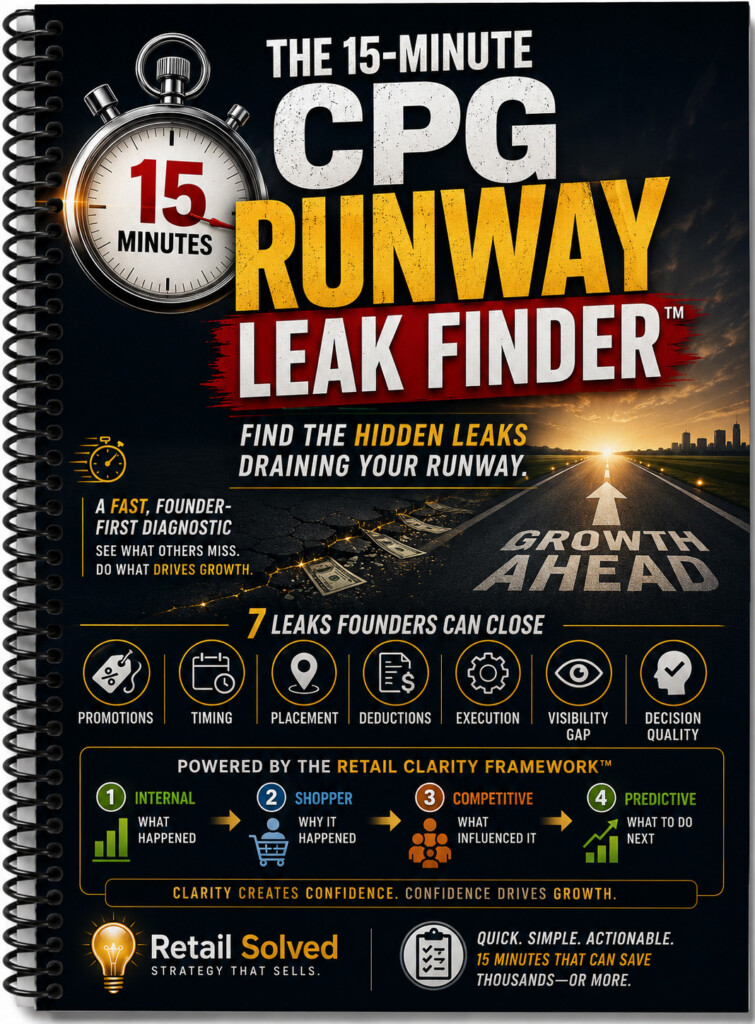
That's why I created the free 15 minutes CBG
runway leak finder.
It helps you quickly identify possible leaks and promotions,
timing, placement, deductions, execution, visibility,
and decision quality set a 15 minute timer pick
one issue and answer honestly.
If you hesitate, that may be where the leak is.
Download it free at retailsolve.com 4
slash fine leaks.
No friction, no email required.
Thanks again for joining me on the Bulletproof Your CPG brand podcast.
If this episode helps you see your business differently, follow
the show, leave a comment, and share it with another founder who needs it.
You can download this episode's free guide in the show notes.
And if you want to start with a bigger picture, run
the free 15 minute CPG runway leak finder at
retailsolve.com slash fine leaks.
Before you raise more money, cut the wrong thing or
fund another promotion, find where your cash, margin,
execution, and decision quality may already be leaking inside your business.
I'll see you in the next episode.
At retailsolve.com/session325.
Sign up to receive email updates
FREE Trade Promotion ROI Calculator:
Click Here To Maximize Sales And Profits
Start here: Find where your CPG brand is losing cash, margin, and runway.
In about 15 minutes, identify the leak creating the most pressure so you know where to look first.
No friction, no email required.
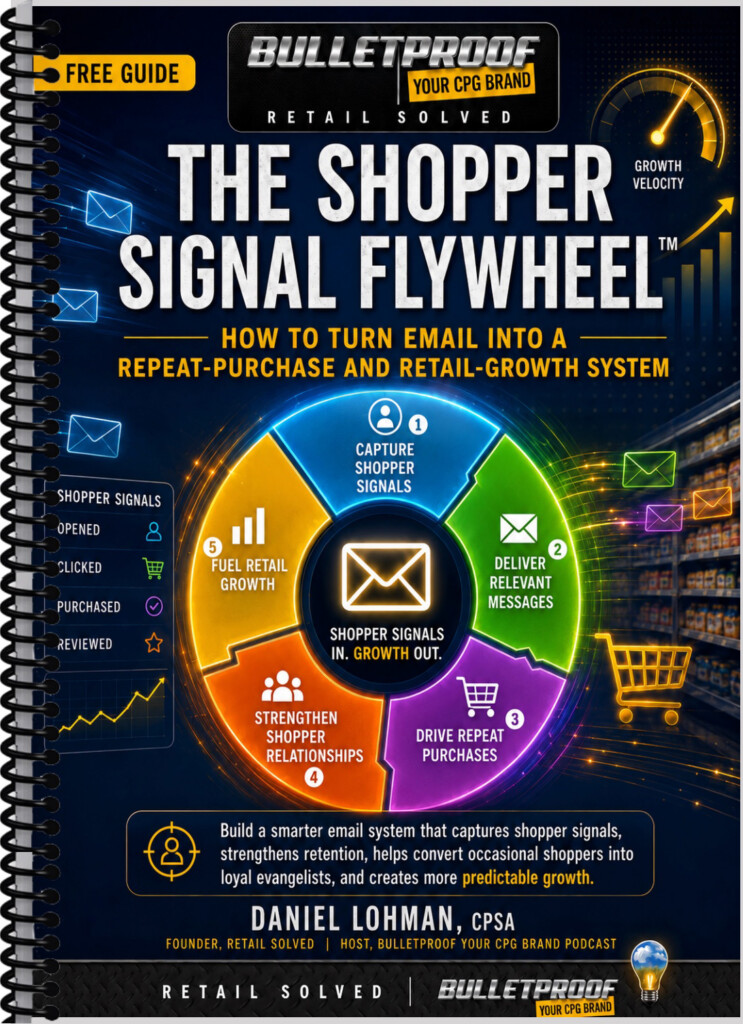
Your shoppers may know what your sales report cannot tell you.
Use your email list to capture real shopper language, validate ideas, strengthen repeat purchase, and build retailer-ready proof.
Your email list can become more than a marketing channel.
Retail Operating System™
The complete 11-module framework for protecting margin, optimizing trade spend, and scaling distribution with confidence.
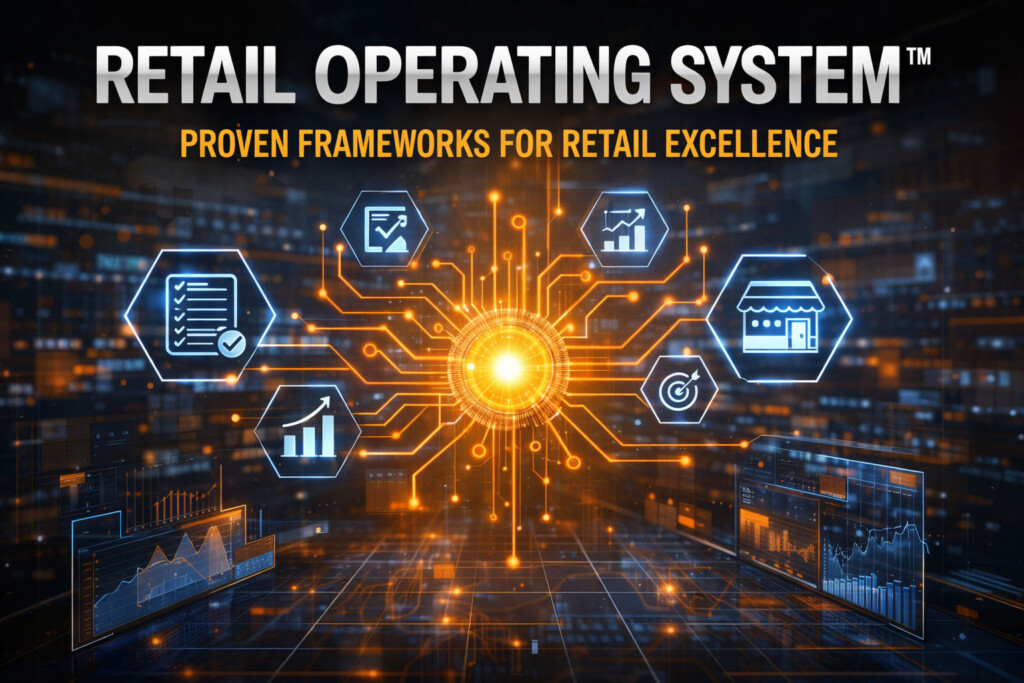
Retailers run on systems.
Most brands run on hustle.
That gap is expensive.
The Retail Operating System™ is the only structured, data-driven retail growth framework built by a Certified Professional Strategic Advisor who has sat both in the founder seat and across the table from retailers.
It gives emerging CPG brands the same operational discipline, trade strategy, and category leverage that big brands use — simplified and systemized to protect margin, optimize trade spend, and extend runway while scaling distribution.
This is not education.
It’s infrastructure.
Image is the property of CMS4CPG LLC, distribution or reproduction is expressively prohibited.