The brands that win long term are rarely the brands chasing short-term trends.
They are the brands that understand:
• changing shopper behavior
• emerging category shifts
• evolving health priorities
• and how to position products before the market fully catches up
In this episode, I sit down with Suzie Yorke to discuss:
• functional foods
• healthier chocolate
• category evolution
• founder-led innovation
• brand positioning
• scaling mission-based brands
• emerging health trends
• and what smaller brands can learn from large CPG experience
Suzie shares her journey from:
• Procter & Gamble
• Heinz
• Weight Watchers
• and other major CPG leadership roles…
…to launching mission-driven brands focused on solving real consumer needs.
We also discuss:
• why positioning matters more than most founders realize
• how category trends evolve
• why healthier chocolate is becoming a major opportunity
• what founders still misunderstand about the first 3 Ps
• how mission-based brands build stronger loyalty
• and why founder conviction matters during uncertainty
One of the biggest takeaways:
The brands that deeply understand where the shopper is going gain an enormous advantage before competitors fully react.
Listen where you get your podcast








Like what you’ve heard?
Please leave a review and comment on iTunes
Let me know your most pressing question, I’ll do my best to answer it on a future episode.
Susie, thank you for coming on again today.
Enter your name and email address below and I'll send you periodic brand building advice, tips and strategies.
And again, when I say again, I mean, you were here in episode
139, and that was a masterclass in
brand positioning.
So thanks again for coming back, and let's start by
talking a little bit about yourself and who are you and how did you get to where you're at?
Okay, great.
Well, I'm thrilled to be on a 2nd time.
It's quite a privilege.
I'm an engineer, turned marketer,
35 years ago, I graduated McGill, and my
1st job was a bit wild.
I took a marketing job at Proctor and Gamble.
So that was uh, that was the 1st time
a non-business grad had been hired.
I stayed at PNG a pretty long time.
I followed my boss to Fried away.
And then I got a big promotion, big job at Heinz.
So I climbed the ladder and CPG.
You know, I was a very young director and then I got
pregnant with my 1st daughter and then I got a big
job at Weight Watchers as a VP marketing.
So I had the 5 multinationals.
I did Conagra in the middle.
And, uh, I became known as a
turnaround agent, um, I
was, you know, initially at PNG.
I was put on my last assignment was a really tough assignment.
The brand had been declining for 5 years, and there's not a
lot of brands at PNG that declined for that long.
So I kind of turned that around.
Doritos.
They hired a new uh, marketing manager because the
brand had been declining for 3 years.
Then I launched tastitos into Canada, and then both
ketchup and weight watchers were declining brands.
So I was starting to kind of find my niche of like,
I'm kind of the go in there, fix it, uh, blow things up.
Usually, it's people positioning and product and processes
were kind of the 3 themes.
You didn't turn around big ships with just like, you
know, a little promotion or a little bit of fluff.
Um, these were hard, hard brands to turn around.
Um, especially ketchup and weight
watchers had been really, really battered for 10 years and
had some smart VPs before me.
Um, and then, you know, I moved to
fractional at the end of my last, I did 2 hypergrowth
companies as CMO, VP marketing CMO,
and I really got a feel for like the addiction of
taking a brand from 1000000000 to 100 million.
I was really fortunate as a Canadian VPA marketing to do that twice.
In the late 2000 and then
I was just doing fractional.
stuff because I was like, well, wait a minute, you know, I, I
do this strategic plan, the sales plan, the innovation, all
the consumer research was, is, was, is still my niche.
And, um, I just got an idea to launch good fats
because I saw, like, I read the book from Nina Teichultz,
and I'm like, wow, there's something happening here.
I don't there's going to be a lot of doctors writing books.
I think there's 3 already in the works, and I'm like, I'm a brand builder,
so why don't I just launch a brand, knowing
like, you know, Chobani had kind of got
onto, like, really kind of exploded to a
$1000000000 with protein.
They got known as like the protein yogurt and then gluten
free, uh, had taken off and then I was just like,
well, somebody, uh, Atkins 20 years before
had kind of conveyed low carb.
It was a bit too complicated for me, but uh, I, like somebody
is gonna just tap into
this trend of good fads.
And indeed, you know, I was right at the right time with the right brand.
I was adamant that the brand needed to be called good fats.
I did 4 rounds of research.
Consumers were like, oh, I don't know if I want to buy a brand called
good fats, but Those were early adopters.
As soon as the keto kind of, uh,
uh, back winds like
took, like it took the brand from 8000000
year one, the 1st 12 months or 80000, 8.2,
470000 year two, 30000 year 3, despite COVID,
year 3, it was smack in the middle of the 1st year of COVID.
So it was really an exercise of everything I had learned
before, like how to turn around or launch,
you know, testedos, we are 50000000 year one when I launched it for PepsiCo.
Like, how do you kind of take all of that?
The difference is it's your own money.
It's your own time.
It's your own job.
You're the founder, you're the one raising funding and kind
of saying like, you know, I believe I have something.
Um, and it just worked really well.
Uh, in the end, uh, love good
fats wind up, uh, being sold to the 2nd
largest investor and I, I didn't have, you know, common shares.
We didn't have 1000000s and 1000000s of dollars of exit as we on
paper had prior to COVID.
Um, but it was a really good experience
in at age 50 learning,
you know, you can scale a brand, um, you know, I now have
like 9 years of board governance experience and
uh, and raising funds.
The whole VC world has changed, like everything post COVID,
like has changed dramatically, kind of twice,
like during COVID, and the immediate
2 years after, and then the last 2 years, it's Wild
West and package goods again.
So you, you definitely see cycles and GLP
one and protein and fiber is nuts again.
So, you know.
Like over the 35 years, I've seen a lot of
cycles, but these are, these are big cycles
that are hitting us, like in a big, the same as AI
is, is massive, right?
We haven't had this amount of massive,
massive trend shifting, uh,
uh, habit, uh, and shared
changing trends that really reshape
entire, uh, categories.
So it's, it's, certainly a fun time to
be where we are to be part of it.
It is interesting.
Thank you for sharing all that.
And that's a lot more than you shared last time, so thank you for all the depth.
And I, so I, 1st of all, I love the fats, the idea behind it.
A lot of people don't understand.
That's important.
Avocado, it's good fats, et cetera.
But getting back to where you're at, you're right.
This is a very different time.
And brands are struggling to make
margin and control it and stuff like that.
So thank you for positioning that because this is a very difficult time.
Certainly in this country.
I don't know what it's like in Canada, but I imagine you're probably under
a lot of the similar stresses.
So, why did you start little cacao?
What was the problem you're trying to solve there?
Yep.
Well, the little cacao company?
I think, you know, you get as a as a late blooming
entrepreneur.
I started at age 50
Uh, you get a bug, the same as it's hard to
just do one Iron Man or one marathon,
you get a bug, uh, especially one Iron Man, and then it's like,
you know, I had my bug in my 20s.
I took a 9 year break and then I just had to come back in my
40s and I did 7 more.
Um, I had the advantage
of having like big CPG, a really strong
CMO fractional CMO business and then
a founder CEO.
So I, I had really, I could pick any of the three.
I could have also just, uh, just done
to brand building because this was for nearly
5 years ago that I stepped out and,
you know, I had a partial brand built up and now,
you know, we never knew how big TikTok could
be and personal brand building could become back
then, but I kind of already had an inkling, like I could just,
you know, if I focus for 12 months on building my brand
with the different buckets that I have an expertise.
Um, I, that could have been my full time.
Um, at that point, I, I,
I, I didn't necessarily want to jump in.
Now I look at, you know, the 1000s of content creators like,
I have 6 years as the marketing person
on whatever, and let me give you all this advice.
Um, so I kind of knew there is
3 potential paths that I could be pursuing.
I had a big CMO job of a US company that also,
uh, that I'd worked for before and scaled from 10 to 100 million.
So I was kind of comfortable in that.
Bushy CMO chair.
But I just got drawn.
You know, I got drawn back to the entrepreneurship.
Um, I was an expert in functional bars.
So energy bars, protein bars, uh, fat
bars, and that whole world, and I became
quite an expert in bars, and bars is a really tough category.
But then while I was in my CMO job,
I had some, like a broker in South America that
was looking for a marketer because there was a factory in Ecuador
that was looking for, like they were doing some
private label and they're finally kind of piercing through a little bit in the
US, but they needed a brand builder because they didn't want to
stay and just do private label.
It's a, it's a tough,
It's a tough business.
You know, you get squeezed by the big, the big boys down there.
So, Lo and behold,
um, they, now I know so
much about, uh, chocolate, but they had a
good little chocolate line and had learn and
developed how to mix vitamins into the chocolate.
And also, uh, when I, you know, start,
when they met me and we started spending some time together, I
just said, I want you to put protein in, similar to
quests, was putting protein in their cups.
But, um, but a whole bunch of really bad,
like bad artificial sweeteners and stuff, which is like
I would never, I would never do that.
So, so I started working both plays, a
functional chocolate, with adaptigens,
astrogonda, uh, energy, like, uh,
claims, like benefit claims and vitamins.
So basically a chocolate family.
And uh, and it was pretty novel.
like I was the brand builder and these guys had never really done that.
We wind up doing a joint venture and it's hard enough to
have partners in either Canada or the US where you speak the same language.
You have the same kind of respect of areas of expertise.
Um, but their plant was like it wasn't a fit at all.
The plant wasn't, you know, I was bringing 30 years of brand
building and they were bringing 5 years of, you know, a couple of factory
runs in the plant and then, you know, as soon as I raise money
that it just went sideways, you know?
Um, then there's money in the bank account
and then it's like, no, no, no, you know.
So, so that though got
me 2 years immersed.
In, um, learning
about chocolate.
So I really started spending, like, I quit my full-time job,
and I really started spending time saying, like, I know there's something there, and
sometimes, you know, it's not always the 1st partner,
the 1st idea, their 2nd idea, but I was like, wow, like,
I discovered the cacao beans,
and the beauty of Ecuador and Peru are
the 2 main South American areas that are
quite unique, Ecuador, because of the volcano, uh,
soil, and then Peru, because it's the best micro
climate, best soil
And I discover that cacao
beans are full of flagonals.
And it's like, wait a minute, flavanols are the
antioxidant that for 40 years,
I have to take my antioxidants to
kill those free radicals that are causing
my muscles to ache with my killer workouts, right?
It's like, you need antioxidants to offset the bad free
radicals, like, I, all athletes knew that,
and now, I'm touching,
holding and making a product in a factory.
That's the highest flavanols
in the world in terms of percentage and weight, and
the 2nd highest in antioxidants.
It's a 100 or 95 orac value versus a
100 for acai berries.
So I was like, whoa, whoa, whoa, like, I can't believe this.
How come we don't know?
Like, it's kind of like, how come we don't know this?
It's like, imagine 30 years ago before a cat berries,
uh, and I don't know, I pronounce it in the French way.
But I was like, whoa, so there's something here.
So bean to bar, don't process
with alkali, have a craft bean to bar factory,
get the beans from the right soil, then they have to ferment
in the wood boxes.
Then you have 10 days, which daily
you rotate the basin so that you have the right
amount of sun for 10 days in a row.
So it's a 15 day process that all the stuff that the culture,
cell culture, cacao beans now are getting
called out for because they just put it in a Petri dish and
then they're like, oh, we have more flavanols than this,
like, 1st of all, you have to grow in the soil for 8
months and you have to have flour, if you have flowers and
fruits around the little backyard gardens.
They don't have fields in South America.
homes with backyard gardens where the family works.
The bean develops, develops, develops
flavor, flavor, flavor, flavor.
Then you do, uh, the proper steps
after, then you bring it in the plant and you do the roasting, not
at a crazy temperature, and then you don't soak them in
alkali, which is the fast way that, you
know, Africa and all of Europe does.
Oh, we do the Dutch method and it's, look, it's dark and it tastes,
it tastes, doesn't taste bitter.
But it's nothing, like it, like it's, I
don't even know what's the nutritional value of cacao
beans when you strip out all the flavinols.
So I kind of knew there was something.
So then I was kind of like, look, you know, I,
I, 2 years, 3 years, 4 years of experience,
10 trips to South America, 2 factories,
one joint venture, and then I started looking at factories in Canada.
And lo and behold, there's a factory in Vancouver,
that the founder he's had for 10 years, no
alkali, he has a license to make vitamins,
but he didn't have the actual NPNs, like, it was like,
I can't believe my luck.
So, you know, I just kind of had to,
one foot in front of the other, I had to pivot here,
I had to pivot there, like every time there's always a chance to just quit,
hang up, and, you know, like, retire, go do
podcast, like, you know, I could have done, like, okay, I'm gonna
just, you know, spend time with my doggies.
But, um, nobody, like, I think there's
something huge with uh, healthier
chocolate that comes from the land.
Um, of course, you know, I launched by
the time I signed the joint venture, cacao
beans was 229 per KG and then it moved to 10 and $12.
So 100s and 100s of companies went
out of businesses, brands went out of businesses, distributors, ones out of business.
Farmers in South America, rejoice
because, you know, it's commodity pricing, so they finally were getting paid.
Fairly, but Africa has been destinated
for 3 or 4 years.
And, uh, but now timing, like again,
I don't know if it's too much of good luck, but, Now
the market got contracted, big chocolate
CPG replaced cacao with other
oils and garbage stuff.
So now there's a surplus
off cacao beans.
And they're gonna invade the world
starting later this year with
the cell grown cacao.
I guess being, I don't know what it's called, powder,
mass, whatever it's called.
So, you know, I'm, I'm just trying to do my
part and at the same time, uh,
Trump says, you know, picks
a big battle with Canada and in Canada, we have to do everything we
have to do to kind of foster investing
in entrepreneurship here.
So I bought a factory, so I don't have any grants
or anything yet, but Carney's promising that, you
know, if you have people like us who kind of put everything on the
line to become an entrepreneur and build Canadian,
uh, uh, ecosystem that there's something in it for us.
So now I'm, I just got to finish this acquisition.
I hired 2 senior leaders, one in ops,
one in finance, so I can get that off my plate
because I don't mind doing it, but it takes me away
from my superpower.
So, uh, my ops guy started today, so
it's a pretty happy day and I'm looking forward to just
going back to, you know, my superpower of like building a brand.
So I think I got the 3 Ps, right?
Like, I pick a good name, the products fabulous,
and we're gonna make sure we, you know, retain our
uniqueness and the prices, right?
It's, it's like it's a premium product, but not like some,
you know, you look at whole foods, some of the chocolates there.
We're not priced at that price and, and I put some with,
like they all have prebiotic fibers, 12 to 16 grams, all of them.
Um, and some of them have protein.
I launching some without protein now.
I have vitamins and on the shelves at Walmart, like.
I'm doing proof of concept in Canada,
so I can kind of come down once we get scale and
then roll that out into into the big leagues in the US.
I'm excited that you said that.
I love your passion.
I mean, your passions are amazing.
Let me back up a little bit.
I had the privilege of working closely
with a big, um, supplement company,
Whole Foods supplement company.
And they were, well, mega food.
And not to sing their praises, but this was a long time ago.
And the cool thing was, I had an opportunity to
listen to people like Trina Lowdog and Dr. Wild.
So I understand exactly what you're saying.
former athlete, I get it.
So thank you for sharing all that because this stuff matters.
That's what makes natural naturals, we're solving problems,
but not just solving the surface level stuff.
We're digging deeper and mission based, et cetera.
So thank you for sharing that.
So, now that you're up and running, the
problem you're trying to solve is bringing chocolate to our
world, is it also trying to bring everything that you just
mentioned, the flavinols and everything?
By the way, they call them a sideberries here.
But, um...
It's not a process.
It's process.
Yeah.
But no, I love that.
I think sparosis.
But anyhow, so, um, with that said, how
is that going in terms of you, making that
difference for you making helping people understand the why?
Yeah.
Well, just starting off.
So, you know, we, I, I have a line of vitamins,
which you just taste the divided ins and
then uh, consumers are in disbelief.
retailers are in disbelief.
Is this, like, this is pure chocolate.
And you don't even need to get into the story off
Flavinols.
It's like, wow, it tastes amazing and it replaces gummy bears
or pills.
So that, that's been really easy.
It's the 1st the only in North America.
I think there's a little chocolate mushroom in the US, but there's
not really just a line off chocolate vitamins.
And then the, so it's in proof of concept here,
um, and then we're at, you know, we're on, uh,
we're on Amazon and uh, we have our website and
we're in about five, 600 stores in Canada.
So we're kind of proving our way.
It's a, it's a bigger hurdle because once
a, a mom gets the kids multivitamin,
like it's sold itself because, you know, 1st
it's a delicious, low sugar, healthy
chocolate with cocoa butter.
So the absorption of the fat soluble nutrients
is 100% versus most all
gummies and all pills.
You need to take with fat.
So your mom used to say, take your vitamin with food.
So we have an automatic absorption claim and
we have a delicious new way to take vitamins.
And our sleep is a super, super formula.
We put 5 HDP in GABBA in addition
to the clinical dosa melatonin, 2 adaptogens.
Like it's like an incredible formula.
So you feel it working right away.
So we'll have that in proof of concept.
Vitamins is a big category and it's like expensive to break through.
We have a good little 152nd ad that's airing.
But in the meantime, you know, when I was in my 1st
joint venture, I really just wanted to have like a functional
chocolate with protein in it and and kind of,
you know, at least have a healthy version
of quest mini cups, like pure chocolate.
So I have a little 13 gram, uh, chocolate, um,
chocolate mini cup.
I put nibs on it because nibs are, are all the large
intivity gurus, you know, you make sure that the
nibs are not processed with alkali.
And then you can literally just have
mega doses of antioxidants, flavenols,
which is sprinkling nibs on your Greek yogurt.
So I put the nibs on the chocolate.
That's a bigger thing in South America.
It hasn't hit here yet, so it's like, okay, come on, come on.
I'll bring that.
That's my little doggy from my rescue from Greece.
Um, and um, and then I
just said like, okay, well, there's protein in the little mini cups and
let's just do bars.
So in Canada, there's 2 brands
that have dabble into a, like a
pure chocolate bar with protein.
Um, Then protein exploded.
So I have, you know, chocolate with protein already.
Um, I'll just, I'll just give you a sample.
This is just an old mockup, but it kind of looks like it's
a chocolate bar with protein and there's nibs on the top.
Um,
So there's 2 brands that have a little bit of protein,
lots of prebiotic fiber, 12 to 16 grams, but it tastes
like delicious, pure chocolate because my, the factory that I just bought.
So in January, I wind up buying the
little factory that, that can make my chocolates,
and um, we conch in the factory.
So we don't just, you know, 90% of
the chocolate, they just buy the pieces and they melt,
they just melt them and then temper them and mold
them and, and that's it.
you know, and cool them and that's it.
But the magic, especially if you want to get either,
you know, at like at optigens or if you want to get
protein and extra fiber, you put it in the cotch.
So that's where it can get smooth.
It takes 24 hours, not 20 minutes.
So it's, you know, it's just about being to
bar, uh, because I don't roll.
I don't want to roast.
I don't want to be bringing in unroasted beans
into Canada.
I get my uh, container straight from Peru.
So it like for many, many reasons, like
if they're roasted by the time they hit the container, we're not going to have any contamination.
So, I can't say bean to bar, but, like
most consumers don't know what that is anyway.
So it's like roasted, nibs, uh,
and, uh, and the cacows, and then I
melt and, um, conch everything at the factory.
So the chocolate is much, much better.
And the, the
brand that I bought with the factory has, uh,
it all has a couple $1000000 off business.
It's a 30 year old brand.
The brand's called Ross.
It's a diabetic gentleman that started selling diabetic
chocolate 30 years ago.
So I kind of, for many reasons, you know, I have my new brand.
I have a factory that I can buy with shares because
I don't, you know, I'm, I didn't buy the factory with cash.
I'm still cast strapped.
And I inherit a brand that has a little bit of
a volume and and, you know, EDI
is connected at log laws and so these.
So, it's, uh, you know, I instantly grew
by a couple $10000 too.
So I'll take that.
But the idea is to build a mega
brand, you know, healthy chocolate, uh,
the best cacao process, very,
very light processing, retain
all the flavinols and the antioxidants because there's no alkali.
High fiber, high protein,
rich authentic cacao, flavor, 100%
single source from payroll.
That's like it hasn't.
I think it I think it resonates, but I have a brand to build with
with that in mind.
That's very exciting.
I would never put Hershey in the same bucket with you.
No, because, yeah, I wouldn't so I apologize for that.
But what I'm getting at is the consumer that is looking
at what's happening with the Reese's peanut butter cups
and stuff like that, how they're getting in trouble and getting exposed.
The cool thing is that negative awareness
for them, I think open sport for you, which is really exciting.
Yeah, the, the, the high level
trends are really in my favor, because the,
the prices come all the way back down to $3, now there's a surplus.
So, number one, number, it's because, because Africa's
crops got resolved, but then so many people exited, like,
so much kilo kilotons exited.
Now they're sell, sell, cacao,
all big large chocolate companies have sell,
have contracts with lab grown, sell grown.
Um, so the capacity is gonna become even more, more available.
So the poor farmers are getting a pretty bad deal
in that whole thing.
Um, uh, but, uh, and I,
you know, I have an established brand that's hopefully,
you know, claiming the high ground with a real cacao bean.
It's not, you know, the little cell cacao beans.
It's like the real stuff.
And um, there's so much bad press
with big chocolate.
You know, for 10 or 20 years, it was child labor,
and now it's like everything.
It's, they all remove chocolate, like Hershey's removed,
cacao entirely from their products, then the grand, the grandchild.
Uh, like complain and then, okay,
they're going to put 2% back in and like they're
getting rightfully so, you know.
The candy bars,
when you kind of see, not only do they really
destroy the cacao bean, but then you know,
you have the bad oil, oils, and you have all of the additives,
like, it's, by the time you get the candy
bar in your hand and your mouth,
like, it's, it's really not a very a good product.
No, no.
Um, with what we know now, you know, and we're
all trying to, FDA is focused
on processing and we're, we're, obviously dies.
Um, so, I hope that, you know,
I have a product that, for those who,
who, who want, like a higher
quality chocolate, who can afford it, because chocolate
is, you know, a, like a tree, so,
we're, we're all very Canada in the US, you know,
there's a lot of people that don't have enough money to
make ends meet for their groceries at the end of the week.
So I think, you know, building a brand in
such an economic, challenging times is,
is not not easy, but, um, hopefully there's,
you know, enough of the right trends that can allow
us to get off the ground and going because, uh,
that's what kills the ability, even from big CPG
when they launch brands.
You know, you have to have a lot of things go right.
Uh, and then spend a lot of money for things to
to work in your favor.
Thank you for sharing it.
What I do in my day job, so to speak, is I help brands navigate
that, what you're talking about.
And I will tell you, I'm going to send you something that I did a long time ago.
And the point being is that Mission-based,
those products that speak to that consumer,
that's where the opportunity is.
And that's where you're skating to where the puck is going before the play starts.
That's why I made that reference.
But the point being is that I think you're well positioned.
So I'm really excited about what you're doing.
And the cool thing is, because I know I'm watching
the clock because I know we're kind of limited on our time and I want to respect it.
So, the cool thing is now that you've got that, you're
classically trained in big CPG, same as I was,
which, by the way, the reason I'm saying that, is because the training is
unbelievable.
I wish small brands had that.
So they have us, hopefully, to help them get that education.
One, and then two, you've got all that fractional training.
So thank you for sharing that and putting that together.
So one of the things that I'm really impressed
with you about as an individual is
how you mentor other brands, how you take a leadership role.
So I'm going to merge 2 of the topics that I was talking, I mentioned you.
So you've got LinkedIn and you've got the small brands.
The way that you encourage and help and support
those brands, hats off to you.
That is so cool.
Can you talk a little bit about your passion
around helping those brands?
What, what do you see there?
What are you trying to accomplish?
For me, it's my mission
is to help brands like yours get more run with
available resources so that you can do more good on our behalf.
That's kind of me.
What is it that you do because I'm sure that you have something very similar.
Yep.
It just started off, you know, as soon as I stepped away from good fats,
and then I took the CMO job.
I had one founder, another founder, another founder.
Hey, can I get 15 minutes?
Can I get that?
Can I get this?
So, like I would pick up the phone.
I had a full-time job and it was always the same thing.
So it, like, it was always like, my brand's not growing.
I'm not sure why I don't know what to do and then they would show me the packaging.
Then I would ask what's the positioning and I was like, oh, dear.
So, you know, what I was
trained and I've done for 30 years, which is the,
I call, I kind of, call it the 4 piece to keep it really simple.
Um, that's all, the 1st 3 Ps are always
the root of the issue and the 4th P is just to get money.
your P and L, to be able to spend to make
your positioning product and price value come to life.
But many founders rush to market with the 1st 3 Ps.
And then it's like, oh, it's not working well.
So whether you're trying to turn around, you know, a 2000000
Doritos brand or a, like, 200,000
startup brand, the principles are the same.
So the, it just started with, you know,
picking up the phone and saying like, okay, you know, I just have a few minutes
and like, I, you know, I had been a fractional.
I had a full-time job.
I don't need to charge for half an hour here and there, but then at
8 was always the same messages, as soon as I would get, I was
like, well, I don't, I can't really help you, send me your brand positioning,
send me your packaging, your website.
Let me look at it. and it was always the same thing.
So then I'm like, okay, here's like, like mini master.
Here's the brand positioning format that I use as the PNG format.
Fill it out.
Don't come on a call with me if it's not filled out because it's not worth it, right?
Then it's filled out and it's like all over the map, like the
benefit station is 2 paragraphs.
I had brands send me, most of the time, I had one again this week.
Brands are sending me like 120 page consulting
deck from whatever agency and I don't even know where to
find the brand positioning because there's like the 1700 in there.
So it just started with like, okay, well, I
can kind of give you some direction.
I'm not taking fractional.
But I need some basics.
So then, at one point, I was like, okay, this is the 3rd
call that I'm saying the same thing.
I just said on LinkedIn, like just join, you know, this
one call, and then like 20 people signed up and then 50 people,
and like, we have now the largest
CPG founders helping founders group on WhatsApp.
So we're like 204.
It's in Canada, but we're 204 founders.
It's really active.
You have every single topic and it's organic, right?
It's founders helping founders.
So I moderated.
We had, you know, it to kind of make sure there's the, like, all what's up.
There's little rules of engagements and stuff.
But it's kind of self self-fulfilling, like there's
a more and more founders now in Canada and all of the basics, right?
Unify and purity and MCBs and how do I get awareness
and demos and consumer shows and trade shows, this distributor,
that distributor, which grants, the list goes on and on.
So it's all day long.
It's like bing, bing, bing, with some back and forth and it's
a really cool group initially.
So I was doing master classes every month, because then I
quit my CMO job, and I started, uh,
the, the, the previous version of the Little Kakao.
And um, and I was doing master classes once a month with
the co-founder because I didn't really want to do this and then Karen said,
oh, you know, you should jump in and I'll help you.
Um, and then we had events like 3 times
a year we got together.
But then it just got a little bit too much.
Like my full-time job now is really demanding.
Um, so I haven't had a salary and I guess 4 years.
I was just doing a like, but now I'm like, I'm
full in, but the group is up and running, you know, we're getting new members every week.
We got 2 more today.
Um, and uh, it's kind of fun, you know,
it's really all about helping each other, and I try
to post, you know, I try to kind of, I
have a lot of buckets that I could share, like I could easily be
full-time, just content creator, and I'd have
different buckets to share, like a multi, multifaceted,
uh, founder that, you know, I could talk about my dogs,
and, and I'm gay, and I'm single mom,
and I've done Iron Mans, and I'm bill brands, and then now I'm an, an, an, an entre
entpreneur.
Uh, and I, you know, 5 multinational I've seen it all.
So nearly every topic I
could go deep on.
Um, but I don't have time, you know, I'm
just, like, literally, I'm submitting some deals today
and, you know, meeting deadlines on Wednesday for
a big grocery chain and.
So I try to do my best and the
group's like up and running now, so it's, it's much, it's easier.
Well, that's so cool.
Thank you for sharing that.
Yeah, and again, my hands off too, because I see some of the interaction on LinkedIn.
Obviously, I'm not on your app, but I'm on LinkedIn, I
just, I just think it's so cool.
The thing I love about natural is people like you helping the community.
We're one family.
It is, we are.
I love that.
So thank you for that.
So I know we're getting a little bit close.
I've got 6 minutes left.
So now that leads us to the other cool thing is you're all in on AI.
So now you found a way to automate yourself,
which is super, super cool.
I love AI.
I've been able to do so many cool things with it.
Talk about your, what you've learned, what you're doing with it,
and why it matters.
Well, it's a big deal for us founders.
You know, I'm on TikTok, but whether you're on YouTube or Instagram.
I don't know if Instagram has as many as the reels as
TikTok, but, um, You know,
1st like AI is not only for large companies
and for rockets and for interplanetary, uh,
life as, as eon is, is raising money
to, to go public with, but, um, it's
also for us entrepreneurs where for 35 years, I,
you know, I feel that forums.
I do, you know, everything is manual.
Sure, Excel got a little bit better and sure, an ARP got a little bit better.
Sure, SNOP got automated.
But, you know, the agency model was all the same.
You do your concept work, you do, you write a
type brief, once you've hit your concept scores, and you know you have a
strong positioning, and then you, you know, you hope that the
creative team will come up with some, and then you have to spend, you know, half
a 1000000 to 10000000 to bring the production
to life and then have the media plan.
Like, there's been like minimum incremental
changes in the industry in terms of efficiency.
I'm an engineer.
I was never kind of leading edge.
Like I was at McGill when some of the, like, us
nerds back then, like we were building computers in our
classes and we were working with, with, uh,
um, MS DOS, I guess.
So a lot of the guys from back then like wind up
creating massive, massive startups.
I just went into business right away.
But, um, as soon as I kind of
saw what AI has to offer and it's about all
about efficiency.
I got really excited because, you know, when I was in good
fats and the company was worth nearly 3000000,
like every 15 minutes of my time was, I don't
know, I did the math, like 100s and 100s of, like, like over
a 100000 or something crazy, uh, in terms of value.
So, like, it was, I've always been
about efficiency, like Iron Man is,
imagine if you can improve your pedal stroke by one.
5% over 6 hours.
If you can just change your posture and your breathing by, you
know, half a percent and you're running, like, that's the difference between podium and not podium.
So, like, an efficiency
machine, like I just get annoyed when we waste
time on stuff that could be avoidable.
AI is all about, like, for
entrepreneurs, like last week, Claude just installed
the small business kit, 2 days ago, the legal, uh, plug in.
So it's like soon.
I, you know, I don't need to ask, but soon, um,
the, the ERP is the next plug-in we need.
So then you have, you know, you have your ERP plug into your Quickbooks.
Literally, the order comes in from Costco, checks,
checks the inventory, schedules of production, here,
boss, sign all the POs, to get, we buy some of our
packaging from China.
Okay, boom, get it on boats, boom, boom, boom.
The port is right there.
Okay, production now, it's booked.
Okay, it goes out the door, ping in your bank account.
Like, It's, it's, I
don't know, a year away and then you have like 4 or 5 robots
running around in the little factory.
Um, Manufacturing's
all gonna get automated.
So I don't know if a smaller brands are going to be last,
but I'm not going to be last, right?
Like I want efficiency because the quicker
I can kind of find ways to save me 45
minutes on this and spend just 15 the better.
So I've invested a lot of time just learning and
and then the this, I'm also on podcasts because I walk my doggies.
I try to run.
I try it, now I'm going to try to bike.
So I'm either podcast or nothing.
Uh, podcast, TikTok or nothing.
I don't, nothing being sleeping.
I don't have an off switch switch, but um, The,
uh, the rates at which AI
is multiplying and it, it allows us to
get more and more efficient is tremendous.
So I can't even, you know, I listen to all of,
all of the, the big visionary stuff, like I, I
don't even know in 5 years, like where my factory would be.
Um, that being said, um,
my brother's a plumber, so he's top of the
list these days, uh, in the AI, like videos,
uh, is has a safe job type of thing.
But I, you know, we, Our
time is so precious when you're literally touching 30 different
things at the same time.
You know, my emails are scraped.
I wake up, my emails are scraped, my urgent parties are highlighted
in front of me right now.
I'm still doing a lot of coaching.
I have a very junior team.
So I'm still kind of like, okay, you know, let's go through this.
All of our SOPs are being uploaded, all
of our, I don't, I don't have my email deployment yet.
I spend 2 hours, boom.
I'm nearly there with my email deployment.
It's like, Claude is just asking, do you want us to connect?
And I'm like, okay, one more audit, that's the copy.
So, It's a whole new world.
Um, the, you know, diary of the
CEO, all of his guests say that by using our
brains this much at, you know, I'm going to be pushing 60 soon.
Like, it'll help delay the onset
of any cognitive issues and keep us going
sharp, so definitely in this decade.
My brain's back to being on
fire and it's supposed to be a good thing.
So, Let's go.
I'm having fun right now.
I'm certainly not bored and I'm learning new things every
day and I'm a little bit frustrated.
Cloud and chat, you know, have to be told they're
not listening a few times, but uh, that's kind of part of the journey.
So it's all good.
Well, and also going back to what you said earlier, and
I know we got to go in a 2nd is that that person you're talking about
with having a hard time getting their, the clarity.
It's amazing what it does in terms of that alone.
So thank you for sharing that.
I wish I could talk to you for hours and hours and hours, but I
know you need to go and I respect your time.
So, I want to say thank you for coming on, and
I look forward to our next conversation.
Is there anything else you want to share?
No, just the little cacao.co and
the little cacao vitamins.co.
Um, we can ship in the US, but it's really expensive, but it's
all about building a brand.
So, uh, hopefully you can root us on uh, from
the US and that will be down there uh, pretty soon.
Count on it.
Okay, thanks, Dan.
Want to get more runway out of your available resources
start here.
Most founders are under pressure.
Margins are tight, cash slow matters.
Retailers expect more.
Shoppers are hard to predict and big competitors can
absorb some mistakes.
Small brand simply cannot.
That's why this matters.
Most brands don't have a spend problem.
They have a visibility problem.
The reports tell you what happened, but they don't always tell you why it happened.
What influenced it, or whether profit's thinking, or what to fix first.
That's why I created the free 15 minute CPG
runway league finder.
It's a fast founder 1st diagnostic that helps
you identify hand leaks in promotions, timing, placement,
deductions, execution, visibility gaps, and decision quality.
Set a timer for 15 minutes.
Answer the questions honestly.
If you hesitate.
That may be where the leak is.
Before you raise more money, cut the wrong thing,
or fund another promotion, find the money that's already leaking inside your business.
Download the free leakfinder at retailsolve.com
forward slash fine leaks.
No friction, no email required.
Then join the free retail clarity workshop to
learn how to prioritize what to fix first.
Thanks again for joining me today on the Bulletproof
Your CBG brand podcast.
If this episode helped you see your business differently,
please follow, subscribe, leave a comment, and share it with another
founder who's working hard to protect a margin, improve execution,
and grow with limited runway.
You can also download this episode's free guide in the show notes.
And if you want to start with the bigger picture, download
the free 15 minute CBG Runway League Finder at
retailSolve.com forward slash fine leaks.
No friction, no email required.
It will help you quickly identify where your cash,
margin, execution, and decision quality may already
be leaking inside your business.
Before you raise more money, cut the wrong
thing, or fund another promotion, find the money
that's already leaking inside your business.
Please reach out and share your most present question.
And I'll do my best to get you the answers that you need on future episodes.
Including with expert advice and CEOs and industry thought leaders.
I look forward to seeing you in the next episode.
At retailsolve.com slash session 323.
Sign up to receive email updates
FREE Trade Promotion ROI Calculator:
Click Here To Maximize Sales And Profits
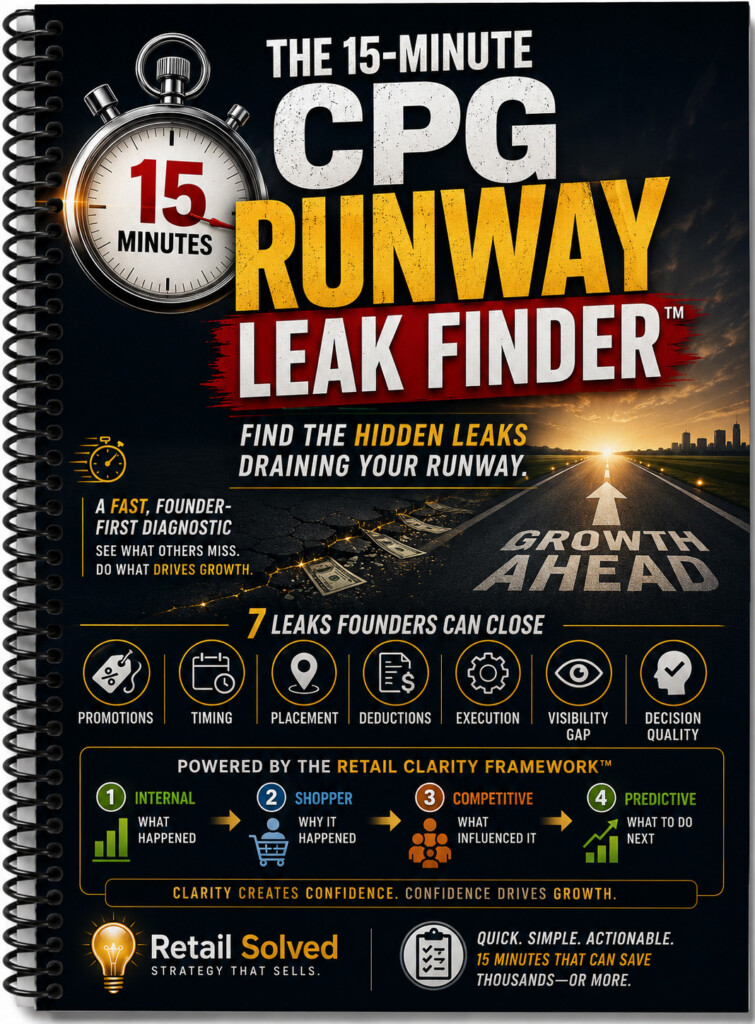
Start here: Find where your CPG brand is losing cash, margin, and runway.
In about 15 minutes, identify the leak creating the most pressure so you know where to look first.
No friction, no email required.
Retail Operating System™
The complete 11-module framework for protecting margin, optimizing trade spend, and scaling distribution with confidence.
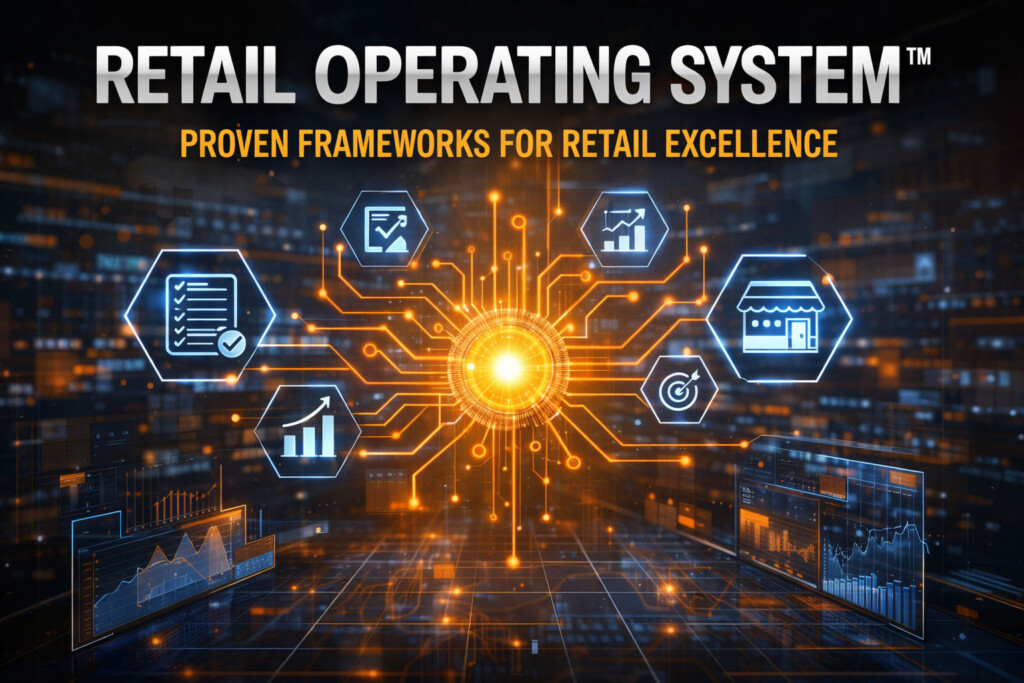
Retailers run on systems.
Most brands run on hustle.
That gap is expensive.
The Retail Operating System™ is the only structured, data-driven retail growth framework built by a Certified Professional Strategic Advisor who has sat both in the founder seat and across the table from retailers.
It gives emerging CPG brands the same operational discipline, trade strategy, and category leverage that big brands use — simplified and systemized to protect margin, optimize trade spend, and extend runway while scaling distribution.
This is not education.
It’s infrastructure.
Image is the property of CMS4CPG LLC, distribution or reproduction is expressively prohibited.