
Growth is supposed to make your CPG brand stronger.
So why do more stores, more sales, more people, and more data so often leave a brand with tighter cash, more fires, and harder decisions?
In this episode, Dan Lohman breaks down one of the biggest problems growing brands face. As the company grows, different people start owning different parts of the business. Sales is focused on sales. Operations is focused on supply. Finance is focused on cash. Marketing is focused on demand. Brokers and distributors are doing their part too. The problem is not always that someone is doing a bad job. The problem is that everyone can be looking at a different piece of the same decision.
That is when growth starts making the business feel heavier instead of stronger.
Dan walks through what gets lost as brands grow, why more distribution is not the whole decision, how challenger brands can stay nimble without becoming chaotic, and what it really means to build retail muscle into the company.
In this episode:
- why growth can create tighter cash, more friction, and harder decisions
- what happens when each function solves only its own piece of the problem
- why the department can be right while the business is still wrong
- what category management was supposed to do
- how to keep the speed of a challenger brand while adding better discipline
- the 5 questions to ask before making the next retail decision
- how to use the new Start Here page to find the right next step
Start with the problem that is costing you the most.
Start here: RetailSolved.com/start
If this episode helps, subscribe, leave a review, and share it with someone trying to grow a CPG brand without breaking it.
Listen where you get your podcast








Like what you’ve heard?
Please leave a review and comment on iTunes
Let me know your most pressing question, I’ll do my best to answer it on a future episode.
Episode 339 Your CPG Brand Is Growing. Why Does Everything Feel Harder? Growth is supposed to make your business stronger. So why do more stores, more sales, more people and more data so often leave a CPG brand with tighter cash, more fires and harder decisions? I've watched a profitable brand add distribution while inventory went up. Free fills went up. The problem was that everybody was looking at a different piece of the same decision. EVERYONE DID THEIR JOB. And I think that explains one of the biggest challenges successful CPG brands face as they grow. Ready to hear more? The company that used to fit around one table When your company is small, a lot of this happens naturally. The buyer meeting, production, cash, inventory, marketing and the distributor all get discussed around the same table because you both need to know what is going on. Then the brand grows. Those are good things. You need specialists as the business gets more complicated. SPECIALIZATION IS GOOD. Because now everybody can get really good at their part of the business while knowing less about what is happening three seats away. That's when growth can start creating problems the original team never had. Use the four things everyone thinks they need We love asking questions like: A great product? Brilliant positioning and marketing? Fast distribution? The right team? But here's the problem. Brilliant marketing when the product isn't available can waste money. Fast distribution without the cash or execution to support it can make the business weaker. And a great team can still make a bad decision if everybody is making the decision from a different picture of the business. So the question isn't simply: The better question is: That's where I think a lot of growing brands leave money on the table. If this sounds familiar, subscribe. Let's say your sales team lands 500 new stores. But what happens next? Nothing there means getting the stores was a bad decision. This is the mistake I see over and over. Nobody has to be bad at their job Sales says operations didn't have enough inventory. But sometimes: THE DEPARTMENT CAN BE RIGHT. That's a very different problem. What actually gets lost I don't think most companies have an information shortage. The problem is much simpler. Finance recovers a deduction. The field team finds an out-of-stock. Marketing talks to ten customers and learns exactly why they love the product. The broker hears an objection from the retailer. IF ONE PERSON LEARNS IT This problem isn't new. CPG actually solved a version of it decades ago. I interviewed Gordon Wade on Episode 266. Gordon was one of the original people who helped develop what became modern Category Management. Before that shift, manufacturers and retailers could spend a lot of time selling to one another while still working from very different priorities. A lot of the relationship was short term. What Category Management helped introduce was a more disciplined way for manufacturers and retailers to work from shared facts, bring different functions into the problem and think longer term about the category and the shopper. In simple terms, think of it as a better way to solve problems and help make it easier for shoppers to find and buy your products on store shelves. It wasn't supposed to be: The report helped people make a better decision together. That is the part of Category Management I think is incredibly important today and it is the part of category management that is so misunderstood and under appreciated. And I think challenger brands can take that idea even further. Do not become the company you're trying to beat Because when you're small, you already have something many enormous companies would love to have back. One of my old bosses at Unilever used to say: Don't grow your challenger brand into an oil tanker. You don't have to choose between being nimble and becoming sophisticated. KEEP THE SPEED. Borrow the discipline. This is what I mean when I talk about building your Retail Muscle. It doesn't mean everybody needs to understand everybody else's job. But before you make a decision that affects the entire business, the people involved need enough of the picture to understand what they may be changing somewhere else. That's the muscle. And when the business learns something important, you capture it so you don't have to relearn it the expensive way six months later. Eventually the company starts saying: That is when a lesson becomes part of the company. Why this becomes a competitive edge Think about what competitors can copy. What they can't instantly copy is years of learning: That's your moat and your competitive advantage. Not another dashboard. This is also why my work tends to look a little different depending on the problem. I've sat in a lot of seats in this industry. That doesn't mean I know your sales leader's job better than they do. That's not the value. The value is that I can often see where a decision in one part of the business is creating a problem somewhere else. Maybe you think you have a sales problem. Maybe you think it's a broker problem. Maybe the dashboard says the item should go. Maybe sales are growing and everybody is celebrating while cash is quietly getting tighter. My job is to help you find the actual problem before you spend a lot of money solving the wrong one. Then solve it with your team. And leave the team better equipped to handle the next one. That's much more valuable than making you dependent on another consultant forever. Here is The practical exercise Here's something you can do this week. Pick one decision that keeps creating frustration. Then ask five questions. That's it. You need the right people looking at the same problem before you commit the money. And while I was thinking about this, I realized something uncomfortable. I've recorded hundreds of podcast conversations including with the top CEO’s and thought leaders in our industry. All useful. That's backwards. So I've rebuilt the starting point. It doesn't begin by asking you what course you want. It doesn't ask whether you're a founder, sales leader or operations person. It asks: Maybe you're trying to get into retail. Start with the problem. The three paths One problem. I want challenger brands to win. Not because they can outspend the biggest companies. But you can be closer to the shopper. So don't measure growth only by: Ask one more question. Because bigger and stronger are not automatically the same thing. Find the problem. One question for you:
Enter your name and email address below and I'll send you periodic brand building advice, tips and strategies.
Distributor costs went up.
Chargebacks started showing up.
And the resources required to support all those new stores went up.
Sales was doing its job.
Operations was doing its job.
The broker wasn't necessarily doing anything wrong.
THE BUSINESS STILL HAD A PROBLEM.
I'm Dan Lohman, and this is Bulletproof Your CPG Brand.
There is a free guide at the end of every episode to help you go deeper into the content.
Now, lets roll up our sleeves and get started.
Maybe it's you and a cofounder.
You hear the retailer feedback.
You see the out-of-stock.
You know why you ran the promotion.
You know why cash is tight.
You probably know some of your shoppers personally.
And this is where something interesting happens.
You hire a sales leader.
Someone owns operations.
Someone owns finance.
Marketing becomes a team.
Maybe you add category or insights.
You have a broker.
A distributor.
Maybe field sales.
ISOLATION IS EXPENSIVE.
What's most important to building a great brand?
Of course.
Absolutely.
You need stores.
Critical.
You can have all four and still struggle.
A great product in the wrong retailer can lose.
Which one matters most?
HOW WELL DO THEY WORK TOGETHER?
Every week I'm taking one retail problem that can cost a CPG brand money, margin, distribution or runway and showing you what I would look at before making the next decision.
Not theory.
Real problems.
Real examples.
One better decision at a time.
That's exciting.
They should celebrate it.
Operations needs inventory.
Finance has to fund it.
The distributor may require more inventory, free fills or other costs.
Trade needs money.
Marketing needs to create awareness.
Somebody has to make sure the product actually gets onto the shelf.
Your forecast needs to be close enough that you don't run out or end up sitting on months of inventory, especially if your product is perishable.
Then deductions can start arriving long after everybody celebrated the authorization.
But it does mean:
GETTING THE STORES WAS NOT THE WHOLE DECISION.
We celebrate the piece we can see first.
Then the rest of the business gets the bill later.
And this matters because the instinct is often to find who screwed up.
Operations says the forecast was wrong.
Finance says trade spent too much.
Marketing says the product wasn't supported at shelf.
The broker says the brand didn't give them enough resources.
And sometimes one of them really did make a mistake.
Nobody failed.
They were simply solving different parts of the problem.
THE BUSINESS CAN STILL BE WRONG.
And another meeting does not automatically solve it.
You've got email.
Slack.
Dashboards.
Reports.
Weekly calls.
Retailer portals.
Spreadsheets everywhere.
The person making the next decision may not know the one thing somebody else already learned.
Great.
But does the person who created the situation know why that deduction happened so it doesn't happen again?
Great information.
But does the person building the forecast ever hear about it?
Does sales get those words before the next buyer meeting?
Does anybody outside the broker relationship ever learn it?
AND THE REST OF THE BUSINESS DOESN'T,
YOU HAVE TO LEARN IT AGAIN.
The next promotion.
The next meeting.
The next quarter.
The relationship mattered, sometimes too much.
“Here's another report.”
You're close to the shopper.
You're close to the buyer.
You're close to what is happening on shelf.
You can more easily pivot and change direction.
You can try something this week instead of putting it into next year's planning cycle.
It takes an ocean to turn an oil tanker.
ADD THE CAPABILITY.
Borrow the data.
Borrow the processes that make sense.
But don't give away the closeness, creativity and speed that helped you get here.
That can be one of your biggest competitive advantages.
Finance does not need to become sales.
Sales does not need to run operations.
Marketing doesn't need to become the Category Management department.
“This is how we handle this here.”
And eventually it becomes part of your brands DNA.
They can copy a promotion.
They can buy similar data.
They can hire the same broker.
They can use the same AI tools.
They can walk the same trade show floor.
What your shopper values.
What your retailers respond to.
Which promotions actually work.
Which stores deserve more support.
Which distributors fit you.
What mistakes you've made.
What those mistakes taught you.
And how your team uses all of that when it makes the next decision.
A company that gets better every time it solves a problem.
I've worked in stores as a grocery manager.
Sales.
Category Management.
Syndicated data.
Shopper insights.
With brokers.
With retailers.
In strategy.
Or your finance person's job.
It turns out to be assortment.
It turns out nobody agreed on what happens after the retailer says yes.
But the shopper and retailer economics say cutting it would actually hurt the category.
Don't redesign the company.
One retailer.
One promotion.
One deduction problem.
One SKU.
One broker issue.
One forecast.
1. What problem are we actually trying to solve?
2. Who knows something about this that the rest of us may not know?
3. What are we trying to accomplish for the whole business, not just one department?
4. If we do this, what else does it change?
5. What do we need to learn afterward so the next decision gets easier?
You don't need everybody sitting in every meeting.
I had created the same problem inside Retail Solved.
There are guides.
Courses.
Decision Tools.
YouTube playlists.
Shopper resources.
Trade resources.
Broker resources.
Category Management resources.
But I was basically saying:
“Good luck. Figure out which one you need.”
You shouldn't have to understand my business before I can help you with yours.
Go to: RetailSolved.com/start
WHAT RETAIL PROBLEM IS COSTING YOU MOST?
Maybe you already got the stores and they're not working.
Maybe sales are growing and cash is tighter.
Maybe your broker isn't delivering what you thought they would.
Maybe promotions are costing more and doing less.
Maybe you have all the data and still don't know what decision to make.
From there, choose the level of help you need.
1. You can solve it yourself using the free videos, podcast and resources.
2. You can build the capability more deeply with the guides, tools and training.
3. Or if the problem is expensive enough that learning slowly costs more than bringing in help, send it to me.
One better decision.
Then make the learning repeatable.
Most can't.
You can be more useful to the retailer.
You can learn faster.
You can make better decisions.
And you can build those lessons into the company as you grow.
How many stores did we add?
How much did revenue increase?
How big did the team get?
DID THE BUSINESS GET STRONGER?
I'm Dan Lohman and this is the bulletproof your cpg brand podcast.
Solve that.
Build the next muscle.
And keep getting a little better every time.
As your brand has grown, what got harder that you didn't expect to get harder?
Put it in the comments.
I'm going to use those answers to decide which problems we tackle next.
And if you want to see one of the reasons a perfectly good-looking report can send a company toward the completely wrong decision, watch the Data to Decisions video on screen now.
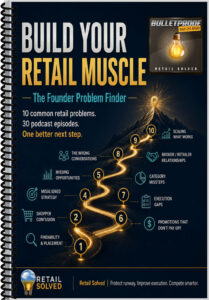
This weeks free guide is the The Founder Problem Finder. Its your very own focused personal
version of the start here page. It lists 10 common problems brands face with the top three
recommended podcast episodes to help you solve them and built retail muscle.
You can the show notes and this weeks free guide at retailsolved.com/session339
Sign up to receive email updates
FREE Trade Promotion ROI Calculator:
Click Here To Maximize Sales And Profits
335+ podcast episodes. Start with the problem in front of you.
Choose the retail problem you are facing and get three conversations, one practical action, and the next resource to help you build that muscle.
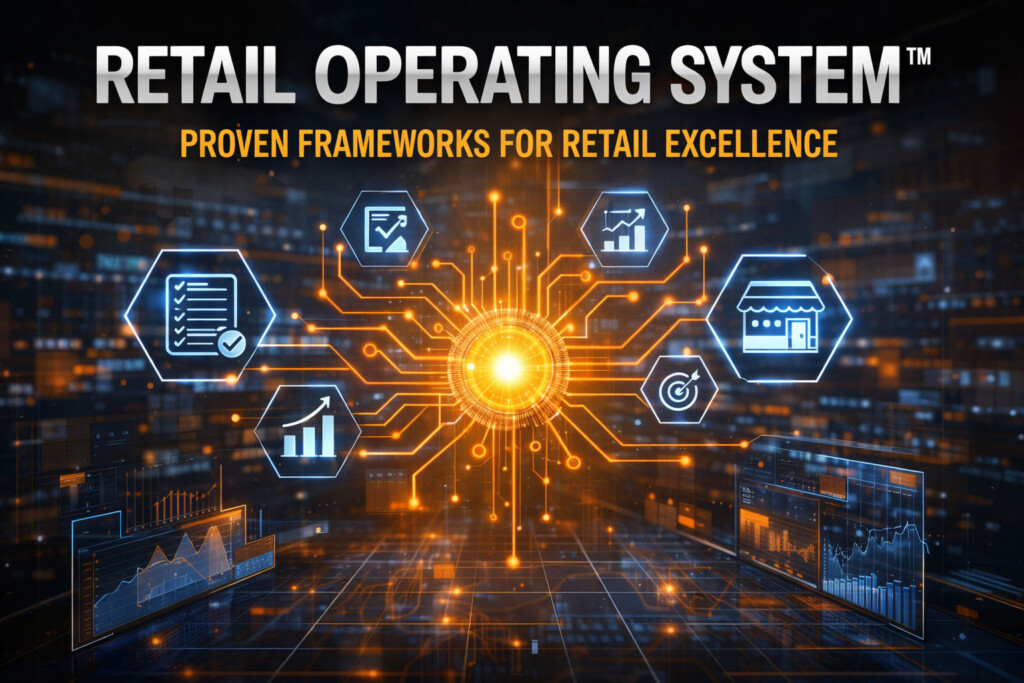
Retail Operating System™
The complete 11-module framework for protecting margin, optimizing trade spend, and scaling distribution with confidence.
Retailers run on systems.
Most brands run on hustle.
That gap is expensive.
The Retail Operating System™ is the only structured, data-driven retail growth framework built by a Certified Professional Strategic Advisor who has sat both in the founder seat and across the table from retailers.
It gives emerging CPG brands the same operational discipline, trade strategy, and category leverage that big brands use — simplified and systemized to protect margin, optimize trade spend, and extend runway while scaling distribution.
This is not education.
It’s infrastructure.
Image is the property of CMS4CPG LLC, distribution or reproduction is expressively prohibited.
Leave A Comment