Your promotion is live.
The retailer approved it. The funding is committed. Inventory shipped. The team believes everything is ready.
Then someone walks into the store.
The sale tag is there. The shelf is empty.
Or the display never got built. Inventory is sitting in the back room. The product was moved. A competitor took the space. Something changed between the plan and what the shopper actually experienced.
And here is the dangerous part:
Your report may eventually tell you the promotion underperformed. It may not tell you that the shopper never had a fair chance to respond.
In Episode 334 of Bulletproof Your CPG Brand, Dan Lohman explains how to close one of the most expensive gaps in retail: the distance between the strategy you approved and what actually happened at the shelf.
Your broker should not own your strategy. But because brokers work directly with retailers, promotions, resets, inventory, displays, competitive activity, and execution, they can become one of your most useful sources of field intelligence.
Dan shares the lessons he learned managing broker performance at Unilever and Kimberly-Clark, working from inside a broker environment at SPINS, building the original SPINS Distribution Tracker, and later writing hundreds of articles and training leadership teams on broker and trade effectiveness.
You’ll learn how to:
- recognize execution problems before the post-promotion recap
- use your broker as a field resource without handing over your strategy
- ask five better questions before the next retailer or broker decision
- connect shopper truth, retailer needs, competitive activity, and field reality
- turn what the broker sees into a clear decision, owner, and next action
- give the broker a clearer assignment and definition of success
Dan also introduces the free 5-Minute Broker Advantage Check™. Use it with one broker, one retailer, and one live priority before your next broker conversation.
Start here:
5-Minute Broker Advantage Check™: RetailSolved.com/leakfinder
Then go deeper:
The free Broker Advantage Playbook™: RetailSolved.com/guide11
Listen where you get your podcast








Like what you’ve heard?
Please leave a review and comment on iTunes
Let me know your most pressing question, I’ll do my best to answer it on a future episode.
334 The Promotion Was Approved. So Why Is the Shelf Empty? Picture this. Your promotion is live. The retailer approved it. The funding is committed. Inventory shipped. The presentation looked great. The sales team believes everything is ready to go. Maybe everyone is already feeling pretty good about the promotion. Then someone walks into the store. The sale tag is there. The shelf is empty. Or the display never got built. The product is sitting somewhere shoppers cannot find it. Inventory never made it from the back room to the shelf. The retailer changed something. A competitor took the display space. Or the promotion simply was not executed the way everyone thought it would be. And here's the dangerous part. That's an expensive blind spot, especially now when every trade dollar, every case of inventory, and every retailer opportunity has to work harder. But you may already have someone much closer to the problem than your dashboard. Your broker. Your broker should not own your strategy. But they are often close to the buyer, the promotion, the display, the reset, the inventory problem, the competitor activity, and what is actually happening at the shelf. That makes them more than a shared sales resource. Used correctly, they can become one of your best sources of field intelligence. Today I want to show you how to use that advantage. Not by handing your strategy to your broker. By asking better questions, creating a clearer assignment, and using what they see in the market to catch execution gaps while you can still do something about them. I'm also going to give you five questions you can take into your very next broker conversation and a free five-minute tool you can use immediately. Ready to hear more? The last several episodes have actually been building toward this. We talked about why the founder's math changed and the margin for error got smaller. Why another report does not automatically create a better decision. Why the founder cannot remain the operating system. And last week with Marise May, why real shoppers can explain something the reports cannot: why the product matters. Today those pieces collide in one place. The shelf. Because the best strategy in the world only creates value when shoppers can actually experience it. “And one of the people closest to that handoff is often your broker…” Your broker should not own your trade strategy. But they may see the strategy succeeding or failing before your dashboard does. That is an advantage most brands do not use nearly well enough. HOW I LEARNED IT AND EARNED IT I did not wake up one day and decide I wanted to become known for broker management. The industry pulled me into it. Beginning at Unilever early in my career, I was tasked with helping manage broker performance and building the tools to make that relationship more effective. I did similar work at Kimberly-Clark. Later, at SPINS, I actually worked from inside a broker environment. I supported brand customers and built reporting tools that helped teams see retailer opportunities, distribution gaps, execution issues, and ownership more clearly. The original spins Distribution Tracker grew from that same basic problem. A report is not useful because it contains more rows and columns. It is useful when it helps someone see what changed, where the opportunity is, what that opportunity may be worth, who owns the next action, and what decision needs to be made. Then New Hope invited me to publish a weekly column. I started writing about broker effectiveness and trade. The questions kept coming. That led to hundreds of articles featured across most leading industry publications, speaking and keynote opportunities, and eventually companies bringing me in to train senior leadership teams. I never considered that proof that I had all the answers. I considered it proof that the industry kept struggling with the same problem. How do you get more value from a shared sales resource without handing over the strategy? That is still the question. WHY THE LOVE-HATE RELATIONSHIP with brokers EXISTS Managing a broker can feel like herding cats. That does not mean the cats are bad. Think about what a broker is carrying. Multiple brands. Multiple categories. Different retailers. Promotions. New items. Resets. Buyer requests. Displays. Inventory issues. Follow-up. Execution fires. Priorities that all arrive labeled urgent. Every brand the broker represents is pushing for their undivided attention. Seeing the business through their eyes is helpful. The brand, understandably, wants its business to be the priority. But a shared sales force does not behave like a dedicated employee unless the brand creates enough clarity to help it focus. That is where many relationships start to break down. The brand says, "They know the retailer. Let them figure it out." Then later the founder is frustrated because the broker did not make the decision the founder would have made. Or the pendulum swings the other direction and the brand decides the broker is only there for coverage and stops using the market knowledge sitting right in front of them. Both approaches leave value on the table. YOUR BROKER IS CLOSE TO THE EXECUTION GAP Brokers are often the people helping set up the promotion, communicating with the retailer, following up on displays, supporting resets, troubleshooting inventory, and seeing what competitors are doing in market. That does not mean they should decide your trade calendar. A retailer asks for a promotion. The broker knows what was done last year. They know what other brands are doing. They have a gut based on experience. Those are useful inputs. They are not a complete strategy. The question is whether the brand has a system for turning those field signals into a better decision. FIVE QUESTIONS BEFORE YOUR NEXT BROKER CALL Before your next important promotion, reset, category review, retailer meeting, or broker conversation, ask five questions. First: What has changed at this retailer since we last made this decision? Not what is on the calendar. What changed? Buyer priorities. Retailer requests. Timing. Category pressure. Assortment. Promotion expectations. Execution requirements. Second: What are you seeing competitors do differently? This is not permission to copy them. It is intelligence. What is getting visibility? What is the retailer rewarding? What may be influencing the shopper or buyer? Third: What is happening at the shelf that our reports cannot show us yet? Placement. Displays. Inventory. Pricing. Compliance. Competitive activity. Shopper friction. Most dashboards are looking backward. Your broker may be seeing something in the field before it becomes obvious in the report. Fourth: Where is execution making the plan harder than it looked on paper? This is where a good strategy often loses value. Fifth: What should we reconsider because of what you are seeing? I want the broker's point of view, but I also want them to understand the shopper we are trying to serve. The better your broker understands who that shopper is, what they value, and why they buy, the easier it becomes to interpret what is changing in the market. Then I want the brand to do its job. Take that signal and connect it to everything else we have been talking about in this series. What are shoppers telling us? What did our committed community reveal? What did our internal performance show? What is the competition influencing? What does this retailer need? What are the economics? What should change next? That is clarity. THE SHOPPER AND THE BROKER SEE DIFFERENT PARTS OF THE SAME STORY Last week we talked about shopper truth. Your shopper can explain why the product matters, what problem it solves, how they use it, what nearly stopped the purchase, and why they come back. Your broker can help show what is happening where that value proposition meets the retailer and the shelf. One gives you the why. The other gives you field reality. Your data tells you what happened. The competitive lens helps explain what influenced it. The brand connects those truths into the next decision. That is the larger Retail Solved system coming together. There is another habit I want you to change. Do not wait until the promotion is over to ask whether it worked. Build a simple field check into the event while there is still time to respond. Ask your broker: Is the product there? Is it where we expected? Is the promotion showing up correctly? Is there enough inventory to support the event? What changed from the plan? What are competitors doing around us? And is there anything we can still fix? That is where the boots-on-the-ground advantage becomes valuable. You are not asking your broker to create the strategy. You are asking them to help protect the strategy from reality. And that feedback should not disappear into an email. It should improve the next decision. THE QUICK WIN I created a simple no-friction tool for this. It is called the 5-Minute Broker Advantage Check™. One broker. One retailer. One live priority. Use the five questions we just discussed, capture what you learned, and finish by answering three things: What changed? What decision does that trigger? Who owns the next action? That is it. It will live on the same no-friction page as the Runway Leak Finder, so there is no email required. You can find it at: RetailSolved.com/LeakFinder THEN GIVE THE BROKER A BETTER ASSIGNMENT The quick check helps you gather the field intelligence. The Free Broker Advantage Playbook™ helps you turn it into a clearer broker and retailer assignment. I rebuilt that free guide around this exact job. It is now called The Broker Advantage Playbook™. The goal is not another lecture about broker management. It is built from the same questions readers kept asking after my broker articles and the same problems leadership teams brought me in to help solve. It helps you connect: - the priority Now the broker knows where you are trying to go and what good execution looks like. That solves the first problem: a clearer assignment. Then comes the next practical question. How do you create accountability without micromanaging? How do you turn broker meetings into decisions instead of status reports? How do you use their retailer knowledge and relationships as an advantage? How do you build a win-win partnership where the broker succeeds because your priorities are clearer and your brand succeeds because execution is stronger? That is the deeper broker-management capability inside Simple Solutions To Maximize Broker Effectiveness mini-course. But do not start there yet. Start with one broker, one retailer, and one live priority. Use the no-friction check. Then download free The Broker Advantage Playbook™ at: RetailSolved.com/guide11 Your broker should help execute the strategy. The brand still has to own it. Let me leave you with this. Founders are not powerless. A solid broker partnership can give you a huge advantage. Smaller brands absolutely can compete in today’s environment. But they cannot compete blindly. The old assumptions about loyalty, growth, promotions, and retail execution are changing. That does not mean emerging brands are doomed. It means clarity matters more, and a well-managed broker relationship can help you see changes sooner and execute the response more consistently. The brands that win will not necessarily be the brands with the biggest budgets. They will be the brands that: * understand the shopper better When the margin for error gets smaller, clarity becomes your competitive advantage. Retail Solved helps smaller brands turn that clarity into better decisions and stronger execution. If this episode helped you, share it with another founder who needs to hear it. Until next time. I’m Dan Lohman and this is the bulletproof your cpg brand podcast Protect runway. Improve execution. Compete smarter. You can get the show notes, the free Broker Advantage Check, and this week's guide at RetailSolved.com/session334.
Enter your name and email address below and I'll send you periodic brand building advice, tips and strategies.
Your report may eventually tell you the promotion underperformed. It may not tell you that the shopper never had a fair chance to respond.
This is the Bulletproof Your CPG Brand podcast. I'm your host, Dan Lohman.
Let's roll up our sleeves and get started.
Why a promotion can increase sales and still tighten cash.
By then, most of the money has already been spent.
- shopper truth
- the field signal
- retailer opportunity
- the specific ask
- guardrails
- evidence and ownership
* make better decisions faster
* execute more consistently
* protect margin more intelligently
help retailers win
use their broker as a true field resource
* and adapt faster when conditions change
Sign up to receive email updates
FREE Trade Promotion ROI Calculator:
Click Here To Maximize Sales And Profits
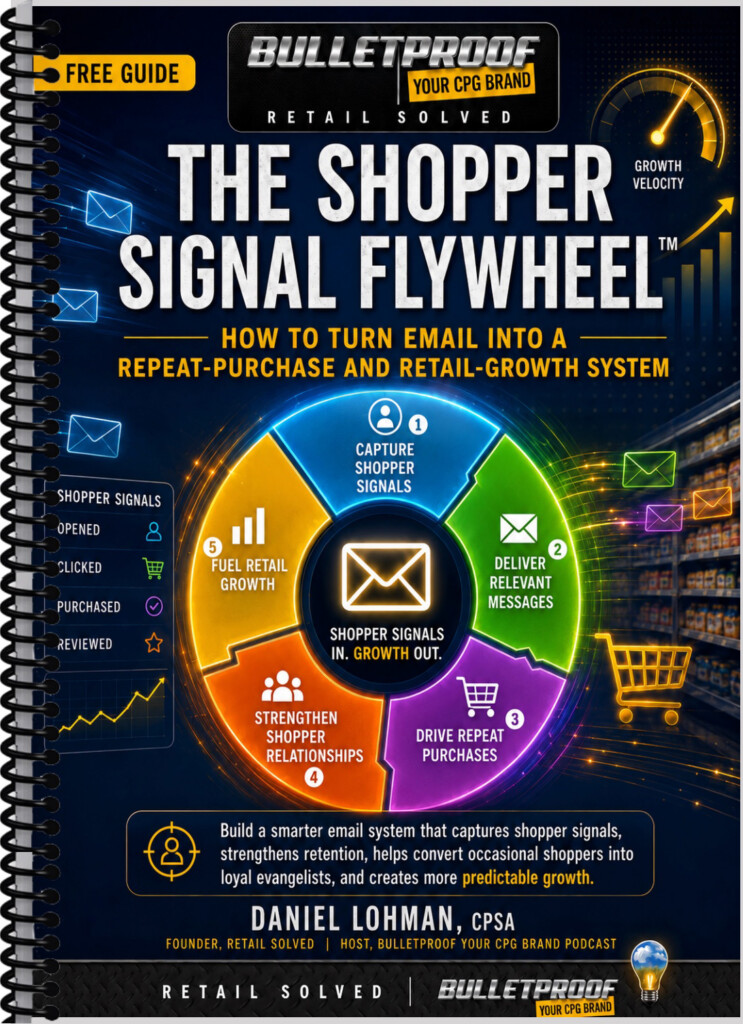
Your shoppers may know what your sales report cannot tell you.
Use your email list to capture real shopper language, validate ideas, strengthen repeat purchase, and build retailer-ready proof.
Your email list can become more than a marketing channel.
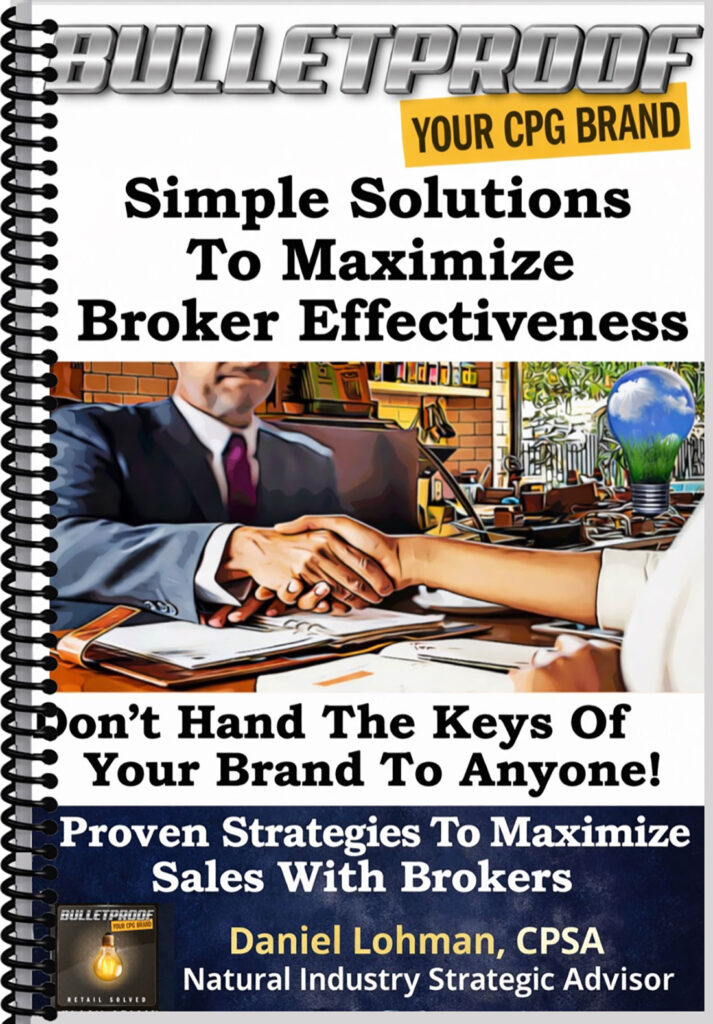
If your broker is not delivering, something may be missing upstream.
Create clearer priorities, stronger retailer assignments, better accountability, and the structure your broker needs to perform.
Retail Operating System™
The complete 11-module framework for protecting margin, optimizing trade spend, and scaling distribution with confidence.
Retailers run on systems.
Most brands run on hustle.
That gap is expensive.
The Retail Operating System™ is the only structured, data-driven retail growth framework built by a Certified Professional Strategic Advisor who has sat both in the founder seat and across the table from retailers.
It gives emerging CPG brands the same operational discipline, trade strategy, and category leverage that big brands use — simplified and systemized to protect margin, optimize trade spend, and extend runway while scaling distribution.
This is not education.
It’s infrastructure.
Image is the property of CMS4CPG LLC, distribution or reproduction is expressively prohibited.