Sales are up.
Distribution is expanding.
Retailers are saying yes.
The team is working harder than ever.
So why does cash still feel tight?
In this episode, Dan Lohman explores one of the biggest blind spots facing entrepreneurial CPG brands today:
Growth is not the same as health.
The market has changed.
The shopper has changed.
And many of the assumptions founders relied on for years no longer work the same way they once did.
You'll learn:
• Why revenue growth can be misleading
• How the shopper contract has changed
• Why sales are not the same as cash
• The danger of false signals inside your business
• How top-line growth can hide operational problems
• The four growth leaks quietly draining runway
• How the Retail Clarity Framework™ helps founders make better decisions
Dan also shares the story of a rapidly growing founder who discovered that expansion was creating more pressure than leverage—and why asking “Can I afford this growth?” may be more important than asking “How do I grow faster?”
Because growth can hide problems.
Volatility exposes them.
And Retail Clarity helps you find them before they become expensive.
Listen where you get your podcast








Like what you’ve heard?
Please leave a review and comment on iTunes
Let me know your most pressing question, I’ll do my best to answer it on a future episode.
# EPISODE 324 # Your Sales Are Up. So Why Is Cash Still Tight? Your sales are up. So why does cash still feel tight? Why does growth feel harder than it should? Why does it feel like you’re running faster but not getting farther ahead? If you’ve ever asked yourself those questions, you’re not alone. In fact, I would argue this is one of the most important conversations entrepreneurial CPG founders need to have right now. Because the market changed. The shopper changed. The old assumptions about loyalty, growth, promotions, and retail execution are not working the same way anymore. And this is the blindspot most brands did not see coming. For decades, brands could rely on a fairly predictable shopping pattern. Shoppers had their primary store. That world is changing. Today’s shopper is doing the math. They are comparing prices. That does not mean the shopper disappeared. The shopper changed the rules. And when the shopper changes the rules, your old scorecard may not tell you the full story. This is why sales growth can be so misleading right now. A brand can grow sales in one place while losing margin somewhere else. A brand can gain distribution while becoming harder to support. A brand can lift volume through promotions while training shoppers to only buy on deal. A brand can keep showing revenue growth while cash quietly gets tighter. And that is what I want to talk about today. Because growth is not the same as health. Sales are not the same as cash. And revenue alone does not tell you whether your business is getting stronger. Let me explain. ## Why This Matters Now For years, founders have been taught that growth solves everything. More sales. And don’t get me wrong. Growth matters. I am not anti-growth. In fact, helping brands grow profitably is exactly what I’ve spent my career doing. But what I have learned is this: Not all growth creates value. Not all growth creates leverage. And not all growth improves the health of the business. Sometimes growth actually hides the problem. And when markets become volatile, those hidden problems suddenly become much more expensive. Think about what founders are dealing with right now. Costs are higher. In a stable market, a brand might get away with poor visibility, weak promotion strategy, inconsistent execution, or unclear decision-making for a while. But in a volatile market, those same gaps become expensive much faster. When costs rise, every leak gets more expensive. When shoppers become less loyal, every weak assumption gets exposed. When retailers become more demanding, every execution gap becomes more visible. This is why Retail Clarity matters more than ever. Because your internal reports may tell you what happened. But they do not always tell you why it happened, what influenced it, where cash is leaking, or what to fix first. And that is the difference between reacting to growth and leading through it. ## The Shopper Contract Has Changed Let’s talk about the shopper for a minute. The shopper is not disloyal. The shopper is doing the math. That distinction matters. It is easy for brands and retailers to look at the current market and say, “Shoppers are less loyal.” That may be true on the surface. But beneath that behavior is a shopper trying to protect their own household. They are trying to stretch their budget. The weekly shopping trip is not as simple as it used to be. The shopper may buy produce at one store, pantry staples somewhere else, club-sized products at a warehouse retailer, specialty items online, and mission-driven products only when the value equation still makes sense. That creates a major challenge for CPG brands. Because your sales data may show one thing, but the shopper behavior underneath may be telling a very different story. Are shoppers buying your brand because they love it? Or because it was on deal? Are they buying more frequently? Or just loading up during promotion windows? Are they loyal to your brand? Or are they loyal to the best value at that moment? Are they choosing your product as part of their routine? Or are they switching between you, private label, and another competitor depending on price, availability, and store choice? This is why sales data alone is not enough. It tells you what happened. It does not always tell you what changed. And right now, what changed may be the most important question you can ask. ## The Founder Story A number of years ago, I interviewed a founder on the podcast. If you want the full story, go back and listen to Episode 132. At the time, the brand was experiencing tremendous growth. Revenue was roughly doubling. Exactly what most founders dream about. But underneath the surface, the business was under increasing pressure. Because every new retailer brought new costs. Every new distributor brought new complexity. Every new market required more support. There were free fills. The brand had followed advice that sounded logical on the surface: Go bigger. But the founder eventually had to ask a much better question. Not simply: How do I grow faster? But: Can I afford the growth I am creating? That is a completely different conversation. And it is a conversation more founders should be having. Because revenue growth can make a business look healthier than it really is. Sales may be up. But if cash is tighter, margin is weaker, and execution is harder to manage, the business may not actually be stronger. This is not a criticism of brokers, distributors, retailers, or growth partners. That is not the point. The point is that founders need to own their strategy. You need to understand what kind of growth you are creating. You need to know whether that growth is profitable, supportable, repeatable, and aligned with the shopper and retailer you are trying to serve. Because if you do not own the strategy, someone else’s incentives may quietly shape the direction of your business. And that is dangerous. ## Sales Are Not The Same As Cash Years ago, I heard a story that perfectly illustrates this. A brand shipped roughly $19,000 worth of product. The truck left the warehouse. Then the payment arrived. The check was for $12.34. Twelve dollars and thirty-four cents. Now obviously there were deductions, fees, adjustments, and issues behind that number. But the lesson is unforgettable. Sales are not the same as cash. Revenue is not the same as profitability. And growth is not the same as health. This is where many founders get trapped. They look at top-line growth and assume the business is getting stronger. Sometimes it is. Sometimes it is not. The real question is: What is the growth costing you? What is it demanding from your team? What is it doing to your cash? What is it doing to your margin? What is it doing to retailer trust? What is it doing to your ability to execute? And what is it doing to your runway? Because the top-line sales number alone cannot answer those questions. ## The False Signal One of the most dangerous things in business is a false signal. Because false signals create confidence. And confidence without clarity can be expensive. A promotion lifts volume. Great. But did it improve profitability? Did it improve retailer confidence? Did it improve repeat purchase? Did it improve baseline sales? Did it attract new shoppers? Did it strengthen the category? Or did you simply rent sales for a few weeks? A retailer authorizes more stores. Fantastic. But can the business support those stores properly? Do you have the inventory? A shopper buys your brand during a promotion. Great. But did they buy it because your brand matters to them? Or because your product happened to be discounted that week? That distinction matters more than ever right now. Because shoppers are actively recalculating value. They are not just walking into the same store, buying the same basket, and making the same choices they made three years ago. They are making tradeoffs. They are asking whether the brand is still worth it. They are deciding which premium products stay in the basket and which ones get replaced. They are deciding which retailers earn the trip. That means a sales lift can be real and still be incomplete. Growth often answers one question: Can we sell more? Retail Clarity answers a better question: Should we be growing this way? ## The 11 SKU Story Let me give you another example. Years ago, our largest competitor was the category captain for one of the largest retailers in the country. They launched a new product line. To make room for it, they proposed removing seventeen existing items from the shelf. Eleven of those items belonged to us. Almost half our business with that retailer. Most people accepted the recommendation. The category captain’s data looked convincing. But something did not feel right. So I dug deeper. Without realizing it at the time, I was using what would later become the Retail Clarity Framework™. Internally, our sales were strong. So I asked a different set of questions. Who was the shopper? Not just our shopper. Their shopper. The retailer’s shopper. What role did each product play in the category? What would happen if those items disappeared? Would sales transfer inside the category? Would shoppers switch to the competitor? Would they leave the category? Would they shop the category somewhere else? What would the retailer lose if the shopper could no longer find what they wanted? That is the predictive pillar. Not just what happened. Not just what the report said. But what should happen next? The result? Instead of losing eleven SKUs across more than 2,500 stores, we gained four additional SKUs per store. Think about that. One path would have dramatically reduced sales. The other accelerated growth. The difference was not spending. The difference was clarity. This is why I say that canned reports are a starting point. They are not a strategy. The report may tell you what happened. But Retail Clarity helps you understand what to do next. ## The Retail Clarity Framework™ This is exactly why I built the Retail Clarity Framework™. Because most brands are not suffering from a lack of data. They are suffering from a lack of visibility. They have reports. All of that matters. But none of it guarantees that the brand understands the full picture. The Retail Clarity Framework™ asks four questions. ## Internal — What happened? Sales. This is where most brands start. And too often, this is where they stop. But internal data only tells you what happened inside your world. It does not always tell you what happened in the shopper’s world, the retailer’s world, or the competitive environment. ## Shopper — Why did it happen? What problem was the shopper trying to solve? Why did they choose your product? Why did they ignore it? Why did they switch? Why did they only buy on deal? Why did they stop buying? What changed in the shopper’s life, budget, habits, routine, or store choice? This matters because the shopper is not a data point. The shopper is a person making tradeoffs. And when the shopper changes behavior, your strategy needs to catch up. ## Competitive — What influenced it? What happened around you? Was private label more aggressive? Did a competitor promote? Did a retailer change shelf placement? Did another store win the trip? Did the category shift? Did a discount retailer reset the value equation? Did your brand lose visibility at the exact moment shoppers became more price sensitive? Your brand does not operate in isolation. Your promotion does not operate in isolation. Your shelf set does not operate in isolation. Everything influences everything else. ## Predictive — What should happen next? This is where clarity becomes leverage. This is where founders stop reacting and start leading. The goal is not to predict perfectly. The goal is to improve the quality of decisions. What should you fix first? What should you stop funding? Which growth is profitable? Which growth is draining runway? Which retailer opportunities are worth supporting? Which promotions create real demand? Which execution gaps are costing the most? What does the retailer need to believe before they give you more support? This is where smaller brands can compete smarter. Not by outspending everyone. By seeing what others miss. ## The Four Growth Leaks Now let’s make this practical. When sales rise but the business does not feel stronger, I typically see one of four leaks. ## Leak #1 — Margin Leak Sales are growing. Profit is shrinking. Promotions become more expensive. That is a margin leak. The business is getting bigger, but not necessarily healthier. Question: Can you clearly explain which growth is improving margin and which growth is compressing it? ## Leak #2 — Execution Leak Distribution expands faster than the business can support. Displays are missed. And when the shopper cannot find your product, they do not blame the distributor, the broker, the night stock person, or the truck. They blame the brand. Or worse, they simply choose something else. That is an execution leak. Retail execution is not a sales support function. It is a margin protection system. Question: Is your growth stretching your execution capabilities? ## Leak #3 — Cash Leak This is where founders get surprised. Deductions. Cash leaves the business before the founder fully sees the cost. That is a cash leak. And this is one of the reasons a brand can show sales growth while still feeling financially weaker. Question: Are sales growing faster than cash? ## Leak #4 — Decision Quality Leak This may be the most dangerous leak of all. Because poor decisions compound. Founders feel pressure. And decisions get made before the full picture is understood. That is a decision-quality leak. And it may be the most expensive leak because it often creates the other three. Question: Are you making decisions from reports, pressure, and assumptions? Or are you making decisions from clarity? Because data tells you what happened. Retail Clarity tells you what to do next. ## Quick Self-Audit Ask yourself: Are sales up but cash tighter? Are promotions lifting volume but not improving baseline? Are deductions or retailer fees surprising you? Are shoppers buying more often, or only buying when you discount? Are you expanding into markets you cannot properly support? Are you saying yes before understanding the true cost? Can you clearly explain which growth is profitable and which growth is draining runway? Does your team agree on what to fix first? Do you know whether your shopper is loyal to your brand, loyal to the deal, or loyal to the store that gives them the best value? If you struggle to answer those questions confidently, that is probably where you should start. Because you cannot fix what you cannot see. ## The Big Reframe The goal is not to stop growing. The goal is to grow with clarity. The goal is not to spend less. The goal is to stop funding what is not working. The goal is not to chase more revenue. The goal is to build a healthier business. That distinction matters now more than ever. Because the shopper contract has changed. The shopper is more calculated. That creates pressure. But it also creates opportunity. Because if shoppers are rethinking old habits, they are also open to better solutions. That is where emerging brands can still win. But not by guessing. Not by assuming loyalty will protect them. Not by funding every promotion. Not by chasing every retailer. Not by confusing top-line growth with business health. The brands that win will be the brands that understand the shopper, the retailer, the category, the competitive environment, and their own economics better than anyone else. Before you raise more money, find the money already leaking inside your business. Before you chase another retailer, understand the true cost of supporting that retailer. Before you fund another promotion, understand whether it is actually creating value. Before you assume your shopper is loyal, understand what loyalty means in this new environment. Because growth can hide problems. Volatility exposes them. Retail Clarity helps you find them before they become expensive. ## CTA If your sales are up but cash still feels tight, download the free 15-Minute CPG Runway Leak Finder™ at RetailSolved.com/findleaks. It will help you identify where your brand may be losing cash, margin, execution, visibility, and decision quality. Then connect with me on LinkedIn and send me the word RUNWAY if you want the free audit or want help thinking through where to start. And if you have already downloaded the Leak Finder, bring your results to the free live Retail Clarity working session. I’ll show you how to prioritize what to fix first. Because identifying the leak is useful. Knowing what to fix first is where the leverage begins. ## Close Let me leave you with this. Founders are not powerless. Smaller brands absolutely can compete in today’s environment. But they cannot compete blindly. The old assumptions about loyalty, growth, promotions, and retail execution are changing. That does not mean emerging brands are doomed. It means clarity matters more. The brands that win will not necessarily be the brands with the biggest budgets. They will be the brands that: * understand the shopper better Retail Solved helps smaller brands compete smarter by turning clarity into leverage. Because growth is not the same as health. Sales are not the same as cash. And the strongest brands are not always the fastest-growing brands. They are the brands that understand what is really happening underneath the numbers. If this episode helped you, share it with another founder who needs to hear it. The stronger mission-driven brands become, the stronger the industry becomes. A rising tide lifts all boats. Until next time. I’m Dan Lohman and this is the bulletproof your cpg brand podcast
Enter your name and email address below and I'll send you periodic brand building advice, tips and strategies.
Distribution is expanding.
The team is working harder than ever.
Retailers are saying yes.
Revenue is growing.
They had their preferred brands.
They had routines.
They had habits.
They had a fairly predictable weekly shopping trip.
Splitting trips.
Shopping more retailers.
Using more channels.
Trading down when needed.
Waiting for promotions.
Buying private label.
Moving between stores.
And making more value-driven decisions than they may have made in the past.
More distribution.
More retailers.
More velocity.
More awareness.
More revenue.
Retailers are more demanding.
Shoppers are more cautious.
Promotions are harder to predict.
Private label is more relevant.
Discount retailers are gaining influence.
Retail loyalty is weaker.
And shoppers are more willing to switch if the value equation no longer makes sense.
They are trying to make smarter choices.
They are trying to decide where quality matters most.
They are deciding when your brand is worth the premium and when it is not.
They are deciding which store gets which part of the basket.
New retailers were saying yes.
Distribution was expanding.
The brand had momentum.
Everything looked like success from the outside.
Chargebacks.
Distributor expenses.
Retail support requirements.
Promotional expectations.
Inventory investments.
Cash flow demands.
Velocity expectations.
And a much greater need for execution discipline.
Get more distribution.
Expand faster.
Take advantage of the opportunity.
Everyone celebrated.
Revenue was booked.
The sale looked fantastic.
The execution?
The merchandising support?
The cash?
The broker alignment?
The distributor accountability?
The operational discipline?
Shopper loyalty was strong.
The category was healthy.
Retailer performance was strong.
There was no obvious reason we should suddenly lose almost half our distribution.
Dashboards.
Broker updates.
Retailer feedback.
Sales numbers.
Promotion results.
Distributor information.
Inventory reports.
Margins.
Velocity.
Forecasts.
Inventory.
Trade spend.
Deductions.
Distribution.
Promotion results.
Retailer expectations rise.
Support costs increase.
Price gaps widen.
Shoppers become more value-conscious.
Private label becomes more relevant.
And the brand feels pressure to fund more activity just to protect the same volume.
Out-of-stocks increase.
Inventory gets stretched.
Communication breaks down.
Broker follow-through becomes inconsistent.
Retailer confidence suffers.
The shopper cannot always find the product.
Chargebacks.
Free fills.
Inventory mistakes.
Distributor costs.
Retailer fees.
Compliance issues.
Operational friction.
Late payments.
Promotion deductions that are hard to track.
Small issues that quietly compound.
Retailers push.
Advisors make recommendations.
Distributors offer opportunities.
Brokers suggest expansion.
Competitors make moves.
Investors expect growth.
The team wants momentum.
More value-conscious.
More fragmented.
More willing to compare.
More willing to switch.
More willing to split the trip.
More willing to buy private label when the value equation makes sense.
* make better decisions faster
* execute more consistently
* protect margin more intelligently
* help retailers win
* and adapt faster when conditions change
Sign up to receive email updates
FREE Trade Promotion ROI Calculator:
Click Here To Maximize Sales And Profits
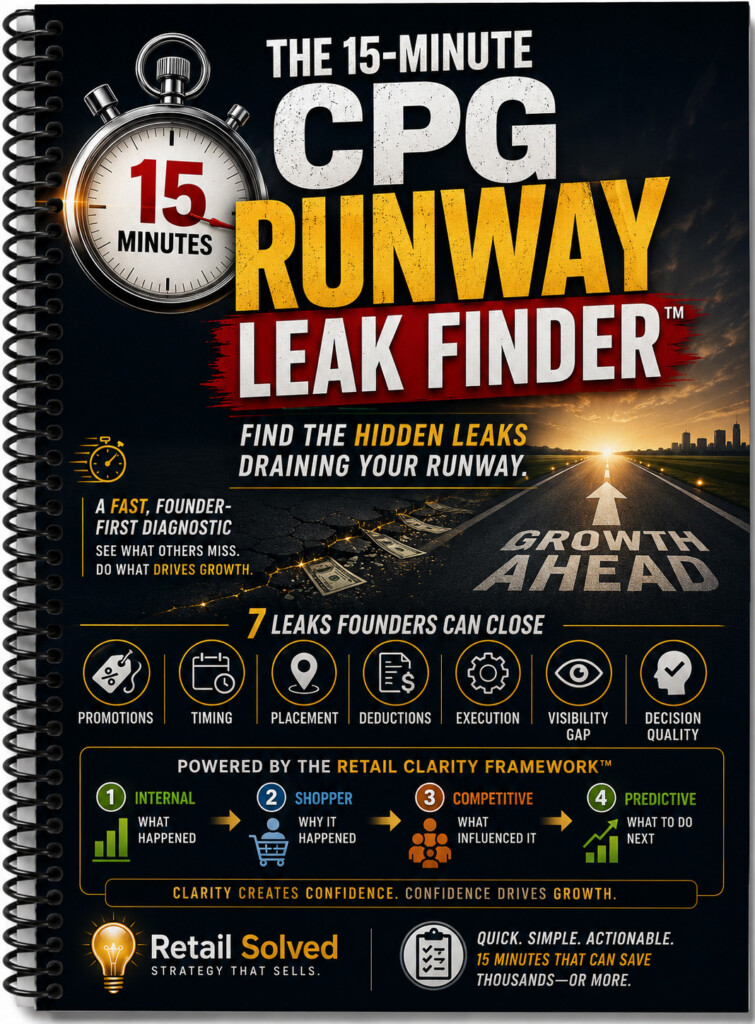
Start here: Find where your CPG brand is losing cash, margin, and runway.
In about 15 minutes, identify the leak creating the most pressure so you know where to look first.
No friction, no email required.
Retail Operating System™
The complete 11-module framework for protecting margin, optimizing trade spend, and scaling distribution with confidence.
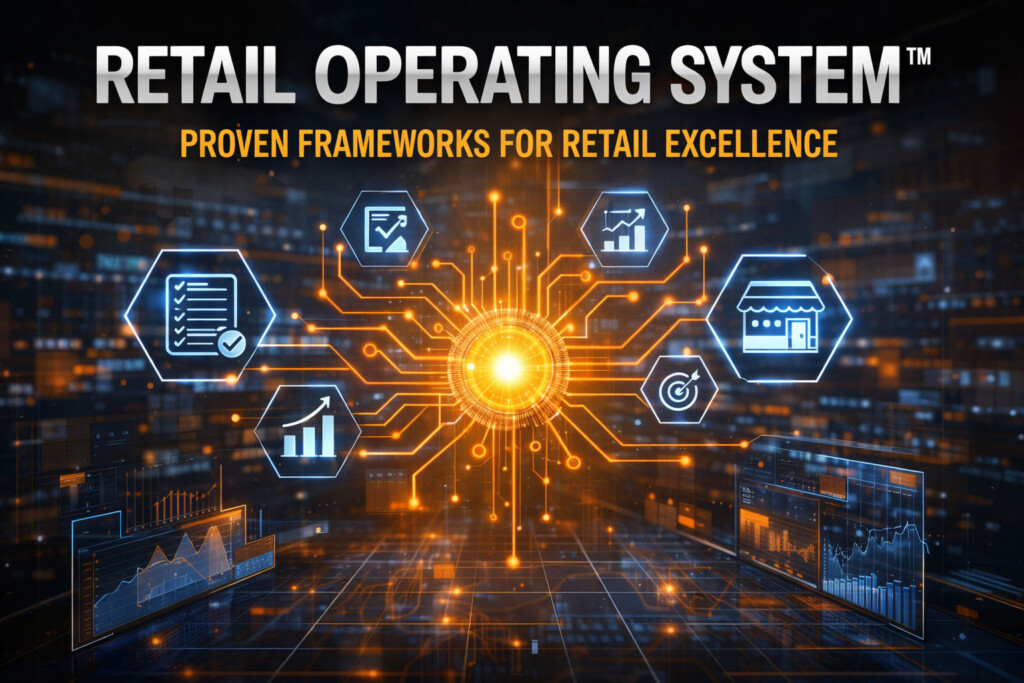
Retailers run on systems.
Most brands run on hustle.
That gap is expensive.
The Retail Operating System™ is the only structured, data-driven retail growth framework built by a Certified Professional Strategic Advisor who has sat both in the founder seat and across the table from retailers.
It gives emerging CPG brands the same operational discipline, trade strategy, and category leverage that big brands use — simplified and systemized to protect margin, optimize trade spend, and extend runway while scaling distribution.
This is not education.
It’s infrastructure.
Image is the property of CMS4CPG LLC, distribution or reproduction is expressively prohibited.