Most growing brands are being sold some version of an easy button.
Hire another person. Add a dashboard. Plug in AI. Automate the report, and the business will finally become easier to run.
Those tools can help. The problem begins when the business expects them to replace the commercial decision capability it never built.
Dan Lohman explains why the same recurring decisions keep returning to the founder even after the company adds more people, information, technology, and outside partners.
You will learn:
- Why the founder often becomes the company’s original operating system
- Why hiring around confusion can make it more expensive
- How software and AI can accelerate the wrong answer
- The four parts of repeatable decision capability
- How stronger operating rhythm improves shopper trust and business value
- Why better capability changes the terms with retailers and investors
The Decision Clarity Trilogy helps you listen, understand, and decide.
Episode 331 shows you how to build those lessons into the way the business operates.
This is the Build chapter of the Retail Clarity series.
Retail Clarity Series Podcast playlist
328: Listen
329: Understand
330: Decide
331: Build
Bring one report, workflow, or recurring decision your team still debates:
RetailSolved.com/DecisionTools
Listen to the rest of the Retail Clarity Series below
Listen where you get your podcast








Like what you’ve heard?
Please leave a review and comment on iTunes
Let me know your most pressing question, I’ll do my best to answer it on a future episode.
331 More People. More Software. Why the Same Decisions Keep Coming Back. Most growing brands are being sold some version of an easy button. Hire the right person. Buy the right software. Add a dashboard. Plug in AI. Automate the reports. Push the button, and the business will finally become easier to run. I understand the appeal. Founders are carrying too much. They are managing retailers, brokers, distributors, investors, inventory, promotions, cash, deductions, and a team that needs answers. A push-button solution sounds like relief. The problem is not that software, AI, dashboards, or talented people cannot help. They absolutely can. The problem is that a tool can only support the process underneath it. If the question is unclear, ownership is fuzzy, or the report is missing important context, the easy button does not remove the confusion. It makes the confusion move faster and that is where things get expensive fast. Today, I want to show you why the same decisions keep returning even after you add more people, more reports, and more technology. More importantly, I want to show you how to build the capability underneath those tools so your team can make better decisions even when you are not in the room. I’m Dan Lohman, founder of Retail Solved, and this is Bulletproof Your CPG Brand podcast. Now, Let’s roll up our sleeves and get started. The founder becomes the original operating system Most founders begin as the company’s original operating system. You know why the product exists. You understand the shopper, the retailer relationships, the history behind every decision, and the reason one exception matters while another does not. In the beginning, that is an advantage. You can make decisions quickly because most of the important context already lives in your head. Then the business grows. More people join the team. More retailers carry the product. More reports appear. Brokers, distributors, promotions, systems, and outside partners become involved. But the judgment that helped you make good decisions does not automatically move into the business with them. The team may bring you the information, but they still wait for you to interpret it. The company has more resources, yet the same questions keep finding their way back to the founder. That does not automatically mean you have a weak team. It may mean the company never clearly defined how those decisions should be made. The founder was never supposed to stay the company’s operating system. The missing layer between the people and the tools When the workload becomes too heavy, hiring someone feels like the logical answer. Sometimes it is. But hiring around an unclear decision process can make the problem more expensive without making it clearer. The new employee arrives with experience from another company, another category, and another operating model. They begin using the definitions and practices that worked there. Meanwhile, the existing team has its own definitions. Everyone may be working hard and making reasonable recommendations from the seat they occupy. The problem is that a decision can make sense from one department’s point of view and still weaken the larger business. That is the missing layer. The business needs a way to connect the people, information, and tools around the decision it is actually trying to make. I call that commercial decision capability. When visible growth hides a weakening foundation I learned this inside a fast-growing CPG business. We had built a creative retail strategy that was working. Retailers were adopting it. Sales were growing quickly. New products were creating excitement and giving the sales team a fresh story. From the outside, the business looked strong. At the same time, I started noticing smaller challenger brands gaining traction. They were easy to dismiss at first, but they were winning space and becoming more relevant. I was also seeing something more troubling inside our core business. Important energy-bar products that had once been widely distributed were quietly falling off retailer shelves. Imagine a retailer with 100 stores. There was no dramatic announcement. Nobody officially discontinued the product across the chain. The brand was simply losing ground one store and one item at a time. The reports existed. The warning signs existed. New item authorizations were visible. Innovation wins were visible. The sales team was rewarded for growing distribution. Protecting the existing business was quieter. Stewardship did not create the same excitement as placing a new product on the shelf, even when protecting the core business was more valuable. That is how healthy brands get into trouble. They chase the visible growth while the foundation underneath it starts to weaken. I eventually built a tool that highlighted the impact of the challenger brands taking space from us. It identified the distribution gaps by retailer and item. More importantly, it quantified in dollars what those gaps were worth. The tool did not simply say, “We are losing distribution.” That changed the conversation. The spreadsheet was not the product. The decision tool became valuable because the organization could finally see the same problem from the same picture and act before more ground was lost. The tool even measured the teams progress is closing those gaps in units, TDP’s, and in dollars. That mattered because it changed the incentive structure and rewarded the team for their accomplishments. That was not an easy button. It was a tool supporting a clearly defined decision. Software is not the enemy I want to be very clear about this. I am not anti-software. I am not anti-AI. I am not against dashboards, automation, or outside expertise. The right technology can save hours. It can preserve institutional knowledge, standardize and streamline reporting, make important exceptions easier to see, and help a strong operating rhythm become easier to repeat. It can be the starting point for any analysis. AI can help teams analyze information, identify patterns, ask better questions, and work faster. A talented employee can bring judgment, experience, and fresh thinking. The sequence matters. First define the decision. Then define the ownership, evidence, and operating rhythm. After that, use the technology to reinforce the system. Technology should make good decisions easier. It should not be asked to invent the discipline the business never built. We have all heard the phrase, “Garbage in, garbage out.” Software and AI can accelerate a process, but they cannot repair assumptions the business has never challenged. If the data structure does not reflect how the shopper actually shops, the technology may optimize the wrong answer. If every department uses a different definition of success, the dashboard may make each version of the truth look more professional. If nobody owns the decision, automation may simply deliver the unanswered question faster. The easy button is not the enemy. Using it before the business is ready is the problem. Four things must come before the easy button A repeatable decision capability needs four things. The first is a clearly defined question. Now the conversation can include distribution, inventory, capital, trade spending, execution, and shopper demand. Consider a promotion. A better question might be: Now the team knows what it is trying to decide. The second requirement is ownership. Someone must be responsible for moving the complete decision forward. That person does not need to produce every piece of information. Sales, finance, marketing, operations, the broker, and the distributor may all contribute. But the team needs to know who gathers the evidence, brings the recommendation, and follows through. Shared input can improve a decision. The third requirement is the right evidence. One report rarely provides the complete answer. A sales increase does not tell you whether a promotion created profitable demand. You may also need margin, trade spend, inventory, retailer execution, shopper response, competitive activity, timing, deductions, and evidence of whether the promotion created new demand or simply moved purchases forward. The goal is not to collect every piece of data you can find. The goal is to identify the evidence needed to make this decision well. The fourth requirement is an operating rhythm. A strong operating rhythm becomes the brand’s muscle memory. It allows good decisions to happen even when the founder is not in the room. Without that rhythm, even a great tool becomes another file someone updates when they remember. The goal is not to build a perfect system. The goal is to stop relearning the same decision every week. Better capability changes the terms of the conversation This is bigger than reducing the founder’s workload. Stronger operating capability makes the company less risky to retailers, investors, strategic partners, shoppers and potential buyers. They depend on capable partners to help them understand what is changing, which shoppers are being missed, where the category is headed, and which opportunities deserve attention. Some of my greatest retail wins came when I helped the retailer make a better decision first. At one point, a major retailer’s promotional fees were much higher than those of its primary competitor. Those fees reduced the amount of money we could invest in productive promotions and category growth. I did not simply complain about the fees. I showed the retailer the economics. I demonstrated the size and value of the baskets our brands created, the return we could generate elsewhere, and how different terms would help both sides compete more effectively. The retailer changed its fee structure for us across four divisions. That saved millions and gave us more resources to help them compete. I then used that support to strengthen the plan with their primary competitor. Those actions dramatically grew the brand in the market. The point is not that I negotiated aggressively. The point is that we had enough evidence, operating capability, and retail value to change the terms of the conversation. The same principle applies to investors. A founder should not have to become a perpetual fundraiser because the business never developed the capability to protect what it already built. A company becomes more attractive when it can show that it knows how to recognize a signal, protect the core, allocate resources, learn from the result, and respond before a small problem becomes an expensive one. Better operating capability changes the terms of the conversation. A better operating system is your brand promise to shoppers. It reinforces their trust because it delivers consistent quality, is easy to find and buy, and it delivers measurable value. That alone can help protect you from pricing and promotion tactics lesser brands adopt. It can help a brand keep more equity, negotiate better retailer terms, earn longer commitments, and become more valuable to a future buyer. Think in terms of risk reversal. This is how you increase the brands value and increase its ROI. Listen. Understand. Decide. Build. The past three episodes of Bulletproof Your CPG Brand podcast explored the first parts of this process. Episode 328 focused on listening. Episode 329 focused on understanding. Episode 330 focused on deciding. Those three episodes form the Decision Clarity Trilogy. Episode 331 is the implementation chapter. That same progression connects the broader Retail Solved system. These are not separate collections of content. They address different parts of the same operating problem. How do you build a brand that becomes stronger as it grows instead of more fragile? Start with one recurring decision Do not try to redesign the entire company this week. Choose one recurring decision that keeps returning to you. Write the exact question in one sentence. Then decide who should eventually own it. Identify the evidence that person consistently needs, including the important context your current reports do not show. Finally, establish when the decision should be reviewed and what action should follow. You may discover that the business does not need another report. It may need one trusted way to make the decision. Once that foundation is clear, then ask what the right hire, software, AI, dashboard, or outside partner can do to make the system stronger. The easy button comes last. The next step If this episode sounds familiar, start with the full Decision Clarity series. I have linked Episodes 328 through 331 together so you can work through Listen, Understand, Decide, and Build in order. I have also included the free 15-Minute CPG Runway Leak Finder. No friction, no email required. Use it to identify whether the immediate pressure is coming from cash, margin, execution, visibility, or decision quality. Then choose one recurring decision. If your team already has reports, people, and software but still debates what to do next, bring me that decision. You do not need a polished presentation or perfectly cleaned data. Bring one report, workflow, or recurring question. I will help you determine whether the gap is the question, the ownership, the evidence, the operating rhythm, or the tool supporting the decision. If a focused Retail Clarity Decision Tool or capability project makes sense, I will explain what that could look like. To recap But none of them can replace the commercial decision capability the business never built. Start with the question. The spreadsheet is not the product. When the margin for error gets smaller, clarity becomes your competitive advantage. I’m Dan Lohman. Thanks for joining me on Bulletproof Your CPG Brand podcast. You can download the show notes and get this weeks free guide at RetailSolved.com/session331.
Enter your name and email address below and I'll send you periodic brand building advice, tips and strategies.
• Should we support this promotion?
• Which retailer deserves more attention?
• Is this broker doing enough?
• Why did sales increase while cash got tighter?
• Is the problem pricing, distribution, inventory, execution, shopper demand, or the report itself?
• Sales views the business through revenue and distribution.
• Finance views it through margin and cash.
• Operations sees inventory and service levels.
• Marketing sees awareness and shopper engagement.
• The retailer is thinking about category productivity.
• Sales can win more doors while operations struggles to service them.
• Marketing can create trial while finance absorbs the discount.
• A broker can close distribution gaps while the wrong products go into the wrong stores.
• A deduction team can recover money without fixing the process that caused the deduction.
• A dashboard can show that one metric improved while the overall business became less profitable.
An item that had once been available in all 100 stores might now be available in only 60.
But those signals did not fit the story the organization was celebrating.
It showed where the losses were happening, which products mattered most, how large the opportunity was, where the team should focus first and it placed a dollar value on each and every opportunity.
Sales could see it.
Leadership could see it.
The brand team could see it.
The opportunity had a value, an owner, and a clear next action.
The decision was.
“We need to grow” is an aspiration.
“We need to grow five percent next year without compressing margin” gives the team something it can work backward from.
“How did the promotion perform?” usually produces a sales recap.
Should we repeat this promotion at this retailer, with this product, during this time period?
Shared accountability usually becomes no accountability.
• When will the decision be reviewed?
• What triggers the review?
• What must be prepared before the meeting?
• What happens after the team makes the decision?
Retailers cannot be experts in every brand and every category they sell.
Shopper conversations, email responses, demos, trade-show follow-up, retailer questions, and community feedback can reveal changes before the sales dashboard does.
The shopper’s math changed. The founder’s math changed. The margin for error got smaller.
A report can be accurate and still produce an incomplete answer when it lacks shopper, competitive, category, and operating context.
• Listen to the signals.
• Understand what they mean.
• Use them to make a clearer decision.
Build the decision into the way the company operates.
• The 30 Days to Extend Your CPG Runway Challenge helps founders strengthen the foundation before growth exposes the cracks.
• The 15-Minute CPG Runway Leak Finder Finder helps identify where the pressure may already be building.
• The Shopper Signal Flywheel helps the brand listen before the report reveals the outcome.
• The Decision Clarity series helps the team understand and decide.
• Retail Clarity Decision Tools help turn that decision into something the team can see, own, maintain, and repeat.
• Maybe it is whether to support a promotion.
• Maybe it is which retailer deserves more attention.
• Maybe it is how to evaluate your broker.
• Maybe it is why deductions keep appearing.
• Maybe it is whether a new product belongs in the core assortment.
• The next software platform may help.
• The next employee may help.
• AI may help.
• A better dashboard may help.
• Name the owner.
• Identify the evidence.
• Build the operating rhythm.
• Then use the tools to make that system faster, clearer, and easier to repeat.
The decision is.
And the decision should not depend on the founder being in every room.
Sign up to receive email updates
FREE Trade Promotion ROI Calculator:
Click Here To Maximize Sales And Profits
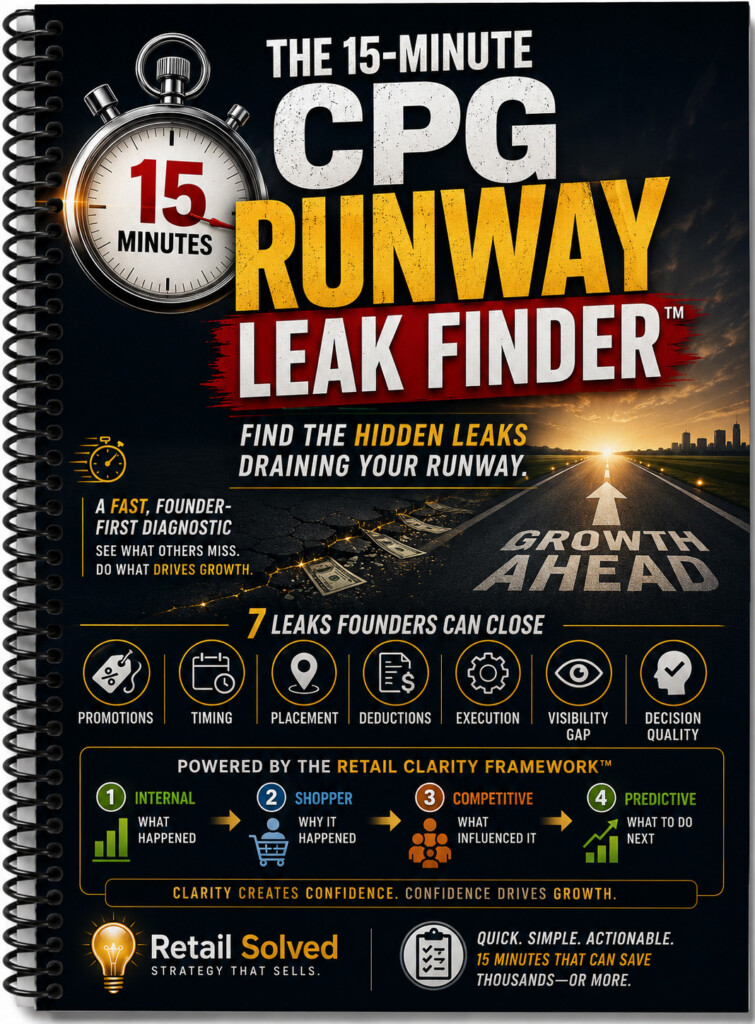
Start here: Find where your CPG brand is losing cash, margin, and runway.
In about 15 minutes, identify the leak creating the most pressure so you know where to look first.
No friction, no email required.
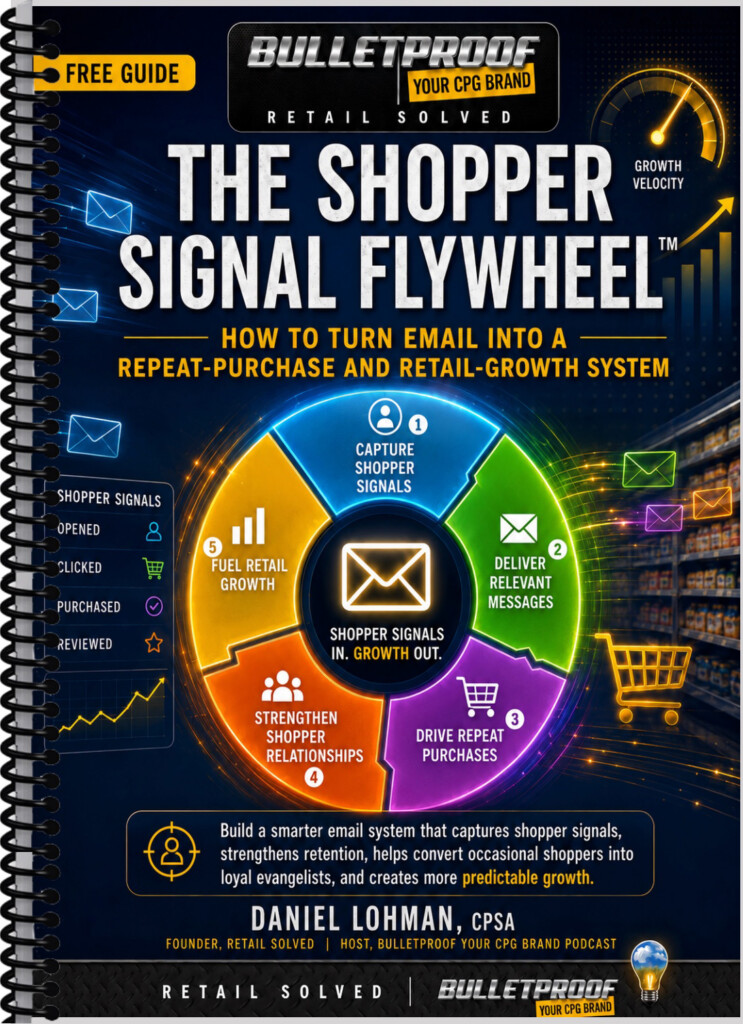
Your shoppers may know what your sales report cannot tell you.
Use your email list to capture real shopper language, validate ideas, strengthen repeat purchase, and build retailer-ready proof.
Your email list can become more than a marketing channel.
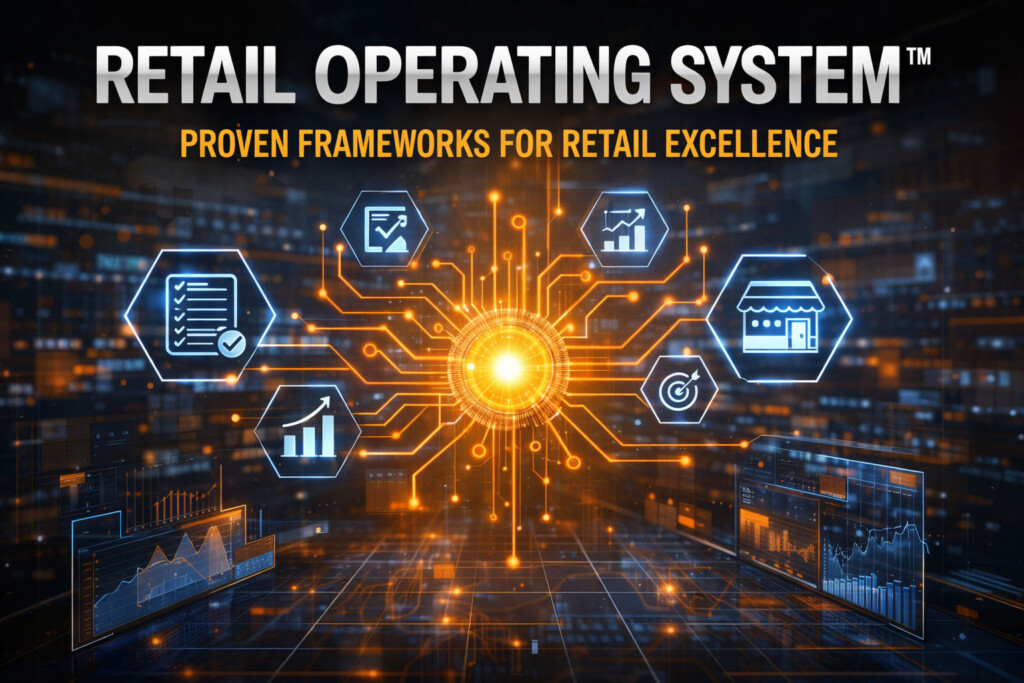
Retail Operating System™
The complete 11-module framework for protecting margin, optimizing trade spend, and scaling distribution with confidence.
Retailers run on systems.
Most brands run on hustle.
That gap is expensive.
The Retail Operating System™ is the only structured, data-driven retail growth framework built by a Certified Professional Strategic Advisor who has sat both in the founder seat and across the table from retailers.
It gives emerging CPG brands the same operational discipline, trade strategy, and category leverage that big brands use — simplified and systemized to protect margin, optimize trade spend, and extend runway while scaling distribution.
This is not education.
It’s infrastructure.
Image is the property of CMS4CPG LLC, distribution or reproduction is expressively prohibited.