I didn’t make the decision.
I fought against it.
And I still paid for it dearly.
Years ago, I helped build a mission-driven CPG company that I believed could make a meaningful difference. I put my consulting practice on hold. I invested my savings, retirement money and eventually credit cards. I built the website, sales materials, pitch decks and helped fund the work required to get the business moving.
Then a financing decision I had fought against moved forward without me.
My ownership went from 47% to less than 8%. Another planned round could have taken it below 2%. I went from believing I would help lead the company to being locked out of the business I had helped build.
I knew CPG. I knew retailers, category management, shoppers, data, sales and execution.
What I didn’t know yet was this part of being a founder.
I learned it in one of the most expensive ways imaginable.
This is the first time I have shared the full story publicly. It explains why extending runway, asking better questions and helping challenger brands avoid expensive mistakes became so personal to me.
It also explains something I call Retail Judgment.
Use the data. Use the software. Use AI. Use experts.
Just don’t outsource your judgment.
In this episode, I share the Retail Decision Stress Test I use to pressure-test an important decision through five lenses: the data, the shopper, the retailer, the economics and the execution.
Then I ask the question that can change everything:
What would change my decision?
You don’t need a perfect business. You need to make the next controllable thing a little better, learn from it and do it again.
That is how you build Retail Muscle.
If you have already paid for an expensive business or retail lesson, I would love to hear it. What do you wish somebody had told you sooner?
And if a founder you know is struggling with something we have already covered, don’t send them 341 episodes. Send them the one they need.
Start with the problem in front of you:
RetailSolved.com/start
Listen where you get your podcast








Like what you’ve heard?
Please leave a review and comment on iTunes
Let me know your most pressing question, I’ll do my best to answer it on a future episode.
Episode 341 I Didn't Make the Decision. I Still Paid for It. There is one decision that changed almost everything for me and it is why helping mission based brands thrive is so personal to me. Let me explain. I didn't make it. Have you every been in a car accident where everything moves in slow motion and you are completely at the mercy of gravity and circumstance? That nightmare had become my reality. I lost the company I had bootstrapped and helped build. I lost the role I thought I would have building it, from CEO to locked out. My ownership went from 47% to less than 8% in the blink of an eye. Another financing round was planned that would have taken me down to less than 2% despite the promises and assurances that there would be no dilution or changes made to leadership or our mission. And by then, I had already put my savings, my retirement savings and eventually a lot of credit-card debt behind the business. I knew CPG. I had worked as a grocery manager and I had worked for big brands who spared no expense to send me though some of the best training programs available. I understood retailers, sales, category management, brands, shoppers, data and execution. What I did not understand yet was this part of being a founder. Are you ready to hear more? My name is Dan Lohman and I am the host of the bulletproof your cpg brand podcast. At the end of each episode is a free guide to help you put into practice what we talk about. Now, lets roll up our sleeves and get started. Years ago, I helped build a sweetener company with a cofounder who had developed an innovative proprietary process. The basic idea was easy to understand. We had patented a process for dramatically reducing the calories from organic cane sugar while maintaining the same flavor profile and sweetness. Imagine the taste of real sugar with about a fifth of the unwanted calories and without any of the side effects or downsides found in some alternative sweetness. We were on a mission to transform the industry - or at least so we had hoped so. I believed deeply in what we were trying to build. We had a solid mission that we were deeply committed to. I had a successful consulting practice at the time that I placed on hold. With the support of my then-wife, I started putting my own money behind the business. I built the website. I even paid for both pilot runs, product samples, patent work and travel. I owned domains and trademarks. This was not something I was playing around with on the weekends. I had bet on it and I had gone all in. And I did what the founder ecosystem tells founders to do. I learned how to pitch. I listened. How do you get the investor interested? A lot of that education was useful. But there was a huge part of the conversation that I wasn't hearing enough. Nothing I had learned was going to give my brand an edge or help differentiate my brand. What happens after the retailer says yes? Those questions aren't nearly as exciting as winning the pitch competition. They may be a lot more important. At one point, with help from a friend, I had another funding path lined up. Then another group became interested. At first, they sounded great. But I started digging. I kept saying no. I repeatedly told my cofounder that I did not think we should do the deal. They kept working on him applying a lot of pressure. I would talk him back down. Then they would come back with something else. Eventually, he decided to move forward behind my back. I did not sign the deal. That was the moment everything changed. I spoke to an attorney. Legal options require money. That taught me something founder success stories rarely talk about. Having the right to fight is not the same thing as having the resources to fight. The promises and the original arrangement initially appeared to protect much of what mattered to me, our mission, and all I had worked night and day to built. I expected to be reimbursed for what I had put into the business. But there was language around future financing that became incredibly important. The verbal promises did not align with the paperwork my co-founder signed. I tried to get that promise in writing. I couldn’t. I eventually just walked away from the deal all together. I had no more to give and what I worked so hard on was unceremoniously ripped out from under me. Sadly, this the side of launching a brand you do not hear about. This is the first time I have shared my story publicly. So why now? Simply put, I want to help you avoid the painful mistakes I and other have made. I want to help you steer clear of the blindspots and obstacles that derail brands and shorten your runway. My mission is to help mission based brands doing good on our behalf grow and thrive so that they can do more good. That can be as simple as your commitment to quality ingredients, compostable packaging, the land and the people you serve. I want to be careful about the lesson. This is not a story to scare you away from launching a brand. On the contrary, helping you thrive is the focus of more that 341 podcast episodes, all of my articles across multiple industry publications, and everything I talk about. This is not an anti-investor story. It is not a story about never trusting anybody. One of the biggest was allowing promises and an incomplete agreement to stand in for protections that should have been fully settled before the stakes became enormous. I knew something felt wrong. But I had also invested so much into getting the business this far that I wanted the company to succeed desperately. And that taught me another lesson that has stayed with me ever since: The more badly you need the deal, the less leverage you may have. That is why I am such a strong advocate today for extending runway with your available resources and helping you make better informed decisions. Not because a brand should hoard cash forever. Because runway gives you options. The stronger you make the company before you desperately need the investor, retailer, broker, distributor or next round of funding, the better position you may be in to negotiate what comes next. You do not need a perfect company. You need another month. Baby steps. Learn to walk before you run. I eventually went back to Category Management Solutions, the consulting practice I had put on hold. It took years to rebuild. I wasn't completely starting from zero. I had written hundreds of articles for most every industry publication. I had frequently spoken at industry events. I had built the original SPINS Distribution Tracker and reporting tools for brands and retailers. I had spent years helping companies understand categories, shoppers, data and retail. I had ebooks, courses, and a huge email subscriber list for my weekly newsletter. I had the resume before all of this happened. When somebody showed me a report, I no longer saw just the report. I started asking: And over the years, retail kept teaching me the same lesson in different ways. Here's a simple example. Years ago I worked with a brand that sold an item that every assortment program recommended be deleted. Its sales were well below the minimum threshold used in the most trusted models. Competitors and retailers were all pushing to discontinue it. That was until we showed some key retailers that it was the entry point to the category. It was answering the question it had been designed to answer. It just wasn't answering the whole business question. That distinction has shaped my career and that is why I am sharing my uncomfortable founder story with you now. Let me explain. We experimented by placing the item in the checkout lanes as well in the regular category. It delivered a high margin and when it was in the shopping basket it deliver a much higher total ring at checkout. What was interesting and unexpected is that it also drove trial in the category. Shoppers would purchase it at the check stand and then shop the category on returning trips. By keeping it in the category assortment, we helped drive profitable sales in the category, boosted shopper traffic, and most of the time we did this in the absence of any promotions. Let that sink in a moment. A strategy that was expected to fail, returned an outsized positive result. I've spent decades working with syndicated retail data, shopper data, retailer portal data, assortment models and the tools built on top of them. I even built some of the models and many of the tools myself. Those databases can be incredibly useful if you know what questions to ask and what there limitations are. The problem is that everyone is looking for the preverbal easy button. Sometimes that is new software. Sometimes that is AI. Sometimes that is a new suite of reports. The truth is that I have spent my career seeing where these tools help and where the standard answer misses something important. Sometimes it is because of better execution and sometimes its because I asked a different question. This podcast is dedicated to help you navigate through all of that. I'm not against those tools. Quite the opposite. Use them! Just don't outsource your judgment. Because an answer can be mathematically correct and still be answering the wrong question. And the easier it becomes to get an answer, the more important it becomes to know whether you asked the right question. That's what I mean by Retail Judgment. It is not rejecting the model. It is knowing enough about the business, the shopper and the retailer to recognize when something important may be sitting outside it. That is also why I started this podcast. I wanted to sit down with people who had already paid some of the tuition. People who made mistakes. People who almost lost businesses. People who learned something the expensive way and wished somebody had told them sooner. And if you have ever been a guest on this show, I want to say something directly to you. You trusted me with part of your story, and you helped leave something behind that another founder can learn from. But I would also ask something of you. Don't let that contribution end when your episode ends. Listen to another person's story. Challenge something you hear. Add your experience when you see something differently. And when you hear an episode that could help a founder you know, send it to them. I don't want Bulletproof Your CPG Brand to become a warehouse of 341 interviews. I want it to become a living library of expensive lessons brands don't have to pay for twice. And if you're coming on this show in the future, that is the standard I want us to hold together: Leave behind something useful enough that the founder coming behind you can make one better decision. So before your next important retail decision, run one simple stress test. You do not need perfect information. First the DATA Second, your SHOPPER Next the RETAILER Then the ECONOMICS And finally the EXECUTION And then ask the most important question: WHAT WOULD CHANGE MY DECISION? What new information would make me stop? That question forces you to challenge the answer you already want to believe. This does not mean every decision needs every piece of information. That is another trap. Sometimes the right move is simply to make the next controllable thing better. Change the promotion timing. Make the next decision a little better. And sometimes the most important thing you can do is simply look again. We all become blind to things that surround us every day. I live in one of the most beautiful places in the country. Businesses do the same thing. The core item that built the company becomes background noise. Retail Judgment sometimes begins with something much simpler: Look again. I knew CPG when I started that company. I just didn't know this part of being a founder yet. I learned it the expensive way. I have no regrets about where I ended up. I just wish I didn't have to get so bloodied getting here. But if something I learned keeps one founder from paying the same tuition, then losing all of that created something useful. That's why I'm doing this. Every week on the Bulletproof Your CPG Brand podcast, I share an expensive retail lesson so you can learn it before your brand has to pay for it. If you're listening and you have already paid for one of those lessons, I want to hear it. What do you wish somebody had told you sooner? Put it in the comments. Send me a note. It may help the next founder, and it may become a future conversation on this show. And if you know one founder who is dealing with something we have already covered, don't send them 341 episodes. Send them the one they need. That's why I built the new Start Here page. Start with the problem in front of you, and I will help you find the most relevant conversations and tools. Go to RetailSolved.com/start. I'm Dan Lohman. Thanks for listening. And before you make your next big decision, ask yourself one question: What would have to be true for me to change my mind? That's Retail Judgment. Learn the expensive lesson before your brand has to pay for it. You can get the founder problem finder and the show notes at retailsolved.com/session341
Enter your name and email address below and I'll send you periodic brand building advice, tips and strategies.
I fought against it.
And I still paid for it, dearly.
I learned it in one of the most expensive ways imaginable.
And it is the primary reason Retail Solved exists today.
Savings.
Retirement money.
Later, credit cards.
The graphics.
The sales materials.
The pitch decks.
I sourced equipment.
I had identified a potential production location in Colorado.
I traveled to pitch competitions.
I shared samples with potential investors and retailers.
People, investors, and retailers were interested.
I learned how to tell the story.
I learned how to raise money.
I went through several respected founder programs.
I learned.
I became a sponge.
How do you get the retailer meeting?
How do you get somebody to say yes?
What happens after the check arrives?
What happens after the retailer gives you the stores?
What happens after the distributor and broker signs on?
What happens when your interests and somebody else's interests stop being aligned?
What does the next round of financing do to your ownership?
What happens if the assumption you built the decision around is wrong?
What happens when the mission you were on is scrapped for something unrecognizable?
Some things didn't add up.
What I found did not completely match the story I had been told.
Some of their promises started sounding too good to be true.
I would not have signed the deal.
By the time I learned it had moved forward, new corporate paperwork had already been filed.
I was told I may have had legal options to try to stop what had happened.
But there's something important buried inside that sentence.
And I had already put everything I had into the company.
I did not have another pile of money sitting around to fund a protracted legal fight in another state a thousand miles away.
I expected to continue driving the company.
Investment can be incredibly valuable.
And it isn't me pretending I made no mistakes.
I did.
I had questions.
I pushed back.
A stronger business gives you options.
Preventing deductions gives you options.
Better margins give you options.
A shopper who actively looks for your product gives you options.
Retailers that value what you bring give you options.
Understanding your own business gives you options.
Another capability.
Another good retailer.
Another profitable promotion.
Another thing you understand better than you did yesterday.
What I did not have yet have was the scar tissue.
And that changed the way I looked at decisions.
What isn't here?
What happens next?
What has to be true for this answer to work?
Who carries the risk if we're wrong?
And what would make me change my mind?
On paper, removing it made sense.
But the model could not see everything the item was doing.
The model wasn't useless.
Use the consultant.
Use AI.
Use the best software you can afford.
Founders. CEOs. Retailers. Experts.
Thank you.
You do not need a hundred-slide presentation.
You need to pressure-test the decision in front of you.
What does the evidence actually measure?
And what can't it see?
What shopper need, behavior or occasion could change the answer?
This is even more relevant with the unique shopper your brand attracts. Knowing this is your competitive advantage.
How does this decision make the retailer's business better, not just ours?
What happens to margin, cash, basket, inventory and capacity if we're right?
What happens if we're wrong?
Who owns what happens next?
What has to happen after yes for the decision to actually work?
Delay?
Say no?
Change direction?
Ask for different terms?
That is Retail Judgment. It is honed and fine tuned by building retail muscle.
A challenger brand cannot wait until it has perfect data, perfect systems and every resource a billion-dollar company has.
Fix the shelf placement.
Get a better shopper question answered.
Stop repeating the same deduction.
Learn why one store works and another doesn't.
Then learn from it.
Then do it again.
That is how you build Retail Muscle.
And there are days I can drive through it without really seeing it.
The shopper everyone thinks they understand stops being questioned.
The shelf problem becomes normal and is then overlooked.
The report gets trusted because it is familiar even though it does not answer the right question.
The process becomes “the way we do things.”
I knew retailers.
I knew data.
I knew how to sell.
Sign up to receive email updates
FREE Trade Promotion ROI Calculator:
Click Here To Maximize Sales And Profits
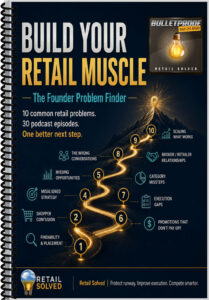
335+ podcast episodes. Start with the problem in front of you.
Choose the retail problem you are facing and get three conversations, one practical action, and the next resource to help you build that muscle.
Retail Operating System™
The complete 11-module framework for protecting margin, optimizing trade spend, and scaling distribution with confidence.
Retailers run on systems.
Most brands run on hustle.
That gap is expensive.
The Retail Operating System™ is the only structured, data-driven retail growth framework built by a Certified Professional Strategic Advisor who has sat both in the founder seat and across the table from retailers.
It gives emerging CPG brands the same operational discipline, trade strategy, and category leverage that big brands use — simplified and systemized to protect margin, optimize trade spend, and extend runway while scaling distribution.
This is not education.
It’s infrastructure.
Image is the property of CMS4CPG LLC, distribution or reproduction is expressively prohibited.