
A category management report can be mathematically correct and still point you toward the wrong decision.
In this episode of Bulletproof Your CPG Brand, I share what happened when one of the lowest-velocity, highest-margin items in an assortment looked like an obvious candidate for deletion. The ranking made sense. What it could not fully show was the job the item was doing for the shopper, retailer and category.
I break down three questions I use to pressure-test an assortment recommendation: SOURCE, RETENTION and INCREMENTALITY. Where does the volume go if the item disappears? What shopper, trip, basket or need state could the retailer lose? What actually disappears when the SKU disappears? 342 The Data Said Delete It. He…
I also share a second assortment decision where 11 of our SKUs were recommended for removal across more than 2,500 stores. After rebuilding the decision around shopper loyalty, substitution, retailer economics and category consequences, the 11 stayed and the final outcome became four additional SKUs per store. 342 The Data Said Delete It. He…
The lesson is not to ignore the data.
Use the data. Then understand what the data cannot see before you make the decision.
If your team has the reports but still cannot agree on what the decision should be, bring me one retailer, one report and one decision:
RetailSolved.com/DecisionTools
Listen where you get your podcast








Like what you’ve heard?
Please leave a review and comment on iTunes
Let me know your most pressing question, I’ll do my best to answer it on a future episode.
EPISODE 342 The Data Said Delete It. Here's Why That Could Have Been an Expensive Mistake. Years ago, a traditional category management report could have told a retailer to get rid of one of the lowest-velocity, highest-margin items we sold. The assortment math would have looked perfectly reasonable. I’m Dan Lohman. This is Bulletproof Your CPG Brand, where every week I share an expensive retail lesson so you can learn it before your brand has to pay for it. Now, Let’s roll up our sleeves and get started. When I worked for a big brand, we sold one of the most recognizable brands in the world. One of out items was in a trial size package. You have probably seen a version of it near checkout. It is the little package somebody throws into a purse, backpack, glove box or suitcase. From a traditional item-ranking perspective, it was not the hero SKU. But when we looked more closely, the item was doing something the basic ranking did not show very well. It was an entry point into the category. It was an impulse purchase at the check stand. It carried attractive an attractive margin. It reminded shoppers of the brand and the category. And our work showed that removing it could hurt the category because the item played an outsized role beyond its own unit sales. In fact, the item drove traffic to and profitable growth in the category That is the difference between asking: Which items sell the most? and asking: Which items make the category stronger? Those are not the same question. The original report did not have to be wrong. The math did not have to be wrong. The frame was incomplete. That is the danger I want you to recognize. We tend to trust clean answers. The ranking report says to delete an item. The category says it needs the space for an item with better sales. The retailer says velocity is weak. AI gives you a recommendation with a very confident explanation that justifies deleting the item. Any one of those answers may be technically reasonable while still being incomplete. None of those answers ask the shopper what matters most to them and if discontinuing the item might cause them shop elsewhere. When I look at an assortment decision, I want to understand at least three different things. First is SOURCE. Where does the item's volume come from? If I delete it, does the shopper simply move to another item I already sell? Do they move to a competitor? Do they leave the category? Do they leave the store all together to purchase the item at a different retailer? Does the item bring a shopper into the category who otherwise would not have purchased? Second is RETENTION. What does the item help the retailer keep? A shopper? A trip? A basket? A need state? A premium customer from shopping their competition? A category entry point? Sometimes a small SKU has strategic value because of the shopper it keeps in the franchise, not because it wins a raw velocity ranking. Third is INCREMENTALITY. What disappears if the item disappears? That is the question a normal ranking can miss. If the item is mostly cannibalizing another SKU, that is one answer. If the item creates an additional occasion, a different shopper, an impulse purchase, a higher-margin transaction or a reason not to shop somewhere else, that is a very different answer. And then I widen the frame one more time. What does the retailer gain? Retailers generally care about three things that show up in a hundred different forms. They need a reasonable profit. They need more shopper traffic and a higher basket value. And they need a competitive advantage that gives shoppers a reason to choose their store instead of somebody else's. So when you recommend adding, deleting, expanding or shrinking an item, I want you to ask: Does this decision make the retailer's business better, or does it only make the item-ranking report look cleaner? That one question has changed a lot of decisions for me over the years. In another major retailer reset, the accepted recommendation called for removing 17 items. Eleven of them were ours. Across more than 2,500 stores, that would have taken out almost half of our business with that retailer. The recommendation from the category captain looked convincing and every one of the retailers divisions accepted the new assortment. They were making room for their new brand. I could not reconcile it with the shopper loyalty, category role and retailer performance I was seeing. Our sales were up and my division was outperforming the others. So I asked a different question: What would the retailer and shopper lose if these products disappeared? We rebuilt the story around the shopper, substitution, retailer economics and category consequences. The 11 recommended SKUs were not removed and I effectively demonstrated to the retailer that the category captains new brand would pull profitable sales from the category while alienating some of their most loyal shoppers. The final outcome was four additional SKUs for our brand per store across more than 2,500 stores. Same industry. Same kind of data. Very different decision. This is what I mean by Retail Judgment. It is not ignoring the report. It is not trusting your gut instead of the facts. It is recognizing what the obvious answer may be missing and then connecting the data, shopper, retailer, economics and execution before you make an expensive decision. AI can help you do that faster. A great analyst can help. A strong broker can help. A sophisticated category model can help. Use all of it. Just do not confuse the recommendation with the decision. Here is the Retail Muscle rep I want you to try this week. This exercise will also help you defend against a competitor initiative. Take one recommendation your team is considering or being confronted with right now. Add a SKU. Delete a SKU. Expand distribution. Cut distribution. Increase trade. Raise price. Whatever it is. Before you act, write down four questions: #1 What is this recommendation optimizing? #2 What important context can it not see? #3 What would the retailer or shopper lose if we follow it? #4 What evidence would make us choose differently? That last question matters. If nothing could change your mind, you are not pressure-testing the decision. You are defending it. The easier it becomes to get an answer, the more important it becomes to ask the right question. If your team has the reports but still cannot agree on what the decision should be, that is exactly why I built Retail Clarity Decision Tools. Bring me one retailer, one report and one decision. We can pressure-test what the standard answer may be missing and build the capability into your team. Go to RetailSolved.com/DecisionTools. The spreadsheet is not the product. The decision is. I'm Dan Lohman. Thanks for listening. Learn the expensive lesson before your brand has to pay for it. You can get the founder problem finder and the show notes at retailsolved.com/session342
Enter your name and email address below and I'll send you periodic brand building advice, tips and strategies.
The item was small. It did not sell like the core items in the category. If you ranked the category by volume and drew a line after the items driving roughly 80% of sales, this item could easily fall below it.
Delete it.
Except that would have missed what the item was actually doing for the retailer.
That is a category management problem: the item ranking can be right while the decision frame is incomplete.
That is the lesson I want to talk about today, because we now have better data, faster dashboards, smarter algorithms and AI tools that can give us an answer in seconds.
That is useful.
It also makes one skill much more important.
Knowing when the answer is solving the wrong problem.
Sign up to receive email updates
FREE Trade Promotion ROI Calculator:
Click Here To Maximize Sales And Profits
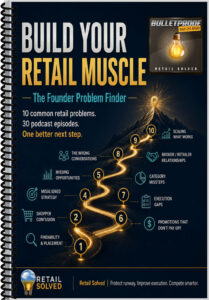
335+ podcast episodes. Start with the problem in front of you.
Choose the retail problem you are facing and get three conversations, one practical action, and the next resource to help you build that muscle.
Retail Operating System™
The complete 11-module framework for protecting margin, optimizing trade spend, and scaling distribution with confidence.
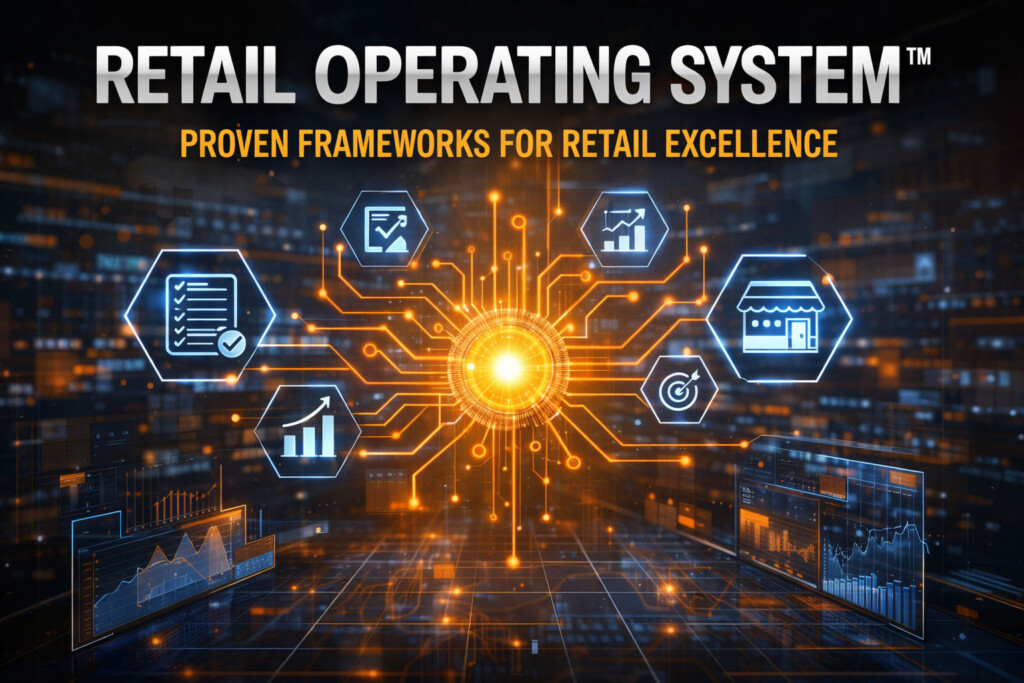
Retailers run on systems.
Most brands run on hustle.
That gap is expensive.
The Retail Operating System™ is the only structured, data-driven retail growth framework built by a Certified Professional Strategic Advisor who has sat both in the founder seat and across the table from retailers.
It gives emerging CPG brands the same operational discipline, trade strategy, and category leverage that big brands use — simplified and systemized to protect margin, optimize trade spend, and extend runway while scaling distribution.
This is not education.
It’s infrastructure.
Image is the property of CMS4CPG LLC, distribution or reproduction is expressively prohibited.
Leave A Comment