
A retailer’s sales report can show what shoppers bought. But can it reveal the shopper need your category never gave them a chance to satisfy? If you’re pitching a CPG product that solves an unmet need, that difference could change your entire retailer conversation.
In Episode 347 of Bulletproof Your CPG Brand, I share why historical retail sales data can be accurate yet incomplete, what I learned when customers told us they were using a struggling hot-cereal product in an unexpected way, and how to turn shopper conversations into something a buyer can actually use.
Learn how to turn your existing, permission-based email relationships into a system to Listen → Learn → Validate → Activate shopper insights, strengthen repeat purchase, and develop a more useful retailer story.
Your Retail Muscle rep this week:
1. Choose one product and talk with ten real customers (or a smaller, permissioned email group).
2. Ask: “The last time you bought or used this product, what were you trying to solve, make easier, improve, or enjoy?”
3. Ask: “What would you have bought or done if our product wasn’t available?”
4. Keep their exact words. Identify one pattern, and finish: “If this is a wider shopper need, the next thing we need to validate is ____.”
The goal isn’t to claim ten conversations represent an entire market. It’s to learn what deserves validation before you spend money on a new SKU, research package, or retailer pitch.
Listen where you get your podcast








Like what you’ve heard?
Please leave a review and comment on iTunes
Let me know your most pressing question, I’ll do my best to answer it on a future episode.
347 The Shopper Need Your Retailer Can't See Imagine sitting across from a retail buyer who's just reviewed last year's snack sales. The buyer tells you, "I don't see demand for the kind of product you're proposing." The category report shows what shoppers bought from the products that were on their shelf. But what about the shopper who walked in looking for something different, couldn't find it, and walked out? Or bought a substitute? Went to a different retailer or went online? If the shopper never had the choice, how would their need appear in that store's sales report? The buyer may be asking the report a question it was never designed to answer and that can cause them overlook your potentially valuable shopper. Now here's the challenge for a brand. You can't walk into a buyer meeting and simply insist that people want your product. You need to understand the unmet need shoppers are trying to fill and how your brand uniquely fills that need. Bring the retailer something useful enough to act on. Make it easy for them to say yes to your brand! I'll show you how to start that process using a valuable free resource you may already have. I'm Dan Lohman, and this is the Bulletproof Your CPG Brand podcast, where you learn the expensive retail lessons before your brand has to pay for them. My goal is to help you get your brand on the shelf, keep it there, and make those stores more valuable for your shoppers, your retail partners, and your business. Every episode includes a free guide to help you go deeper into the topic and put the lesson to work. Today we're going to look at the shopper need that sales reports overlook and how to turn that into your unique advantage. I'll also share my free Shopper Signal Flywheel guide to help you put what we're discussing into practice. Now, Let’s roll up our sleeves and get started. Years ago, I interviewed Megan Reamer, one of the founders of Jackson's Honest, for Episode 53. You will love her story. Megan and her husband were desperately trying to save their sons life after doctors and others had essentially given up. They worked hard and found a food that solved his problem. That search helped inspire a business. Think about what came first. It wasn't a category report saying, "The next flavor is growing 8 percent." It was a real person asking, "Why can't I find something that meets this need?" That's one reason I love entrepreneurial CPG brands. They can begin with a shopper problem that the existing assortment isn't solving. But there's another lesson here, and it matters just as much. How many other families are struggling with the same problem? Who else might benefit from your solution? Those shoppers frequently become the retailers most loyal committed shoppers. This is your brands superpower and I am going to show you how to leverage it to your advantage at retail and beyond. The founder's experience may be the beginning of the question. It isn't the end of the research. What the retailer can — and cannot — see Suppose a retailer carries five snack formats and shoppers buy those five formats in different quantities. That information can tell you a great deal about what happened among those choices. What it cannot automatically tell you is whether some shoppers wanted a sixth format, a different ingredient, or something that would work for an occasion or need the category isn't serving today. The retailer's data tells us what people bought in that retailer based on what was available to the shopper on their shelves. It doesn't necessarily tell us everything they needed. Sometimes I think of it like fishing in a pond. You can become an expert on every fish you catch. That's useful. But what about the pond next door? I've spent much of my career working with retailer data, syndicated data and shopper research data. That information can be extremely valuable BUT you need to first understand what question it can actually answer. Most consumer research is generic at best and the shoppers being surveyed might not buy your brand or have the problem your brand solves. And that leads to an opportunity for brands that don't have a giant research budget: start with the people who are already using your product. Listen for the real reason they choose you Before investing in creating another item, buying shopper data, or asking a retailer for more shelf space, have a few real conversations with your actual shoppers. Not to collect compliments. Not to prove your own idea. To learn. Ask a customer: "Think about the last time you bought or used our product. What were you trying to solve, make easier, improve, or enjoy?" Then stop talking. Don't explain your mission. Don't tell them why you developed the product. Give them room to tell you what it meant to them and why they choose your brand. Then ask a second question: "What would you have bought or done if our product wasn't available?" Now we're learning something different from a flavor ranking or a brand-awareness score. We're learning about the occasion, the alternative, and the need that drove a decision. What if they weren't looking for a snack at all? What if they were trying to make filling a lunchbox easier, solve a dietary preference, find something convenient for a particular moment, or replace something they'd stopped enjoying? Those are illustrations of the kinds of occasions you might hear, not findings from a specific brand's research. And sometimes the answers surprise the founder most of all. You think shoppers love one feature, but they keep describing another benefit. That can change what you say on your website, how you pitch to potential investors, what you test next, or how you explain your value to a retailer. Ten conversations won't tell you the percentage of the country that wants the product. But they can show you a better question to validate. Years ago I was working with a brand that was struggling. They had a hot cereal that was in jeopardy of being discontinued. Then we asked their customers why their purchased their brand and learned that they used it as a baby food. That information turned their company around. That was a question traditional research would never have answered. Your owned relationships are a research asset Here's something many brands overlook: you may already have a way to start those conversations. Your email list. The real customers that freely gave you permission to communicate with them using their email address. Brands invest real effort getting people onto that list. Then every message becomes a coupon, a promotion or another announcement. Typically those conversations are all one sided - all about the brand. There is a place for those things. But what if occasionally you used that permission to listen instead of broadcast? Send one thoughtful question to a small group of customers who have agreed to hear from you. When somebody responds, thank them. Ask a follow-up if it would help you understand their experience. Have an actual conversation with them. Their insights are invaluable. Not every exchange has to end with an offer. Most customers just want to be heard and a brand taking the time to listen and value their opinion can convert an occasional customer into a loyal evangelist. Yes, it’s that easy - when done right. This isn't just about creating another marketing channel. It's about learning from the people who care enough about your product to use it, and making the relationship more valuable to both sides. That's the thinking behind my Shopper Signal Flywheel: Listen to real shoppers. Learn which needs and occasions matter. Validate the patterns before making expensive assumptions. Then activate what you learn in your product decisions, communication, repeat-purchase efforts, and retailer story. And don't stop after the first email. Use the learning to improve the next question. That's how a one-time interaction begins becoming a useful relationship. Turn shopper language into a retailer reason to care Now, a buyer doesn't owe you shelf space because your origin story is inspiring. The buyer needs to know why serving this need could make the category more valuable to shoppers. Who needs the product? When do they need it? What do they do today? What alternatives do they choose? Is there an occasion, shopper or purchase the retailer could be missing? What would we have to measure to determine whether that opportunity is meaningful? Your customer conversations give you answers. Retailer data, broader shopper research, actual sales tests and appropriate category evidence can help pressure-test them. You're not replacing data with anecdotes. You're using a better question to make the data more useful. That's how a smaller brand can bring a retailer more than a request for another facing. Retail Muscle rep Here's what I'd encourage you to do this week. Choose one product. Talk with ten real customers, or start with a small group of people on your email list. Ask what they were trying to accomplish the last time they bought or used it. Ask what they would have done if it wasn't available. And write down their exact words — not the polished marketing version. Now look for one repeated need, frustration or occasion that you hadn't fully appreciated. Then finish this sentence: "If this really is a wider shopper need, the next thing we need to verify is _____." That's your next research question. That's what makes the exercise valuable. You don't have to guess your way into the next product or presentation. To recap If you'd like help turning that first conversation into a repeatable way to learn from shoppers, I have a free guide for you: The Shopper Signal Flywheel. It walks through how to use an existing email relationship to listen, learn, validate and activate shopper insights — instead of treating your list as one more place to send promotions. You can start small, learn what matters, and use the results to strengthen both customer relationships and your retailer story. You'll find it at RetailSolved.com/guide31. That's RetailSolved.com/guide31. I've also put the link in the episode description and on the podcasts webpage. You don't have to change your entire marketing strategy this week. Start with one question, one real conversation and one decision you can make with better context. And if that conversation teaches you something surprising, send me a note on LinkedIn and tell me what you learned. I've learned some of my most useful lessons by listening when someone explains a problem I hadn't considered. Your shoppers can tell you things a retailer's sales report never had a chance to measure. Give them a chance to tell you. I'm Dan Lohman. Thanks for listening to the Bulletproof Your CPG Brand podcast. Learn the expensive lesson before your brand has to pay for it. You can get the show notes and this weeks free download at retailsolved.com/session347
Enter your name and email address below and I'll send you periodic brand building advice, tips and strategies.
Sign up to receive email updates
FREE Trade Promotion ROI Calculator:
Click Here To Maximize Sales And Profits
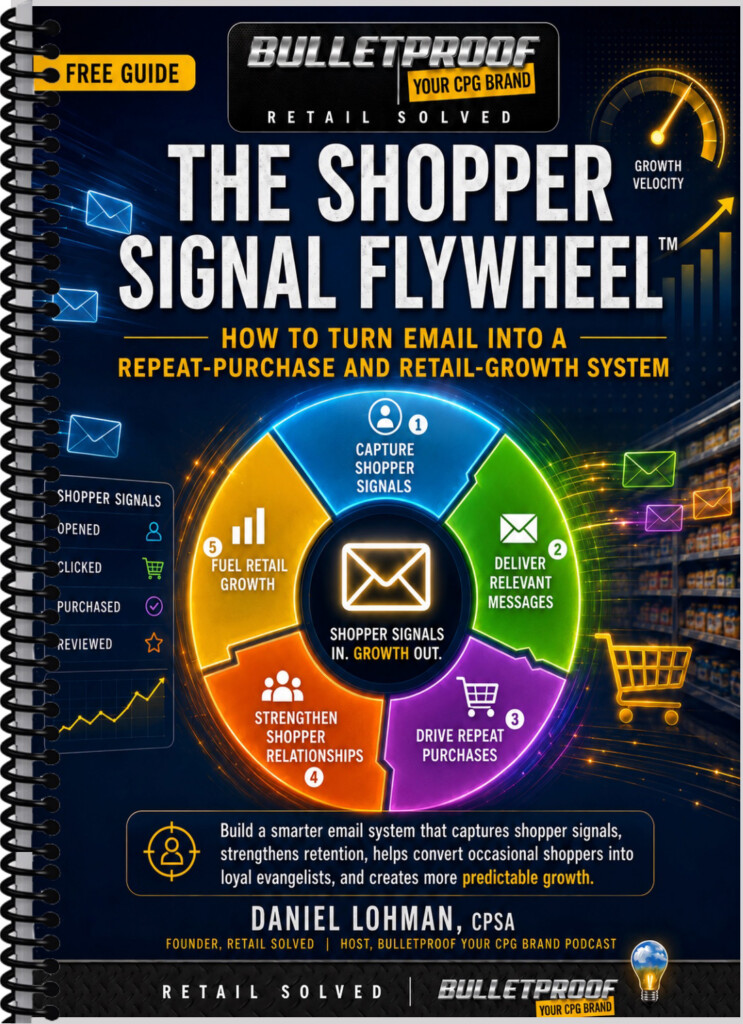
Your shoppers may know what your sales report cannot tell you.
Use your email list to capture real shopper language, validate ideas, strengthen repeat purchase, and build retailer-ready proof.
Your email list can become more than a marketing channel.
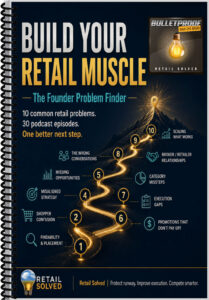
335+ podcast episodes. Start with the problem in front of you.
Choose the retail problem you are facing and get three conversations, one practical action, and the next resource to help you build that muscle.
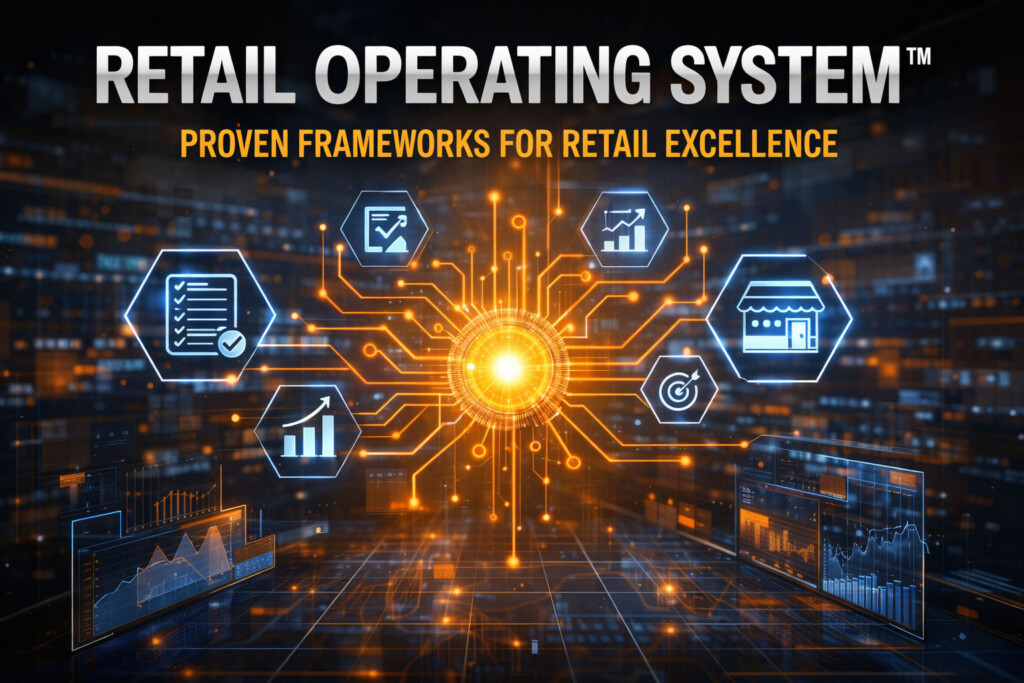
Retail Operating System™
The complete 11-module framework for protecting margin, optimizing trade spend, and scaling distribution with confidence.
Retailers run on systems.
Most brands run on hustle.
That gap is expensive.
The Retail Operating System™ is the only structured, data-driven retail growth framework built by a Certified Professional Strategic Advisor who has sat both in the founder seat and across the table from retailers.
It gives emerging CPG brands the same operational discipline, trade strategy, and category leverage that big brands use — simplified and systemized to protect margin, optimize trade spend, and extend runway while scaling distribution.
This is not education.
It’s infrastructure.
Image is the property of CMS4CPG LLC, distribution or reproduction is expressively prohibited.
Leave A Comment